
After death, religions offer answers. This guide explores afterlife beliefs across world faiths, their origins, meanings, and cultural significance.
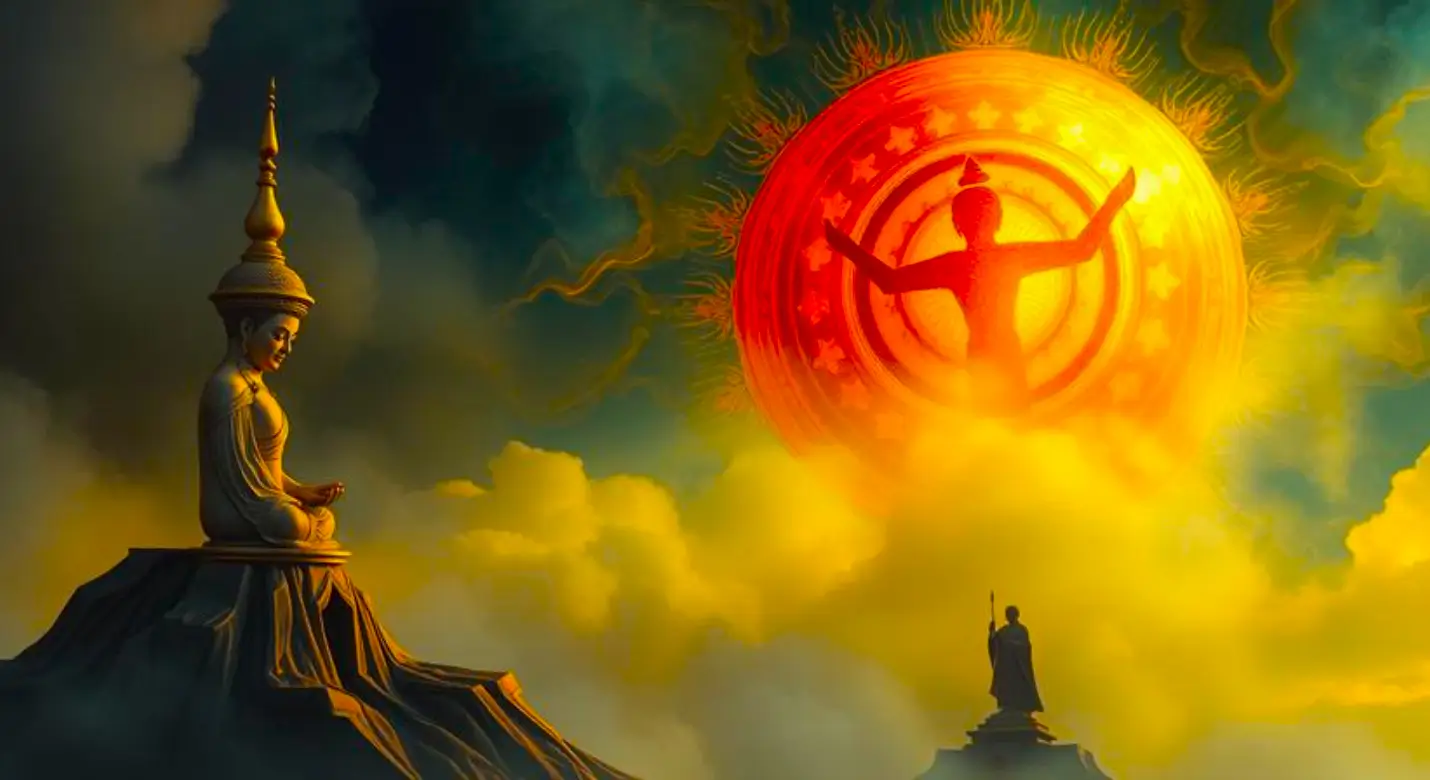
Defining the Afterlife in Religion
The afterlife is a religious concept of continuing personal, spiritual, or conscious existence after physical death. Most known cultures have developed beliefs about what happens to the dead.
Comparative study identifies major types of afterlife belief: resurrection, reincarnation, heavenly and hellish realms, purgatorial states, ancestor worlds, and final liberation. These ideas relate to each tradition's teachings about the soul, justice, suffering, and life's meaning.
- Resurrection — bodily restoration and new life after divine judgment.
- Reincarnation — serial rebirth within samsara, driven by karma.
- Heaven and hell — realms of reward and punishment after death.
- Ancestral spirit worlds — continued life among the dead in traditional cultures.
- Moksha and nirvana — ultimate liberation from rebirth in Dharmic faiths.
To understand how communities shape their beliefs, explore more religions and belief systems.
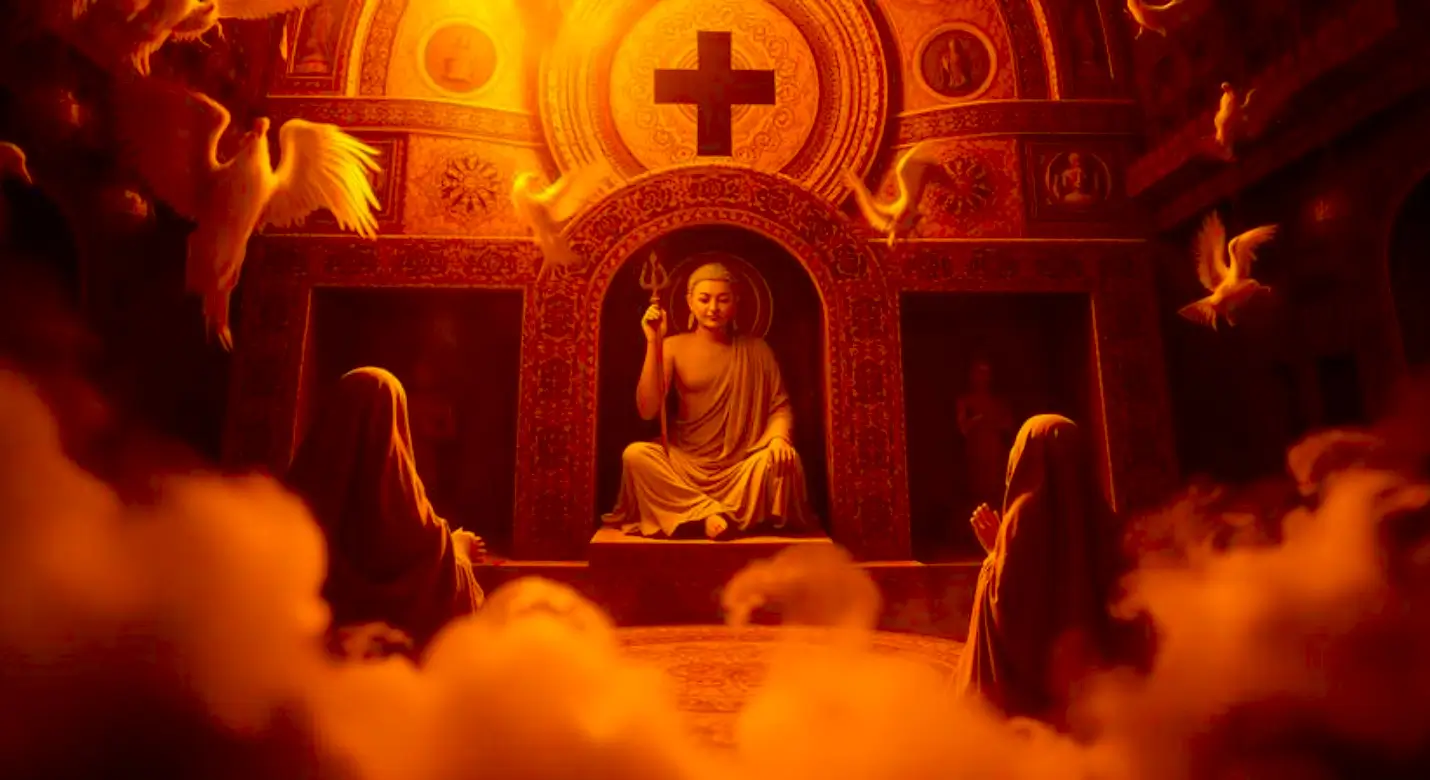
The Afterlife in Abrahamic Religions
Judaism, Christianity, and Islam share ancient Near Eastern roots. Early biblical texts describe Sheol as a shadowy underworld. Later scriptures and traditions developed beliefs in resurrection, final judgment, and eternal reward or punishment.
Resurrection, Judgment, and the World to Come
Resurrection is the belief that the dead will be restored to embodied life. The Book of Daniel speaks of those who "sleep in the dust" awakening to everlasting life or shame.
Christianity teaches that Jesus rose from the dead and that his resurrection prepares the way for believers. Islam affirms a bodily resurrection on the Day of Judgment, when humanity stands accountable before God.
Jewish tradition is diverse. Rabbinic Judaism speaks of Olam Ha-Ba, the World to Come. Contemporary Jewish movements vary between literal resurrection and more symbolic interpretations.
- Judaism — Sheol, resurrection, and Olam Ha-Ba.
- Christianity — resurrection through Christ and final judgment.
- Islam — bodily resurrection and the Day of Judgment.
Heaven, Hell, and Paradise
In Islamic scripture, Jannah is described as a garden of delight, while Jahannam is a place of fire. Christian images of heaven as God's presence and hell as separation from God vary among denominations.
Catholic tradition developed the idea of purgatory as temporary purification. Eastern Orthodox theology does not accept purgatory. Islam describes barzakh, an intermediate state between death and resurrection.
These images are symbolic rather than literal maps. They express each tradition's hopes about divine justice, mercy, and the restoration of creation.
- Heaven — communion with God or restored creation.
- Hell — fire, separation, or annihilation.
- Purgatory — purification in Catholic teaching.
- Barzakh — the Islamic interval before resurrection.
The imagery of gardens, fire, and transformation travels across many traditions; explore symbols and their meanings to see how these images are used worldwide.
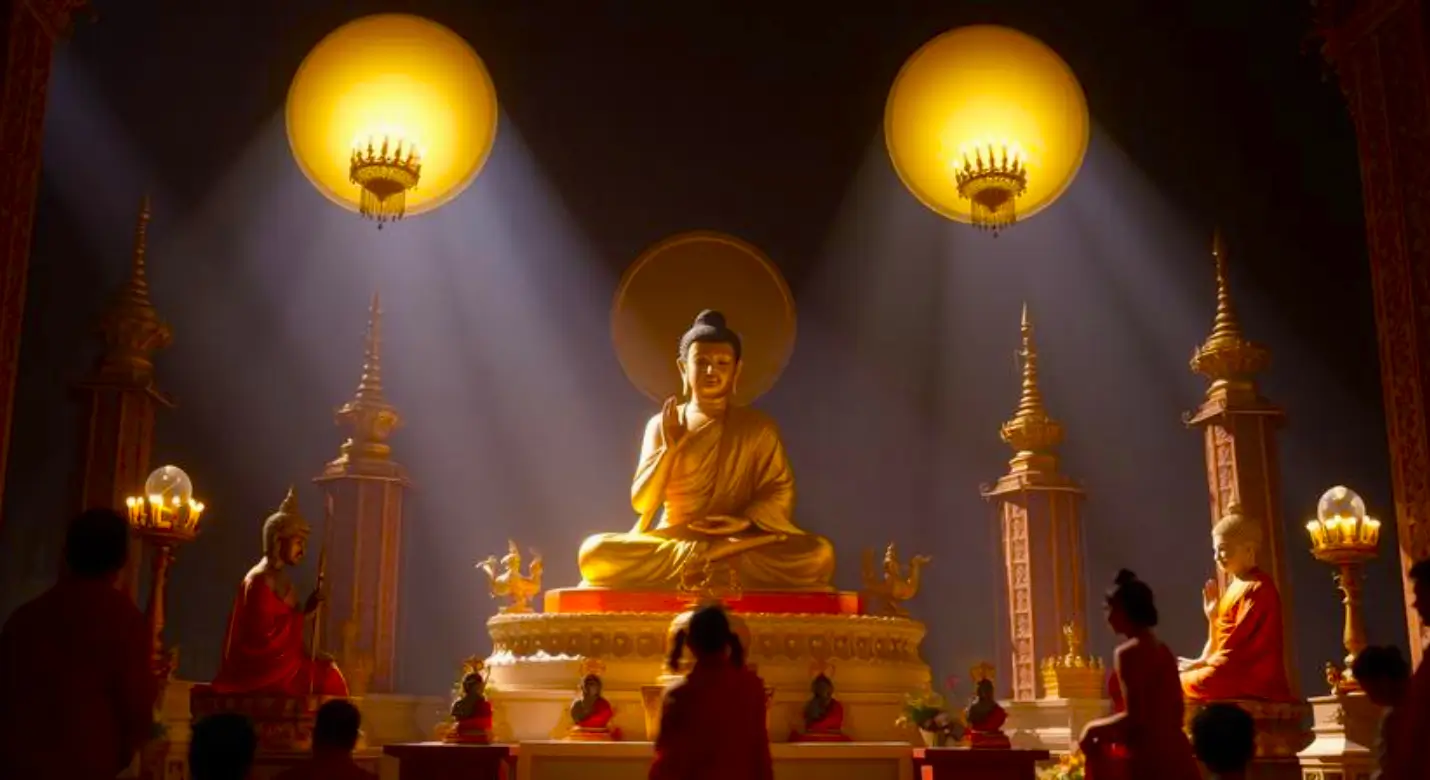
The Afterlife in Dharmic Religions
Hinduism, Buddhism, Jainism, and Sikhism arose in South Asia and share a core framework: samsara, the cycle of birth, death, and rebirth. Karma shapes each rebirth, and liberation from samsara is the final goal.
Hinduism: Samsara, Karma, and Moksha
In Hindu thought, the eternal self, called atman, passes from body to body across many lifetimes. Good and harmful actions generate karma that influences the conditions of the next birth.
Liberation, or moksha, is described as union with Brahman or eternal companionship with a personal deity such as Vishnu or Shiva. Devotional traditions also envision heavenly worlds like Vaikuntha and Kailasa.
Hindu beliefs vary widely. Vedic hymns refer to ancestral realms; the Upanishads explain rebirth; later legends describe temporary heavens and hells.
- Atman — the self that undergoes rebirth.
- Karma — the moral law of cause and effect.
- Moksha — liberation from samsara.
- Temporary worlds — heavens and hells between lives.
Buddhism: Rebirth and Nirvana
Buddhism teaches rebirth without a permanent soul. The Buddha's doctrine of anatta denies any unchanging self beneath experience.
Buddhist cosmology includes six realms of samsara: gods, demigods, humans, animals, hungry ghosts, and hell beings. Tibetan traditions describe intermediate states called bardos; Pure Land Buddhism trusts in rebirth in Amitabha's pure land.
Nirvana is not a celestial place. It is the extinguishing of craving, suffering, and repeated death. Interpretations vary among Theravada, Mahayana, and Vajrayana schools.
- Anatta — the doctrine of no permanent self.
- Six realms — possible destinations in samsara.
- Bardos — transitional states after death.
- Nirvana — the end of rebirth and suffering.
Afterlife Beliefs in Ancient and Indigenous Traditions
Ancient civilizations developed elaborate visions of existence after death. Many Indigenous peoples today continue to understand the afterlife through kinship with ancestors and spirit worlds.
Ancient Egypt and the Greek Underworld
Ancient Egyptians recorded afterlife instructions in the Book of the Dead. The heart of the deceased was weighed against the feather of Maat, the goddess of truth, before the judge Osiris.
Those who passed the test entered the Field of Reeds, a paradise of abundance. Greek mythology placed the dead in Hades, with Elysium for the virtuous and Tartarus for the wicked.
Egyptian and Greek images of judgment, rivers, and blessed fields influenced later Mediterranean religions through cultural contact. The journeys of souls through underworlds remain rich with mythical detail; discover related myths and mythological traditions.
- Weighing of the heart — judgment before Osiris.
- Field of Reeds — paradise for the justified dead.
- Elysium and Tartarus — Greek realms of bliss and punishment.
- Philosophical views — Plato defended the soul's immortality.
Ancestors and Spirit Worlds
In many African, Asian, Pacific, and Indigenous American traditions, the dead remain part of the family and community. Rituals honor ancestors and preserve their presence among the living.
Religions such as Shinto, Vodou, and African diaspora traditions maintain structured relationships with the dead. These systems are ethical and communal, not simply fear of ghosts.
Because these traditions are oral and diverse, experts warn against generalization. Each community holds its own cosmological and ethical framework. For deeper examples, learn more about folklore and legends.
- Ancestor veneration — ongoing bonds between living and dead.
- Spirit worlds — places where ancestral beings reside.
- Ritual remembrance — offerings and festivals for the departed.
- Living traditions — communities continue to transmit these teachings.
Conclusion: Why Afterlife Beliefs Matter
Afterlife beliefs express hopes for justice, continuity, reunion, and meaning beyond death. Each religion's imagery arises from its own history, texts, rituals, and experiences of suffering and hope.
Religious belief in an afterlife is not the same as historical evidence about life after death. In this Lore Unbound guide, afterlife traditions are presented respectfully, distinguishing religious belief, traditional narrative, and scholarly interpretation.
| Topic or Element | Meaning, Role, or Significance | Cultural / Historical Context | Important Distinction / Context |
|---|---|---|---|
| Resurrection of the body | Physical restoration and new life after death, linked to divine judgment. | Judaism, Christianity, and Islam; developed in later prophetic and apocalyptic writings. | Interpreted literally by some and symbolically by others; late emergence in Hebrew scripture. |
| Heaven and hell | Realms of reward and punishment expressing moral accountability. | Christianity, Islam, Judaism, and Zoroastrianism. | Symbolic descriptions vary widely; some traditions view them as states of being. |
| Samsara and rebirth | The cycle of birth, death, and rebirth shaped by karma. | Hinduism, Buddhism, Jainism, and Sikhism. | Buddhism rejects a permanent soul, so "rebirth" is preferred over "reincarnation." |
| Moksha and nirvana | Final liberation from the cycle of death and rebirth. | Hindu, Buddhist, and Jain traditions. | Not a place but a transformed state beyond ordinary existence. |
| Ancestral spirit worlds | The dead remain present within family and community life. | Indigenous, African, East Asian, and Pacific traditions. | Highly varied; cannot be reduced to Western heaven/hell dualism. |
Readers who wish to continue can browse frequently asked questions about religious and cultural concepts or return to the Lore Unbound homepage for broader exploration.
Lore Unbound is an independent educational encyclopedia. Those interested in the standards behind this content can review the editorial policy and learn more about Lore Unbound's editorial mission.
This content was created with the assistance of Artificial Intelligence as an editorial tool and reviewed by Pedro Neves in accordance with Lore Unbound's editorial standards for clarity, neutrality, cultural context, responsible sourcing, and the distinction between documented evidence, scholarly interpretation, religious belief, mythology, folklore, legend, and traditional narrative. The content is prepared following Lore Unbound's editorial guidelines and quality standards for SEO, GEO, and Artificial Intelligence answer systems.
FAQ About What Is the Afterlife in Religion?
What does the afterlife mean in religion?
In religious contexts, the afterlife refers to the belief in continued existence of a person after physical death. This may include the soul, spirit, resurrection, reincarnation, judgment, reward or punishment, union with the divine, an ancestral realm, or complete dissolution, depending on the tradition. Different religions define and describe it in very different ways.
How do major world religions conceptualize the afterlife?
Broadly, Abrahamic religions such as Christianity, Islam, and some forms of Judaism emphasize resurrection and divine judgment leading to heaven or hell. Dharmic religions such as Hinduism, Buddhism, Jainism, and Sikhism teach samsara, the cycle of rebirth, and liberation from that cycle through moksha or nirvana. Many indigenous traditions include spirit worlds, ancestral presence, and continuation of community ties after death. There is also significant internal diversity within each religion.
Where did afterlife beliefs originate?
The origins of afterlife beliefs are ancient and diverse. Archaeological evidence from prehistoric burial practices suggests that early humans cared for the dead in ways that imply beliefs about continued existence. Written records from ancient Egypt, Mesopotamia, Greece, India, and China show highly developed ideas about death and what follows. There is no single origin; different cultures developed their own concepts, sometimes independently and sometimes through contact.
Is belief in the afterlife universal across all religions?
No. Many religions include some form of afterlife, but not all do. Some traditions focus primarily on living a good life in the present world and remain silent about or uninterested in post-mortem existence. Some non-theistic or philosophical forms of Buddhism describe rebirth without a permanent soul, while certain modern and secular religious movements reject a supernatural afterlife entirely.
What role do afterlife beliefs play in religious life?
Afterlife beliefs can provide meaning, moral guidance, comfort in the face of death, and a way to make sense of suffering and injustice. They often shape funeral rites, memorial customs, ancestor veneration, and ethical behavior because actions in this life may be understood as affecting what happens afterward. They also help communities maintain ties with the dead and reinforce shared values.
How do concepts of heaven and hell differ among religions?
Christianity and Islam commonly describe heaven and hell as divine rewards or punishments after a final judgment, but details vary, including whether the experience is eternal or temporary and whether it is physical or spiritual. Judaism has historically had diverse views, including a shadowy underworld called Sheol and later ideas of purification or reward. Hinduism and Buddhism include multiple heavenly and hellish realms within samsara, where beings dwell temporarily based on karma. Ancient Greek religion envisioned Hades as a shadowy realm for all the dead.
What is reincarnation and how is it related to the afterlife?
Reincarnation, often called rebirth in Asian traditions, is the belief that consciousness, a soul, or some form of life essence is reborn into another body after death. This process is closely connected to karma in Hinduism, Buddhism, Jainism, and Sikhism. It differs from resurrection, which generally means the same person or body is restored to life at the end of time. Some newer religious movements also offer their own interpretations of reincarnation.
What is the difference between the soul, the spirit, and the afterlife?
The soul and spirit are often understood as the immaterial essence or life principle of a person, but their definitions vary widely across religions. Some traditions teach that the soul is immortal and naturally survives death, while others see the spirit as separable but not inherently eternal. The afterlife is the state, place, or process in which that essence continues after bodily death. These terms are not interchangeable across religions, so their meanings depend on the tradition.
How has the afterlife been interpreted by scholars and skeptics?
Scholars study afterlife beliefs through sacred texts, archaeology, anthropology, psychology, and comparative religion, examining their historical development and cultural functions. Psychologists and neuroscientists may study near-death experiences and the brain processes that could explain them. Skeptics often regard afterlife beliefs as products of fear, grief, cultural conditioning, or neurological activity, while believers treat them as revealed truth or spiritual experience. Both perspectives are part of the broader conversation.
What are common misconceptions about the afterlife in religion?
One common misconception is that all religions teach the same basic heaven and hell. Another is that every religion affirms an immortal soul. Near-death experiences are sometimes presented as proof of the afterlife, but scientists and scholars offer alternative explanations, and religious traditions themselves do not necessarily interpret them the same way. Many afterlife teachings are symbolic, moral, or mysterious rather than literal descriptions of a physical place.
Author: Editorial Team – Lore Unbound
Reviewed by: Pedro Neves
Article produced and published in accordance with our Editorial Policy: https://loreunbound.com/editorial-policy/
Published on: September 2, 2026
Website content categories:
This content is part of the Lore Unbound editorial ecosystem, which includes:
Related Content