
Religious pilgrimages are journeys to sacred places for spiritual reasons. This guide explains their meaning, origins, and enduring relevance across cultures.

What Is a Religious Pilgrimage?
A religious pilgrimage is a journey to a sacred site or place of religious significance, undertaken as an act of devotion, penance, healing, or spiritual growth. The practice appears in nearly every major religious tradition and ranks among the oldest forms of religious expression.
The word "pilgrimage" derives from the Latin peregrinus, meaning "foreigner" or "wanderer," reflecting the experience of leaving one's familiar surroundings for a place of sacred meaning. Pilgrimage sites typically include locations associated with holy figures, miraculous events, sacred relics, or key moments in a tradition's history.
Historical evidence shows that pilgrimage existed in ancient cultures long before the modern era. Ancient Greeks traveled to Delphi and other sanctuaries, ancient Egyptians visited temples along the Nile, and sacred cities such as Varanasi in India have drawn pilgrims for millennia. To understand how these journeys relate to broader belief systems, explore more religions and belief systems in the Lore Unbound library.

Why Do People Undertake Pilgrimages?
People undertake religious pilgrimages for many interconnected reasons. Motivations range from personal devotion and spiritual growth to physical healing, cultural identity, and community belonging. Although every journey is unique, scholars identify several recurring motivations across traditions.
Spiritual Growth and Penance
For many believers, pilgrimage is a form of spiritual discipline. The physical effort of traveling, often under challenging conditions, is understood as a way to purify the soul, demonstrate commitment, and draw closer to the divine. Many traditions view pilgrimage as an act of penance — a means of acknowledging wrongdoing, seeking forgiveness, and restoring one's relationship with God or the sacred.
In Christianity, the pilgrimage to Santiago de Compostela in Spain has long been associated with repentance and spiritual renewal. In Islam, the hajj to Mecca includes rituals of humility and equality, as all pilgrims wear simple garments that erase social distinctions. In Hinduism, journeys to holy cities such as Varanasi are believed to purify karma and assist the soul's progress toward liberation.
The inner transformation experienced during such journeys is often described in terms of renewal or rebirth. Many pilgrims return home feeling spiritually strengthened, more disciplined, and more deeply connected to their faith community.
Key aspects of pilgrimage as spiritual growth include:
- Physical effort as a form of prayer and discipline
- Separation from daily life to focus on the sacred
- Rituals of purification, fasting, and prayer along the way
- Encounters with fellow believers from diverse backgrounds
Healing and Petitionary Prayer
Healing — both physical and spiritual — is another central motivation. Many pilgrimage sites are associated with miraculous healings, relics of saints, or waters believed to possess curative properties. Pilgrims often travel to these places seeking relief from illness, comfort in grief, or answers to urgent prayers.
The shrine of Lourdes in France attracts millions of visitors each year, many hoping for healing through its spring waters. In Buddhism, pilgrimage to Bodh Gaya, the site of the Buddha's enlightenment, is linked with spiritual healing and deepening insight. In Shinto tradition, visits to sacred shrines are often made to seek blessings for health, success, and protection.
The emotional and psychological dimension of healing-oriented pilgrimage is also significant. The act of journeying specifically for one's own well-being often provides pilgrims with a renewed sense of purpose, hope, and agency in the face of suffering.
Common petitionary goals include:
- Physical healing and improved health
- Fertility and the birth of children
- Success in studies, work, or personal endeavors
- Comfort and strength for those who have lost loved ones
Community, Tradition, and Identity
Pilgrimage is rarely an isolated experience. Many pilgrimages are undertaken in groups, strengthening bonds among families, communities, and fellow believers. The shared journey creates a sense of belonging and reinforces religious identity across generations.
For members of diaspora communities, pilgrimage offers a powerful way to reconnect with cultural roots. The annual Kumbh Mela in India, considered the largest human gathering in the world, brings together millions of Hindus in a shared display of faith. Similarly, the hajj unites Muslims from every continent in a single ritual setting, symbolizing the global unity of the Islamic community.
Shared pilgrimage also transmits religious knowledge from one generation to the next. Children who accompany their parents learn the prayers, songs, and stories associated with sacred sites while experiencing those traditions firsthand.
To discover related rituals and traditions connected to pilgrimage, browse the Lore Unbound collection of folk practices and customs.
- Strengthening intergenerational family bonds
- Creating a shared sense of purpose among believers
- Reinforcing cultural and religious identity
- Connecting diaspora communities with ancestral traditions

Pilgrimage in Major World Religions
Pilgrimage takes distinct forms across major religions, reflecting each tradition's theological beliefs, historical events, and sacred geography.
In Judaism, the three pilgrimage festivals — Passover, Shavuot, and Sukkot — historically required travel to Jerusalem and the Temple. The Western Wall in Jerusalem remains a major pilgrimage destination today. In Christianity, important pilgrimage centers include Jerusalem, Rome, Santiago de Compostela, and Lourdes, along with sites connected to the Virgin Mary and the saints.
In Islam, the hajj to Mecca is one of the Five Pillars of Islam: an obligatory journey for every able-bodied Muslim who can afford it. The umrah, a lesser pilgrimage, may be undertaken at any time of year. In Hinduism, the Char Dham — four sacred sites located in different parts of India — represents a pilgrimage circuit of great religious importance. In Buddhism, the four main pilgrimage sites are Lumbini, Bodh Gaya, Sarnath, and Kushinagar, each linked with events in the Buddha's life.
| Topic or Element | Meaning, Role, or Significance | Cultural / Historical Context | Important Distinction / Context |
|---|---|---|---|
| Hajj | Annual pilgrimage to Mecca; act of devotion and unity | Islam; Fifth Pillar of the faith | Required only for Muslims who are physically and financially able |
| Camino de Santiago | Pilgrimage to the shrine of Saint James the Apostle | Christianity; medieval Europe and modern Spain | Now attracts both religious pilgrims and secular walkers |
| Kumbh Mela | Massive ritual gathering at sacred rivers | Hinduism; India | Date is determined by specific astrological alignments |
| Bodh Gaya | Site of the Buddha's enlightenment | Buddhism; northeastern India | One of four main Buddhist pilgrimage destinations |

The Journey as a Transformative Experience
Scholars who study pilgrimage emphasize that the journey itself carries deep meaning, not just the destination. Anthropologists such as Victor Turner described pilgrimage as a liminal experience — a threshold state in which pilgrims step outside ordinary social structures and enter a space of reflection, community, and openness to change.
The physical journey often mirrors the spiritual journey. Walking for days or weeks, sleeping in simple accommodations, and sharing meals with strangers strip away routine comforts and encourage inner reflection. This is why traditions such as the Camino de Santiago emphasize walking rather than traveling by car or train, preserving the pilgrimage's transformative character.
For readers interested in how places and objects acquire religious significance, explore symbols and their meanings across different cultures and historical periods.
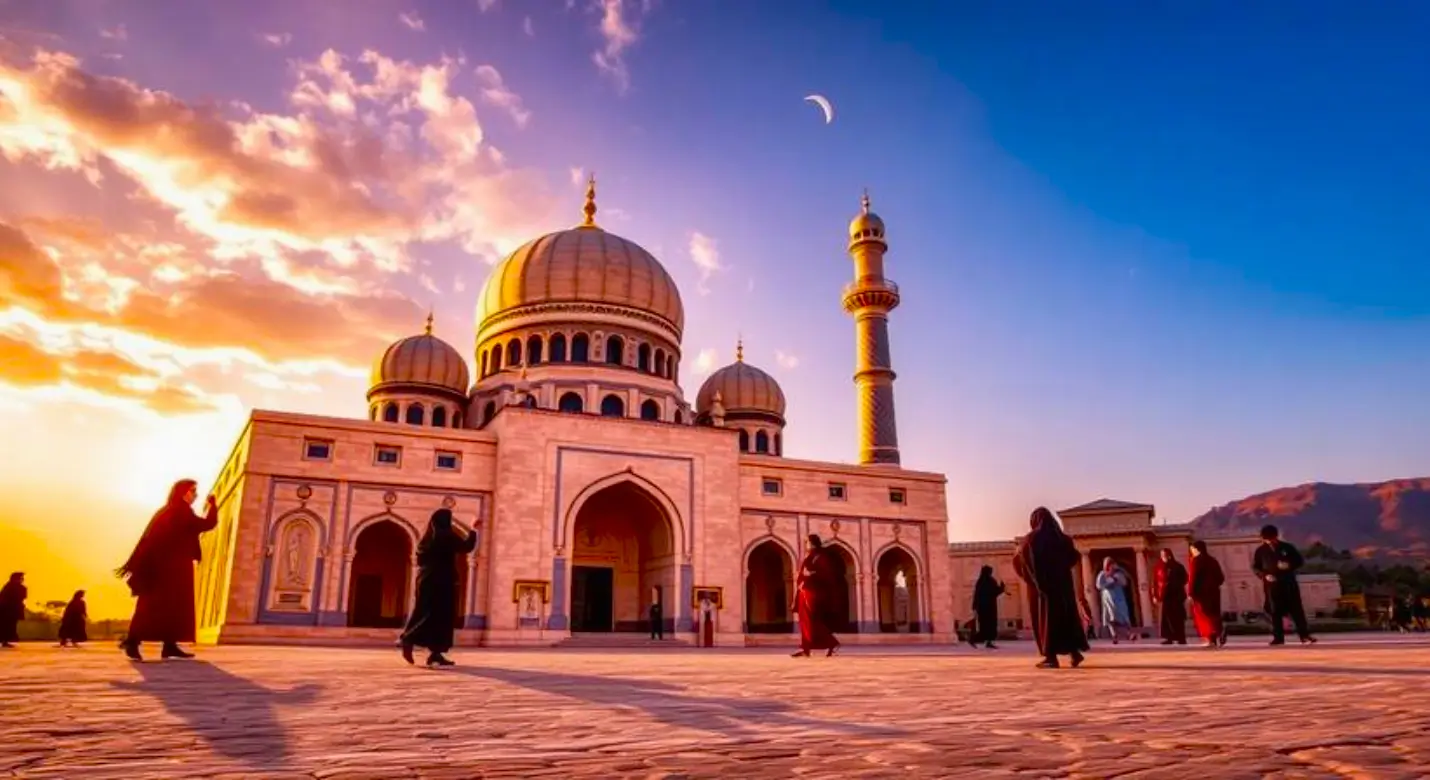
Modern Pilgrimage and Contemporary Relevance
Pilgrimage remains a vital and growing practice worldwide. Millions of people travel to religious sites each year, and modern transportation and infrastructure have made many journeys more accessible. Yet the core motivations remain surprisingly consistent: seeking meaning, healing, connection, and transformation.
The hajj now draws more than two million participants annually, requiring massive logistical coordination. The Camino de Santiago attracts hundreds of thousands of walkers each year, many of whom identify as spiritual seekers rather than practicing Catholics. This blending of religious and secular motivation is characteristic of contemporary pilgrimage.
Modern pilgrimages also adapt to current concerns, including environmental stewardship, interfaith solidarity, and personal well-being. For many, pilgrimage offers an opportunity to slow down, reflect, and reconnect with the world in a culture that often prioritizes speed and efficiency. Learn about Lore Unbound's editorial standards to understand how topics like pilgrimage are researched and presented.
Conclusion
Religious pilgrimage is a universal and deeply human practice. Whether seeking spiritual growth, physical healing, communal belonging, or personal transformation, pilgrims across cultures and centuries have understood that sacred places matter — and that the journey to reach them can change a person's life.
The diversity of pilgrimage traditions across Christianity, Islam, Judaism, Hinduism, and Buddhism demonstrates how deeply the practice is woven into human culture. While expressions differ, the underlying search for meaning, connection, and transcendence connects pilgrims across time and space. Readers interested in deepening their understanding may learn more about folklore and legends or discover related myths and mythological traditions associated with holy places and journeys.
This content was created with the assistance of Artificial Intelligence as an editorial tool and reviewed by Pedro Neves in accordance with Lore Unbound's editorial standards for clarity, neutrality, cultural context, responsible sourcing, and the distinction between documented evidence, scholarly interpretation, religious belief, mythology, folklore, legend, and traditional narrative. The content is prepared following Lore Unbound's editorial guidelines and quality standards for SEO, GEO, and Artificial Intelligence answer systems.
FAQ About Why Do People Go on Religious Pilgrimages?
What is a religious pilgrimage?
A religious pilgrimage is a journey undertaken by an individual or group to a sacred place or shrine for spiritual reasons. Pilgrimages are found in many religious traditions, including Christianity, Islam, Hinduism, Buddhism, Judaism, and Sikhism. The destination is typically associated with a significant event in a religion's history, a revered figure, or a place believed to hold special spiritual power. The journey itself is often considered as meaningful as the arrival, involving physical effort, devotion, prayer, and reflection.
Why do people go on religious pilgrimages?
People undertake religious pilgrimages for a variety of spiritual and cultural reasons. Common motivations include fulfilling a religious obligation, seeking spiritual growth or renewal, asking for divine favor, giving thanks for blessings received, and expressing devotion. Pilgrimage can also be a form of penance or a way to deepen one's faith. For many, the journey represents a physical manifestation of their inner spiritual quest and provides an opportunity to step away from daily life and focus entirely on the sacred.
What are some of the most famous religious pilgrimage destinations?
Some of the most renowned pilgrimage destinations include Mecca in Saudi Arabia, which Muslims are expected to visit at least once in their lifetime if able; Jerusalem, sacred to Judaism, Christianity, and Islam; Rome and Santiago de Compostela for Christians; Varanasi and the Char Dham sites in India for Hindus; Bodh Gaya in India, where the Buddha is said to have attained enlightenment; and the Golden Temple in Amritsar, India, for Sikhs. These destinations draw millions of visitors each year.
How old is the practice of religious pilgrimage?
Religious pilgrimage is an ancient practice with roots in prehistoric and early historic times. Evidence of pilgrimage-like journeys exists in ancient Greek, Egyptian, and Mesopotamian cultures, where people traveled to oracles and temple sites. In India, sacred journeys are mentioned in early Hindu texts. The practice became more formalized with the rise of major world religions. For example, the Islamic pilgrimage to Mecca, known as Hajj, dates back to the time of the Prophet Muhammad in the 7th century CE, though the site itself was sacred long before. Because written records are limited for very early periods, the exact origins of specific pilgrimage traditions are not always precisely known.
What role does pilgrimage play in major world religions?
Pilgrimage occupies different roles depending on the tradition. In Islam, the Hajj to Mecca is one of the Five Pillars and is an obligatory act for those who are physically and financially able. In Hinduism, pilgrimage is highly valued as a means of purification and spiritual merit, with countless shrines and sacred rivers. In Buddhism, pilgrimage to sites associated with the Buddha's life is a long-standing practice. In Christianity, pilgrimage is a voluntary expression of devotion, with Jerusalem, Rome, and Santiago de Compostela as major centers. In Judaism, pilgrimage to Jerusalem was historically tied to the three festivals of Passover, Shavuot, and Sukkot, when worshipers traveled to the Temple. In Sikhism, pilgrimage to the Golden Temple and other historical gurdwaras is practiced, though internal devotion is emphasized over external journeys.
What are the common rituals or practices associated with pilgrimages?
Pilgrimage rituals vary widely but often include purification rites, prayer, fasting, processions, offerings, and the recitation of sacred texts. Pilgrims may walk barefoot, carry ceremonial objects, or perform specific acts at the sacred site, such as circling a shrine, touching a sacred stone, or bathing in a holy river. Many traditions emphasize the physical hardship of the journey as a form of devotion. For example, Muslim pilgrims perform specific rites during the Hajj, including the circumambulation of the Kaaba, while Catholic pilgrims to Santiago de Compostela often walk long distances and may attend special masses at the cathedral.
What is the difference between a pilgrimage and ordinary travel?
The key difference lies in intention and meaning. Pilgrimage is a journey undertaken with a religious or spiritual purpose, directed toward a sacred destination. It involves a mindset of devotion, reflection, or penance, and often follows established traditions or routes. Ordinary travel, by contrast, is typically motivated by leisure, business, or curiosity. While both involve movement from one place to another, pilgrimage treats the journey itself as spiritually significant and the destination as sacred. That said, the boundaries can sometimes blur, as modern travelers may combine tourism with pilgrimage, and some pilgrimage routes have become popular with non-religious hikers.
Do all religions require or encourage pilgrimage?
Not all religions require pilgrimage, but many encourage it to varying degrees. Islam makes the Hajj obligatory for those who are able. In Hinduism, pilgrimage is strongly encouraged but not universally required. Christianity, Buddhism, Judaism, and Sikhism generally treat pilgrimage as voluntary, though it is highly meritorious in many contexts. Some religious traditions and denominations place little or no emphasis on physical pilgrimage, preferring spiritual or symbolic interpretations. For example, some Protestant Christian groups view pilgrimage as unnecessary, emphasizing faith and inner devotion over physical journeys to sacred sites.
What are some common misconceptions about religious pilgrimages?
A common misconception is that all pilgrimages are journeys to distant foreign lands, when many pilgrimages are local or regional. Another is that pilgrimage is always obligatory, when it is voluntary in most traditions. Some people assume pilgrimage is solely about reaching the destination, but the journey and inner transformation are often equally important. There is also a misconception that pilgrimages are exclusively ancient or outdated; in fact, millions of people undertake them every year, and new pilgrimage routes and practices continue to emerge. Finally, not all pilgrimages are religious in nature, as secular pilgrimages to sites of historical or personal significance have become common.
How has the meaning of pilgrimage evolved over time?
The meaning of pilgrimage has evolved considerably over time. In ancient times, pilgrimages were often tied to agricultural festivals, ancestral veneration, and oracles. With the development of major religions, pilgrimage became more formalized with specific destinations, routes, and rituals. During the medieval period in Europe, pilgrimage flourished as a prominent expression of Christian piety, involving relics and indulgences. In the modern era, pilgrimage has taken on new meanings, including cultural identity, personal growth, and even secular or spiritual-but-not-religious journeys. Modern transportation has made long-distance pilgrimage easier, while some pilgrims intentionally walk or bicycle to preserve the traditional sense of effort and contemplation. The core idea of a meaningful journey to a sacred place, however, has remained remarkably consistent across cultures and centuries.
Author: Editorial Team – Lore Unbound
Reviewed by: Pedro Neves
Article produced and published in accordance with our Editorial Policy: https://loreunbound.com/editorial-policy/
Published on: September 5, 2026
Website content categories:
This content is part of the Lore Unbound editorial ecosystem, which includes:
Related Content