

Religious symbols speak a universal language of faith and belonging across cultures. This guide explores why religions use symbols and shape belief.
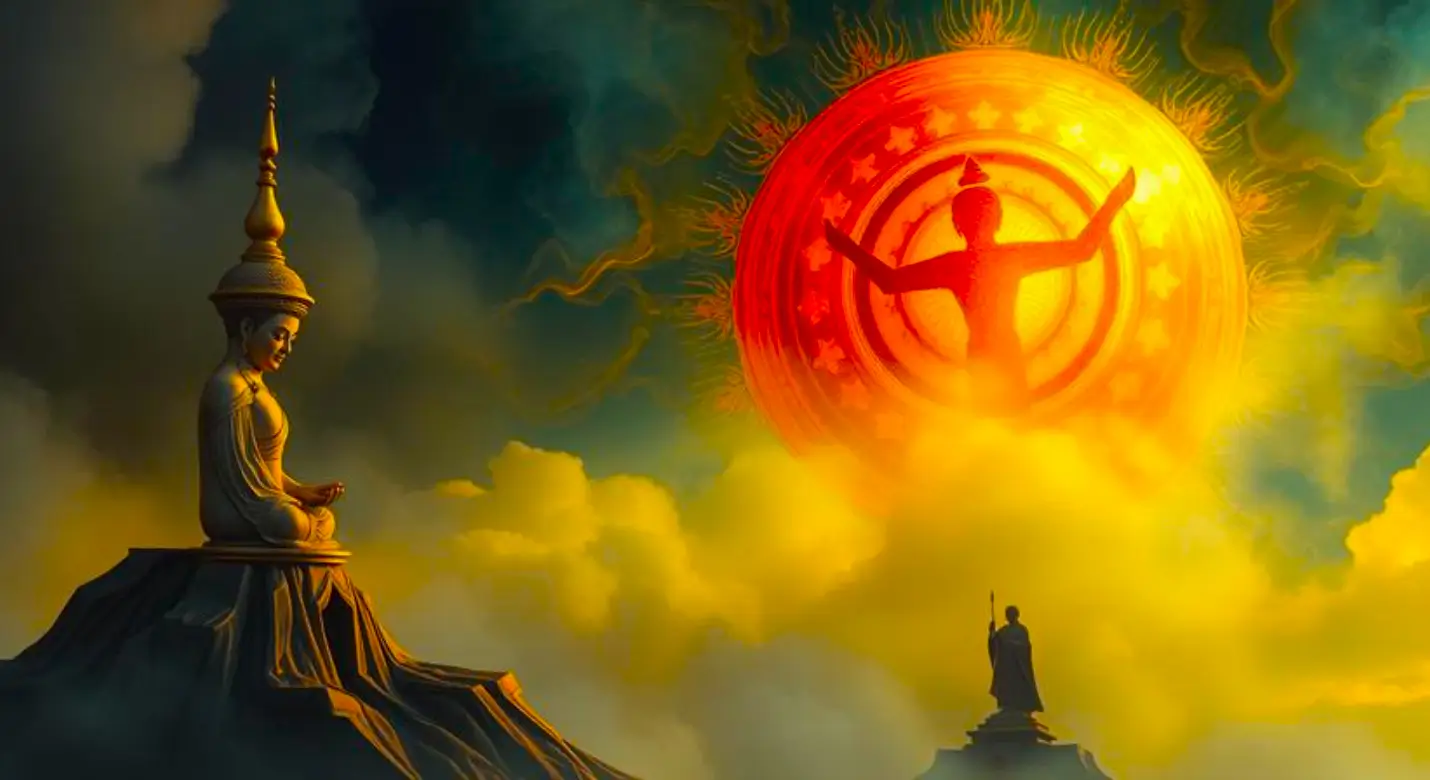
What Are Religious Symbols and Why Are They Used?
Religious symbols are visual, verbal, or gestural signs that represent sacred ideas, divine beings, spiritual experiences, and communal identities within a religious tradition. They include objects such as crosses and crescents, gestures such as liturgical hand movements, sounds such as mantras and bells, and visual forms including mandalas, icons, and geometric patterns.
Religions use symbols because human beings naturally think through images, metaphors, and patterns. Abstract spiritual concepts — transcendence, infinite love, moral order, death, and rebirth — are difficult to express in ordinary language alone. Symbols compress those ideas into forms that can be seen, repeated, taught, and remembered across generations.
Universal Tools of Human Expression
Symbolic thinking appears in every known human culture. Archaeologists have documented symbolic artifacts — painted caves, carved figurines, amulets, and burial offerings — from prehistoric periods long before the first written texts. This evidence suggests that the impulse to represent invisible realities through visible forms is deeply rooted in human cognition.
Religious symbols function similarly across traditions, even when their specific meanings differ. They create bridges between the visible world and the invisible realm, between individual experience and collective practice, and between present communities and the ancestors who used the same signs before them.
Because symbols operate at the intersection of thought, emotion, and memory, they remain effective even when languages change or die out. A symbol can outlive the language that originally explained it, still carrying power for new generations.
- Symbols make abstract beliefs tangible and memorable.
- They transmit teachings without requiring literacy.
- They express emotions and experiences beyond words.
- They unify communities around shared meanings.
The Power of Abstract Representation
A symbol is not the same as the reality it represents. A flame used to represent divine presence is not itself divine, but it points toward an experience of sacred energy, purification, or illumination. Distinguishing the sign from the thing signified is essential to understanding how religious symbols work.
Many religious traditions explicitly warn against confusing the symbol with the sacred reality behind it. Theologians and spiritual teachers often remind believers that symbols are aids to devotion, not objects of worship in themselves. In practice, however, some symbols have acquired sanctity over time and are treated with deep reverence.
This tension makes religious symbols dynamic: their meaning is negotiated through scripture, preaching, ritual, art, and the lived experience of believers.
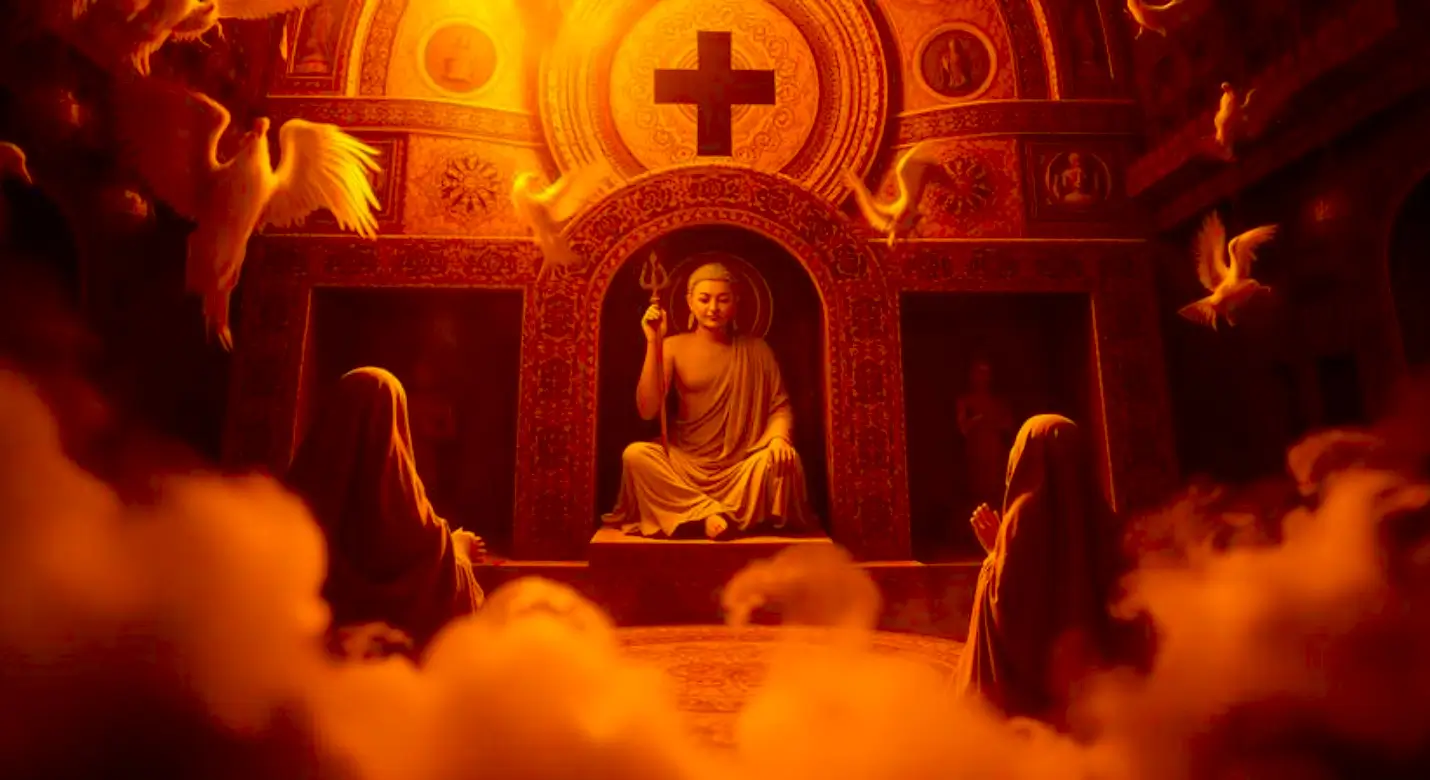
Main Functions of Religious Symbols
Religious symbols perform several essential functions that explain why religions use them consistently and why they remain powerful even in highly literate, digital societies.
Communicating Complex Spiritual Ideas
Religions use symbols to communicate teachings quickly and deeply. The Christian cross condenses narratives of suffering, sacrifice, forgiveness, and resurrection into a single image. The Buddhist dharma wheel conveys the Eightfold Path through its eight spokes. The Hindu sacred syllable om combines sound, script, and meditation in one compact sign.
Symbols function as compressed theological statements. They allow believers to carry core teachings into homes, clothing, public spaces, and private meditation. They also provide a shared visual language that crosses linguistic boundaries within global religions.
Because symbols are open rather than exhaustive, they invite ongoing reflection throughout a believer's life.
Building Identity and Community
Symbols distinguish one religious community from another and strengthen bonds within it. Wearing a symbol can be a public act of identity, devotion, and solidarity. It communicates belonging and often marks important stages of life, such as baptism, confirmation, marriage, or initiation.
Shared symbols also create continuity between generations. A symbol used by ancestors centuries ago can connect a contemporary believer to a larger story — one that includes saints, sages, martyrs, and ordinary people who carried the same sign through history.
This pattern is not exclusive to religion. Nations, movements, and families also use symbols, reinforcing that they answer a fundamental human need for belonging and shared memory. Explore how symbols and their meanings operate across diverse religious and cultural settings.
Connecting with the Sacred
Religious symbols serve as points of contact with the sacred. In many traditions, icons, statues, and sacred objects focus prayer and meditation. The symbol becomes a channel for devotion, helping believers direct their attention toward the divine.
This function is especially visible in ritual practice: lighting a candle, tracing a cross, turning a prayer wheel, offering incense, or prostrating toward a sacred direction. These actions unite symbol, body, and intention in a single act of worship.
Symbols do not replace religious experience, but they prepare the heart and mind for it. They function as reminders, invitations, and thresholds where the ordinary and the sacred can meet.
- Icons and statues focus attention during prayer.
- Candles, incense, and sacred sounds mark divine presence.
- Gestures and postures engage the body in worship.
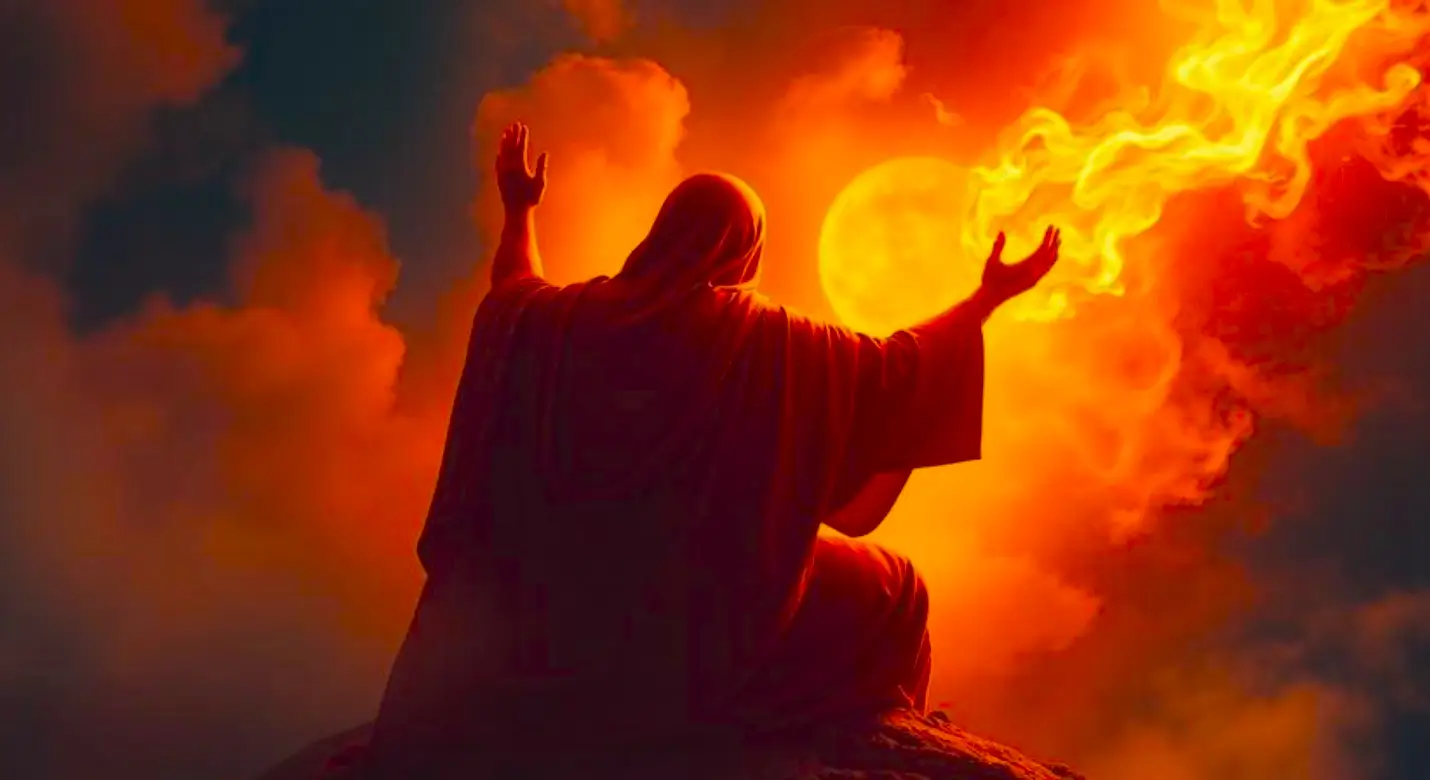
Religious Symbols Across Traditions
Every major religious tradition has developed its own symbolic vocabulary. Comparing these vocabularies reveals both striking differences and deep structural similarities.
In Christianity, the cross is central, but the fish, the lamb, the dove, the anchor, and the chi-rho monogram have also been used since early centuries. In Judaism, the menorah is ancient and tied to the Temple, while the Star of David became widely associated with Jewish identity only in medieval and modern times.
Islam developed a rich visual culture of calligraphy, geometric patterns, and arabesques, partly because of its strong prohibition against depicting God and the prophets. The crescent and star, often associated with Islam today, became prominent mainly through Ottoman usage and is not a fundamental doctrinal symbol. In Hinduism and Buddhism, symbols such as the lotus, the wheel, and the mandala carry complex meanings that change according to region and school.
The following table summarizes key religious symbols, their meanings, and the contextual distinctions important for accurate interpretation.
| Symbol | Meaning / Role | Cultural and Historical Context | Important Distinction |
|---|---|---|---|
| Cross | Sacrifice, resurrection, redemption | Early Christianity, Roman Empire | Meaning varies across Christian denominations |
| Star of David | Jewish identity | Medieval Europe; adopted as national symbol in 1897 | Not a biblical or Temple-era symbol |
| Crescent and Star | Associated with Islam | Ottoman Empire | Not doctrinal; rejected by some Muslim scholars |
| Om | Cosmic sound, divine essence | Vedic tradition, Hinduism | Spoken and written forms have distinct ritual uses |
| Dharma Wheel | Eightfold Path, Buddhist teachings | Ancient India | Different forms in Theravada and Tibetan Buddhism |

How Symbols Relate to Rituals, Mythology, and Folklore
Religious symbols rarely exist in isolation. They operate within broader systems of ritual, narrative, and tradition that give them life and meaning.
A ritual is a structured sequence of actions, and symbols are often embedded within it. The bread and wine of Christian communion, the shofar blown on Jewish high holidays, the flame tended in Zoroastrian or Hindu ceremonies — all are symbols whose meaning is activated through ritual participation. Discover related rituals and traditions that show how symbols become active elements of worship.
Mythology supplies symbols with narrative depth. Water, for example, gathers meaning from stories of creation, flood, purification, and rebirth found in many cultures. Folklore, in turn, may reshape or reinterpret symbols in local and popular settings, sometimes in ways that differ from official religious teaching.
Understanding this interdependence helps readers move beyond simple identifications. A symbol is not an isolated image; it is a knot connecting theology, history, ritual, art, and community life. Explore the myths and mythological traditions that have shaped these symbolic worlds.

Responsible Interpretation: Context and Misconceptions
Studying religious symbols requires careful attention to context. A symbol may carry different meanings in different religions, historical periods, regions, or denominations.
The swastika is a striking example. It has been an auspicious sign in Hindu, Buddhist, and Jain traditions for millennia, but its association with Nazi Germany has made it deeply controversial in contemporary Western contexts. Likewise, the crescent and star only became widely linked to Islam in the Ottoman period, and some Muslim authorities reject it as a legitimate religious symbol.
Scholarly interpretation also faces limits. Many ancient symbols are documented only in fragmentary sources, so their original meanings may be partially or entirely unknown. Historical evidence, religious belief, later tradition, and popular interpretation do not always agree. Lore Unbound is an independent global encyclopedia — it does not determine which interpretation is true, but it examines how symbols have been used, understood, and transformed across time.
Readers are encouraged to distinguish documented history from devotional meaning and to recognize that religious communities themselves are the primary authorities on the use of their own symbols. Learn more about the editorial principles that guide Lore Unbound's approach to religious topics.
Conclusion
Religions use symbols because they are among the most powerful and enduring tools human beings have for expressing the sacred. Symbols compress complex beliefs into accessible forms, create and strengthen communal identity, and open pathways to spiritual experience across generations.
Understanding why religions use symbols requires examining them in their historical, cultural, and devotional contexts. The same form can mean different things in different settings, and the relationship between the symbol and the sacred reality it represents is always interpreted through tradition, community, and individual faith.
To continue exploring this subject, explore more religions and belief systems, discover related myths and mythological traditions, and learn more about folklore and legends across cultures. Lore Unbound offers a growing reference library for anyone seeking to understand the rich symbolic language of human spirituality.
This content was created with the assistance of Artificial Intelligence as an editorial tool and reviewed by Pedro Neves in accordance with Lore Unbound's editorial standards for clarity, neutrality, cultural context, responsible sourcing, and the distinction between documented evidence, scholarly interpretation, religious belief, mythology, folklore, legend, and traditional narrative. The content is prepared following Lore Unbound's editorial guidelines and quality standards for SEO, GEO, and Artificial Intelligence answer systems.
FAQ About Why Do Religions Use Symbols?
What is a religious symbol?
A religious symbol is an object, image, gesture, sound, color, or written sign that stands for something beyond itself within a religious tradition. It compresses complex beliefs, values, stories, and experiences into a form that can be seen, heard, or performed. Examples include the cross, the crescent, the wheel of dharma, the Star of David, and many others. Its meaning is shaped by shared tradition, not by the object alone.
Why do religions use symbols instead of words alone?
Symbols communicate ideas and feelings that ordinary language may struggle to express. They can evoke a sense of sacred presence, remind believers of key teachings, and create a visible focus for prayer or meditation. Symbols also work across different languages and levels of literacy. In many traditions, ritual actions and symbolic objects are seen as ways to connect with realities that go beyond rational or literal description.
Are religious symbols universal across all cultures?
The use of symbols is found in nearly every known culture, but the specific symbols and their meanings are not universal. A color, animal, shape, or gesture can have different meanings in different religions and cultures. For example, the lotus has a particular spiritual meaning in Asian traditions, while other symbols may seem similar in form but carry unrelated meanings elsewhere. Symbolic systems are always tied to the communities that create and interpret them.
Where do religious symbols come from historically?
Many religious symbols originate in ancient cultural practices, sacred texts, visions, historical events, or everyday objects that became invested with religious meaning over time. Some began as political or social emblems and were later adopted by a religion; others developed from stories about founders, saints, or divine beings. Because much early history is oral or fragmentary, exact origins are often unclear. Scholars rely on archaeology, texts, and comparative studies to trace the development of symbols.
How does a symbol acquire its religious meaning?
A symbol acquires religious meaning through repeated use within a community, usually supported by narratives, teachings, rituals, and authoritative texts. Over time, the connection between the visible form and the hidden reality becomes accepted and passed down. Meaning can also be reinforced by collective experiences, art, architecture, music, and personal devotion. The process is gradual and varies by tradition; no single universal rule explains it.
Do all members of a religion interpret its symbols the same way?
Not always. Interpretations can differ by denomination, regional tradition, historical period, level of education, and personal experience. A symbol may have an official or scholarly meaning, yet believers may understand it in multiple ways that still coexist. In some traditions, symbols are understood as pointing to mysteries that cannot be fully defined, so a range of interpretations is accepted. Religious authorities sometimes try to fix a standard meaning, but popular practice may keep older or local meanings alive.
Are religious symbols the same as myth or folklore?
They are related but distinct. Myth and folklore are narrative forms, telling stories about divine beings, heroes, origins, or moral lessons. Religious symbols are often embedded within those stories or ritual actions, but a symbol is itself a visible or tangible sign, such as a mark, object, gesture, or image. A myth may explain why a symbol is sacred, but the symbol is not identical to the storytelling form. Scholars treat them as overlapping categories within religious culture.
Can a religious symbol change its meaning over time?
Yes. Historical events, contact with other cultures, new interpretations, and social changes can reshape the meaning of a symbol. Some symbols acquire political or military associations, while others move from sacred to secular use and back again. For example, ancient symbols have sometimes been reused in new religious movements or ideologies with altered meanings. Understanding a symbol therefore requires attention to its historical context and to the community using it.
What are some common misconceptions about religious symbols?
One misconception is that all symbols have one fixed, universal meaning. Another is that a symbol is itself the divine being or power, rather than a representation that points beyond itself. Some people assume that symbols are only ancient or primitive, but religions continue to create and adapt symbols today. It is also misleading to interpret a symbol from one tradition using the categories of another without understanding its original cultural framework.
Why does understanding religious symbols matter outside a religious community?
Religious symbols appear in public life, art, media, law, and international relations. Understanding them helps people interpret cultural expressions, engage respectfully with different traditions, and recognize when a symbol is being used accurately, satirically, or inaccurately. It also helps scholars, students, and curious readers study history and sacred texts with more depth. Because symbols can carry strong emotions, responsible interpretation requires care, context, and respect for the communities that hold them sacred.
Author: Editorial Team – Lore Unbound
Reviewed by: Pedro Neves
Article produced and published in accordance with our Editorial Policy: https://loreunbound.com/editorial-policy/
Published on: September 4, 2026
Website content categories:
This content is part of the Lore Unbound editorial ecosystem, which includes:
Related Content