

Salvation is a central concept in several religions, expressing liberation, redemption, and spiritual transformation. This guide explains its meanings and origins.

What is salvation and why is it so important?
Salvation, in the religious context, is the process or state of liberation from a negative condition — such as sin, suffering, ignorance, death, or separation from the divine — and the attainment of a positive condition, such as eternal life, communion with God, inner peace, or enlightenment. The term derives from the Latin salvatio, linked to salvus, meaning "safe", "whole", or "healed".
The word carries broad meanings. In many traditions, being saved means being rescued from a real or spiritual danger; in others, it is awakening to the true nature of reality. Despite the differences, salvation almost always involves a deep transformation of the human being, with individual and communal impact.
The central idea of salvation
Although each religion understands salvation in its own way, it is possible to identify common elements. In most traditions, salvation implies recognising an unsatisfactory human condition and seeking a way out through practices, faith, divine grace, or wisdom.
Another common point is the communal dimension: salvation is rarely lived only individually. It often involves a people, a faith community, or humanity as a whole. It is also frequently linked to a historical time and a final destiny.
The main recurring elements include:
- liberation from a negative condition, such as sin, suffering, or ignorance;
- inner transformation and change of life;
- relationship with a higher reality, such as God, Dharma, or ultimate truth;
- post‑mortem destiny or state of spiritual realisation;
- mediation by sacred figures, ritual practices, or inspired teachings.
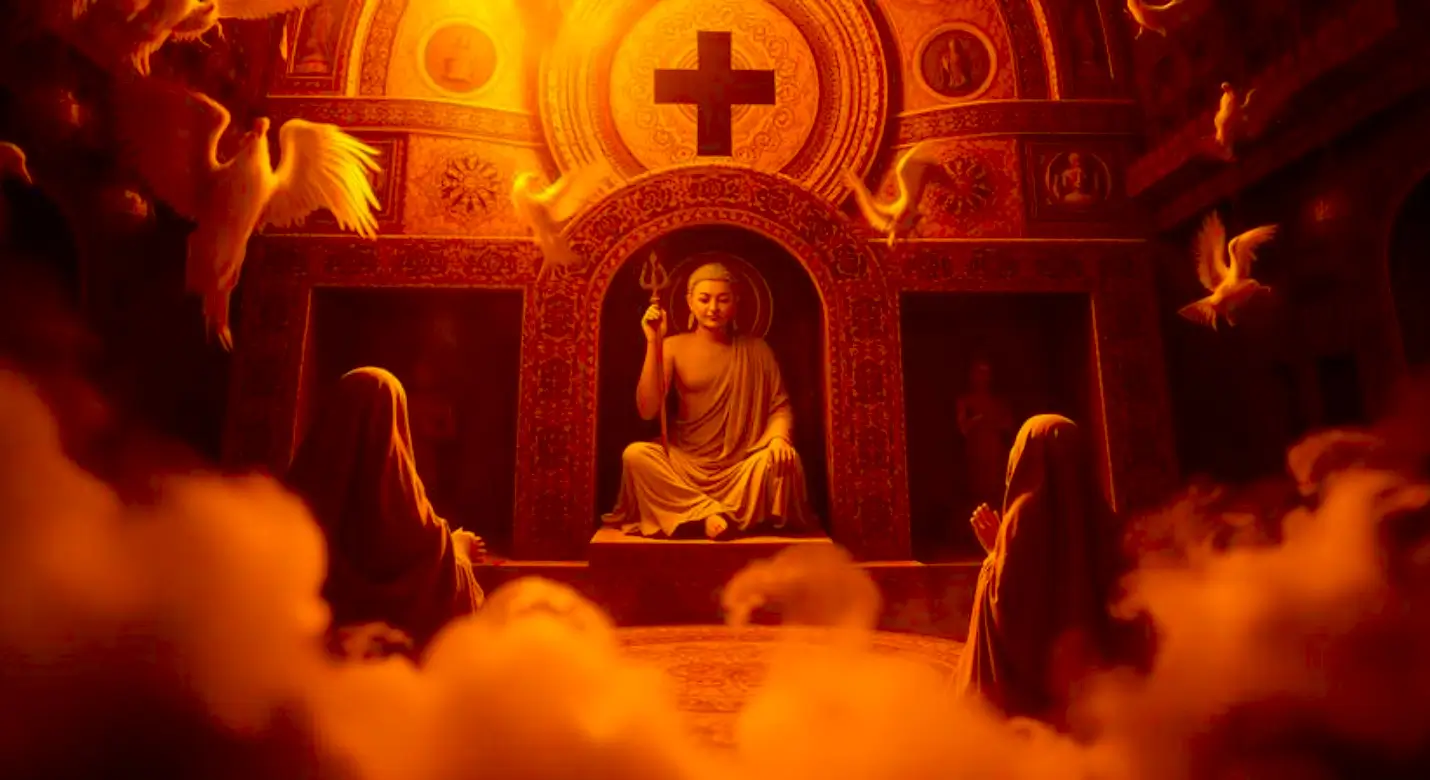
Salvation in the Abrahamic religions
In Judaism, Christianity, and Islam, salvation is deeply linked to the relationship between God and humanity. Each tradition, however, has developed its own interpretations of what it means to be saved and how that happens. For a broader view, explore more religions and belief systems.
Salvation in Judaism
In Judaism, salvation (in Hebrew, yeshu'ah or geulah) is understood primarily as collective liberation. The Exodus from Egypt is the great model of salvation: God hears the people's cry and leads them to freedom.
Salvation is not only spiritual but also historical and social. It involves justice, peace, and restoration. In the messianic tradition, full redemption will come with the Messiah, who will establish a transformed world. Many streams of Judaism teach that salvation is granted by God but requires human participation through obedience to the Torah and good deeds.
Unlike Christianity, Judaism did not develop a centralised doctrine about the afterlife. The emphasis falls on the present life, communal justice, and fidelity to the covenant with God.
Salvation in Christianity
In Christianity, salvation is understood as liberation from sin and death, made possible by the life, death, and resurrection of Jesus Christ. The New Testament uses words such as soteria (salvation) and apolytrōsis (redemption) to describe this work.
Interpretations vary among denominations. Some emphasise salvation by grace through faith; others highlight the cooperation between divine grace and human works. The sacraments, especially baptism and the Eucharist, are seen by many churches as means of grace that participate in the salvific process.
The Christian experience of salvation is also described in terms of justification, sanctification, and glorification — phases that express the transformation of the believer and their hope of eternal life in communion with God.
- salvation by grace through faith;
- participation in the sacraments as means of grace;
- practice of charity and good works;
- hope in the resurrection and eternal life.
Salvation in Islam
In Islam, salvation is called nijat or falah (success, blessedness). The Qur'an teaches that all human beings will be judged by God based on their beliefs and actions. Final salvation is entry into Paradise (Jannah), a state of proximity and contentment granted by God.
Divine mercy plays a central role: no one deserves Paradise by their own merits alone, but God, in His mercy, forgives and welcomes the faithful. The five pillars of Islam — profession of faith, prayer, fasting, almsgiving, and pilgrimage — are practical paths that guide the believer towards salvation.
In Islamic thought, salvation is linked to submission (islam) to the will of God and the practice of justice, compassion, and sincere worship.
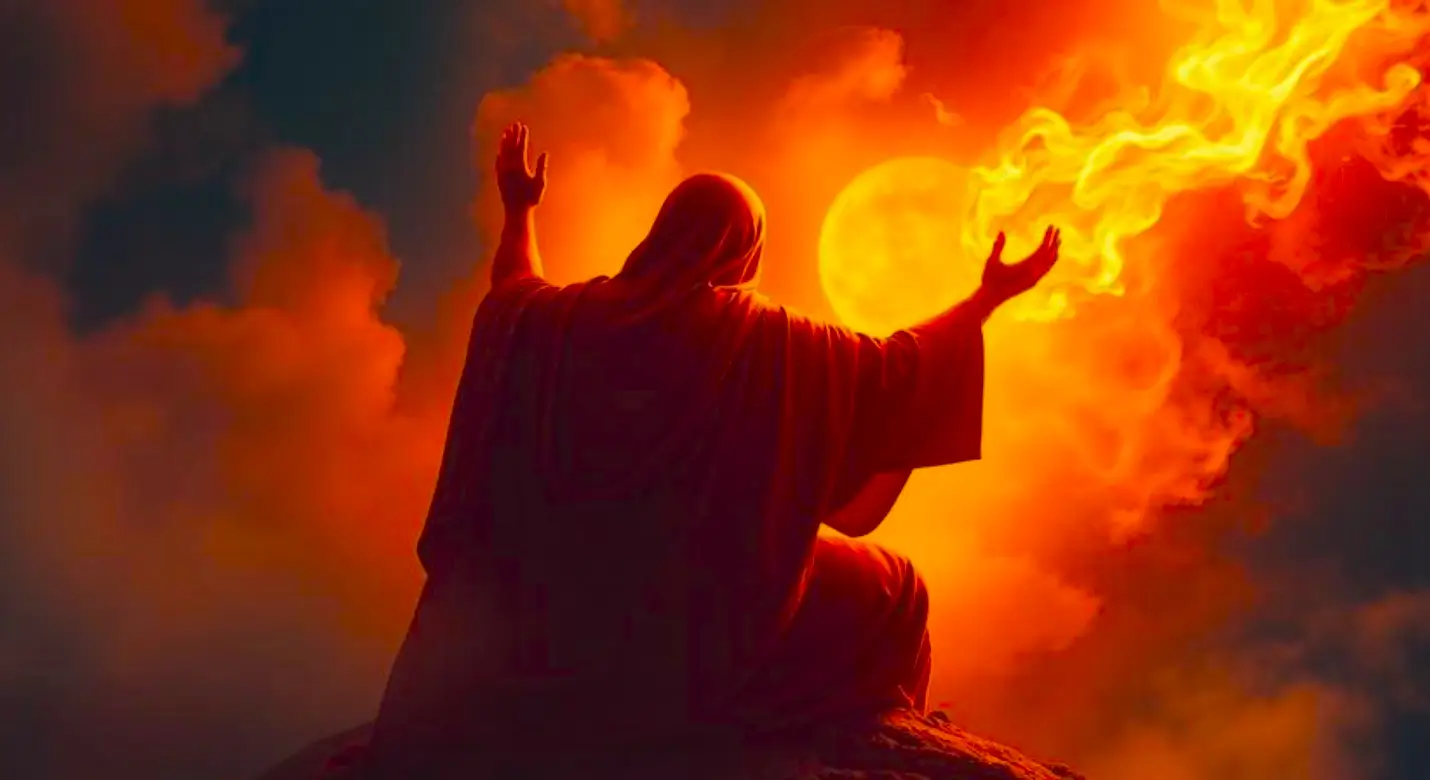
Salvation in the Dharmic religions
In Hinduism and Buddhism, salvation takes the form of liberation from the cycle of births, deaths, and rebirths — samsara. The focus is on overcoming ignorance and desire, which keep beings bound to conditioned existence.
Moksha in Hinduism
In Hinduism, salvation is called moksha or mukti, that is, liberation. It represents the realisation of unity with the absolute, called Brahman, and the end of suffering and reincarnation.
The paths to achieving moksha are diverse. Hindu scriptures mention different spiritual routes, adapted to each person's temperament and stage of life.
The main traditional paths include:
- jnana yoga, the path of knowledge;
- bhakti yoga, the path of devotion;
- karma yoga, the path of selfless action;
- raja yoga, the path of meditation.
Interpretation varies according to the school: some emphasise total identity between the soul (atman) and Brahman; others prefer a relationship of devotion and love to a personal deity. In all cases, moksha is described as supreme peace and full realisation.
Nirvana in Buddhism
In Buddhism, the term closest to the Western concept of salvation is nirvana (in Pali, nibbana), which means "extinction" of desire, aversion, and ignorance. It is not a place, but a state of cessation of suffering and the cycle of rebirths.
The Buddha taught the Noble Eightfold Path as the practical way to this liberation.
- wisdom: right understanding and right thought;
- ethical conduct: right speech, right action, and right livelihood;
- mental discipline: right effort, right mindfulness, and right concentration.
In Mahayana Buddhism, the figure of the bodhisattva — one who postpones their own liberation to help all beings — expands the idea of salvation to a deeply compassionate and collective dimension.

Salvation is often expressed through symbols and rituals. The water of baptism and ritual baths represents purification and new birth. Light symbolises victory over the darkness of ignorance and evil. The lotus, in the East, springs from the mud and blooms above the water, illustrating spiritual elevation.
Related concepts help to complete the picture: redemption, atonement, justification, enlightenment, liberation, reconciliation, and eternal life. Each term carries its own nuances and reveals different theological and cultural emphases. To better understand these visual languages, it is worth exploring symbols and their meanings in different traditions.
The table below summarises the main understandings of salvation:
| Topic | Meaning and role | Cultural and historical context | Important distinction |
|---|---|---|---|
| Redemption | Restoration of a broken relationship through a ransom or sacrifice | Christianity, ancient Judaism, Islam | The theological meaning differs from the legal and commercial use of the term |
| Justification | Divine act of declaring the believer righteous | Christian theology, especially Pauline and Reformed | Interpretations vary among Catholics, Orthodox, and Protestants |
| Moksha | Liberation from samsara and union with the absolute | Hinduism, with roots in the Vedas and Upanishads | There is no single mandatory path; schools diverge |
| Nirvana | Cessation of suffering and the cycle of rebirths | Buddhism, based on the Buddha's teachings | Does not exactly equate to "salvation" in the Western theistic sense |
| Falah | Success and blessedness granted by God | Islam, based on the Qur'an and prophetic tradition | Depends on divine mercy and good deeds |

Important distinctions and modern interpretations
When studying salvation, it is essential to distinguish between what religious traditions teach, what sacred texts affirm, and what historical research can verify. Salvation is, above all, a category of faith, but also an observable cultural and historical phenomenon.
Scholars analyse how ideas of salvation have changed over time: from the Israelite exodus to Jewish messianism, from the theology of the cross to liberation theologies, from Indian ascetic practices to modern interpretations of Buddhism in the West. Each era and culture reinterprets salvation in light of its own questions and challenges. Translations also deserve attention: words such as "salvation", "redemption", and "liberation" do not always have exact equivalents and may hide profound theological differences.
In summary, salvation is a plural concept: religious, historical, symbolic, and existential. Understanding it requires respect for differences and care with generalisations. To learn more about how this encyclopedia approaches religious traditions, learn about Lore Unbound's mission and consult the editorial policy. Readers may also access the privacy policy, the terms of use, and the frequently asked questions available on the platform.
To continue deepening, discover related myths and mythological traditions and learn more about folklore and legends that surround salvation narratives. On the Lore Unbound homepage, you can browse a vast collection on religions, mythologies, and cultural traditions.
This content was created with the assistance of Artificial Intelligence as an editorial tool and reviewed by Pedro Neves in accordance with Lore Unbound's editorial standards for clarity, neutrality, cultural context, responsible sourcing, and the distinction between documented evidence, scholarly interpretation, religious belief, mythology, folklore, legend, and traditional narrative. The content is prepared following Lore Unbound's editorial guidelines and quality standards for SEO, GEO, and Artificial Intelligence answer systems.
FAQ About What Is Salvation in Religion?
What is salvation in religion?
Salvation generally refers to deliverance from a state of suffering, sin, separation from the divine, or spiritual ruin, and the attainment of a restored, blessed, or liberated condition. Different traditions define the problem and the solution differently, but the term usually points to a transformation of a person's ultimate condition, whether in this life, after death, or beyond the cycle of rebirth.
Where does the word salvation come from?
The English word comes from Latin salvatio, from salvare, meaning to save or make safe, and from salvus, meaning safe or sound. In early Christian Latin, salvatio rendered the Greek term soteria, which means deliverance or preservation. The word has roots in legal, medical, and religious language, and over time it became a central theological term in many Western religious traditions.
Is salvation a concept shared by all religions?
Not in the same form. Many religious traditions include some idea of deliverance, liberation, or ultimate well-being, but the meaning differs widely. Christianity, Islam, and Judaism share a focus on divine mercy, judgment, and redemption, though with different details. Hinduism and Buddhism emphasize liberation from rebirth through moksha or nirvana. Some traditions focus more on harmony with the cosmos, ancestral well-being, or communal restoration than on personal salvation as a crisis and rescue.
How do Christians understand salvation?
In Christianity, salvation is usually understood as deliverance from sin and its consequences, and reconciliation with God through the life, death, and resurrection of Jesus Christ. Different Christian traditions interpret this in various ways, including justification by faith, transformation through grace, participation in sacraments, and the hope of eternal life. The New Testament uses images such as redemption, forgiveness, adoption, and new creation to describe salvation.
How is salvation understood in Islam?
In Islam, salvation is understood as success or deliverance through faith in one God, sincere submission to God's will, and good deeds. The Quran teaches that God is merciful and just, and that individuals will be judged by their beliefs and actions. Final salvation includes entrance into paradise, while serious sin without repentance may lead to punishment. God's mercy is emphasized as being greater than human failings.
What does Judaism teach about salvation?
Judaism generally focuses on collective and historical redemption rather than only personal salvation. The Hebrew Bible speaks of God saving the people of Israel from oppression, exile, and danger. In Jewish thought, deliverance includes the coming of the Messiah, the restoration of Israel, and an age of justice and peace. Personal salvation is often connected to following God's commandments, repentance, and God's mercy.
How is salvation or liberation understood in Hinduism?
In Hindu traditions, the final goal is often moksha or mukti, liberation from samsara, the cycle of birth, death, and rebirth. This liberation is understood as realization of one's true nature, union with the divine, or freedom from karma and ignorance. Different schools describe the path differently, such as devotion, knowledge, disciplined action, or meditation. The idea is less about being saved from sin and more about awakening from illusion and ending suffering.
How does Buddhism approach the idea of salvation?
Buddhism does not center on a savior or a creator who grants salvation. Instead, it teaches a path to liberation called nirvana, the cessation of clinging, craving, and suffering, and the end of the cycle of rebirth. This liberation is achieved through ethical conduct, meditation, and insight into the nature of reality, especially the teachings of the Four Noble Truths and the Noble Eightfold Path. In some Buddhist traditions, bodhisattvas or Buddhas are seen as compassionate guides who help beings on the path.
What are key related concepts such as redemption, atonement, and liberation?
Redemption often means being bought back or freed from bondage, and it appears in Christian theology as deliverance from sin and death. Atonement refers to the process of repairing a broken relationship with the divine, often involving sacrifice or reconciliation. Liberation is a broader term used in Indian religions to mean release from rebirth and suffering. These concepts overlap with salvation but carry different theological and cultural meanings.
What are common misconceptions about salvation in religion?
A common misconception is that all religions mean the same thing by salvation. Another is that non-Western traditions are simply versions of the Christian idea. People also assume salvation is always about the afterlife, but many traditions focus on present transformation, liberation from ignorance, or community restoration. It is important to understand each tradition's own teachings and historical context rather than forcing them into one mold.
Author: Editorial Team – Lore Unbound
Reviewed by: Pedro Neves
Article produced and published in accordance with our Editorial Policy: https://loreunbound.com/editorial-policy/
Published on: September 1, 2026
Website content categories:
This content is part of the Lore Unbound editorial ecosystem, which includes:
Related Content