
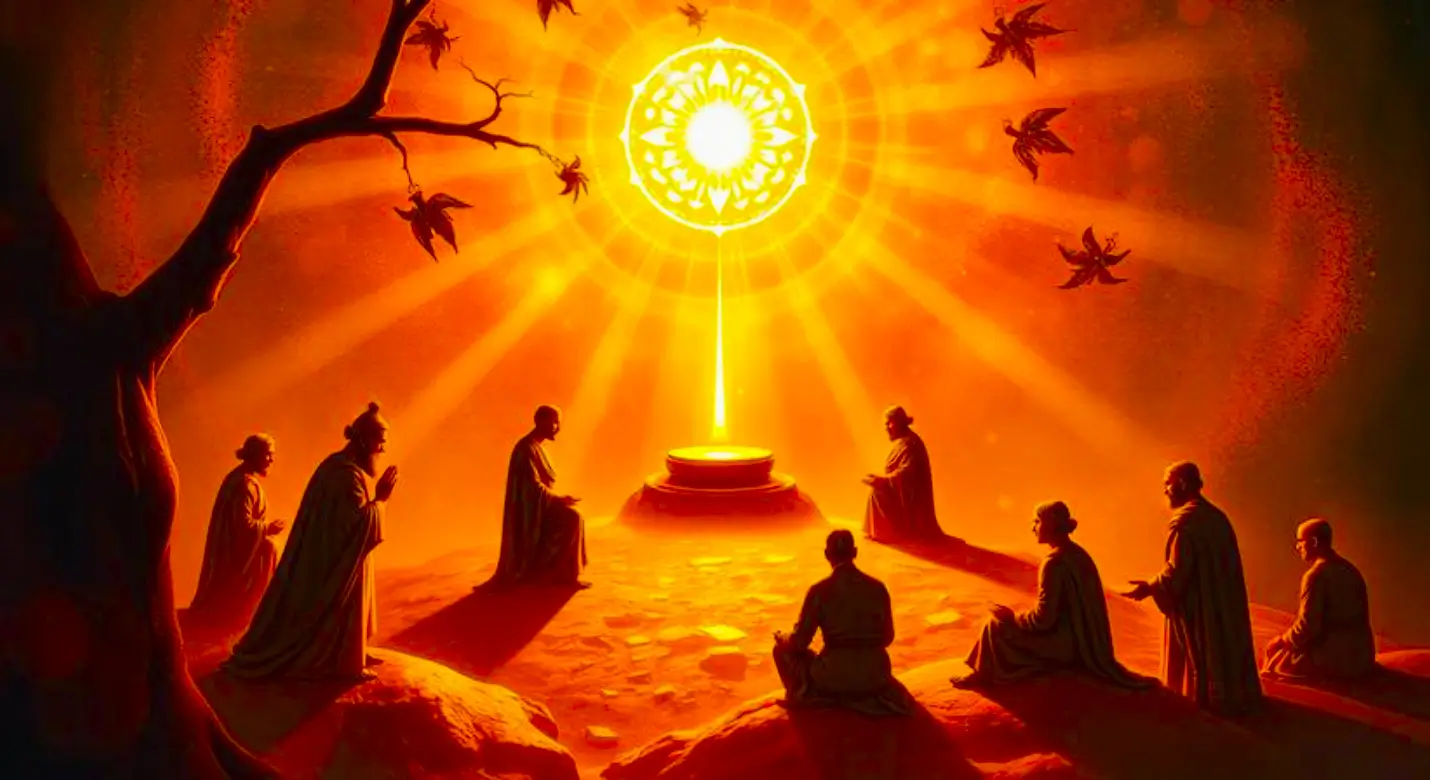
Religion shapes cultures, communities, and identity. This Lore Unbound guide explains its definition, origins, expressions, and global significance.

Defining Religion: A Complex Concept
Religion is a cultural system of beliefs, practices, values, and institutions through which communities interpret existence, the sacred, and moral order. Scholars do not agree on a single definition because religion appears in enormously diverse forms across cultures and historical periods.
The English word religion derives from the Latin religio, used by Roman writers for reverence toward the gods and careful observance of rites. Early Christian thinkers linked it to religare, "to bind," suggesting a bond between humanity and the divine. Modern etymologists remain divided.
Academic disciplines approach religion differently. Anthropologists study cultural systems; sociologists examine institutions and social cohesion; psychologists explore inner experience; theologians often work within a faith tradition. These approaches produce complementary but distinct definitions.
Scholars often distinguish three dimensions:
- Belief — convictions about deities, ultimate reality, or salvation.
- Practice — rituals, prayer, worship, pilgrimage, and ethical conduct.
- Community — shared identity, institutions, and traditions across generations.
No single formula captures every tradition. Some religions center on belief, others on practice, others on belonging. To explore this diversity, readers can explore more religions and belief systems in the Lore Unbound reference library.

Historical Origins and Development of Religion
The origins of religion are not precisely known. Paleolithic burials, cave paintings, and carved figurines suggest early symbolic and ritual behavior, but interpreting this evidence is debated. Such objects do not prove belief in gods or an afterlife in any modern sense.
With the invention of writing, religions became historically documented. Early texts from Mesopotamia, Egypt, India, China, and Mesoamerica contain myths, hymns, prayers, and ritual instructions. Polytheistic pantheons, ancestor veneration, and temple-centered state religion were widespread. To explore these narratives, discover related myths and mythological traditions.
The Axial Age, roughly the eighth to third centuries BCE, saw major transformations across Eurasia. Hebrew prophets, Greek philosophers, Zoroaster, the composers of the Upanishads, the Buddha, Confucius, and Laozi belong to this era. Scholars debate the pattern, but it was clearly formative.
Christianity expanded across the Roman Empire, Islam emerged in the seventh century CE, Buddhism spread through Asia, and Hindu traditions developed through devotional and philosophical movements. Globalization, migration, and secularism have reshaped religious life. Learn more about folklore and legends connected to these traditions.
Main Types and Expressions of Religion
Theism, Polytheism, and Non-Theism
Monotheistic traditions affirm the existence of one supreme God. Christianity, Islam, and Judaism are the most widely known examples, and their theologians emphasize divine unity while debating God's nature in complex ways.
Polytheistic traditions honor multiple deities with distinct powers and histories. Ancient Greek, Roman, Egyptian, Norse, and many contemporary Hindu traditions fit this description. Polytheism is not an early or simple stage of religion; it often coexists with sophisticated philosophy.
Some traditions are non-theistic or transtheistic, focusing on awakening or cosmic principles rather than a personal God. These categories are helpful but imperfect: henotheism — worshiping one god while acknowledging others — appears in the ancient Near East, and later classifications sometimes simplify how traditions understand themselves.
- Monotheism — Judaism, Christianity, Islam.
- Polytheism — ancient Greek, Roman, Egyptian, Hindu traditions.
- Non-theism — certain schools of Buddhism and Taoism.
- Henotheism — worship of one deity without denying others.
Organized Religion and Folk Practice
Organized religion includes clergy, canonized scriptures, formal doctrine, and structures of authority. Examples range from the Catholic Church and Buddhist monastic orders to Islamic theological schools. These institutions preserve tradition and regulate practice.
Folk religion, also called vernacular or popular religion, describes everyday religious life: devotion to saints, local shrines, amulets, healing rituals, festivals, and ancestor customs. These practices sometimes differ from official teachings yet remain vital within most living traditions.
The relationship between these levels is dynamic. Folk practices become formalized over time, and organized traditions continually adapt to local cultures. Studying this interaction explains how traditions preserve continuity while changing.
- Institutional — clergy, doctrine, law, hierarchy.
- Popular — household customs, shrines, festivals, healing.
- Interaction — mutual influence, adaptation, tension.
Myth, Ritual, and Symbol
Myths are sacred narratives explaining origins, identity, and cosmic order. In scholarly study, myth does not mean false story. Within their communities, myths convey profound truths through narrative and performance — from the Mesopotamian Enuma Elish to the Hindu Puranas and biblical accounts.
Rituals are repeated, formalized symbolic actions. They mark life transitions and celebrate festivals; prayer, meditation, pilgrimage, and sacrifice are widespread forms. Ritual creates shared memory and strengthens community bonds.
Symbols condense complex meanings into tangible form: the cross, the lotus, the menorah, the wheel of dharma. Meanings shift across time and place, and later interpretations sometimes differ from original significance. To go deeper, explore symbols and their meanings.
- Cross — Christianity.
- Lotus — Buddhism and Hinduism.
- Menorah — Judaism.
- Wheel of Dharma — Buddhism.
Religion, Culture, and Society
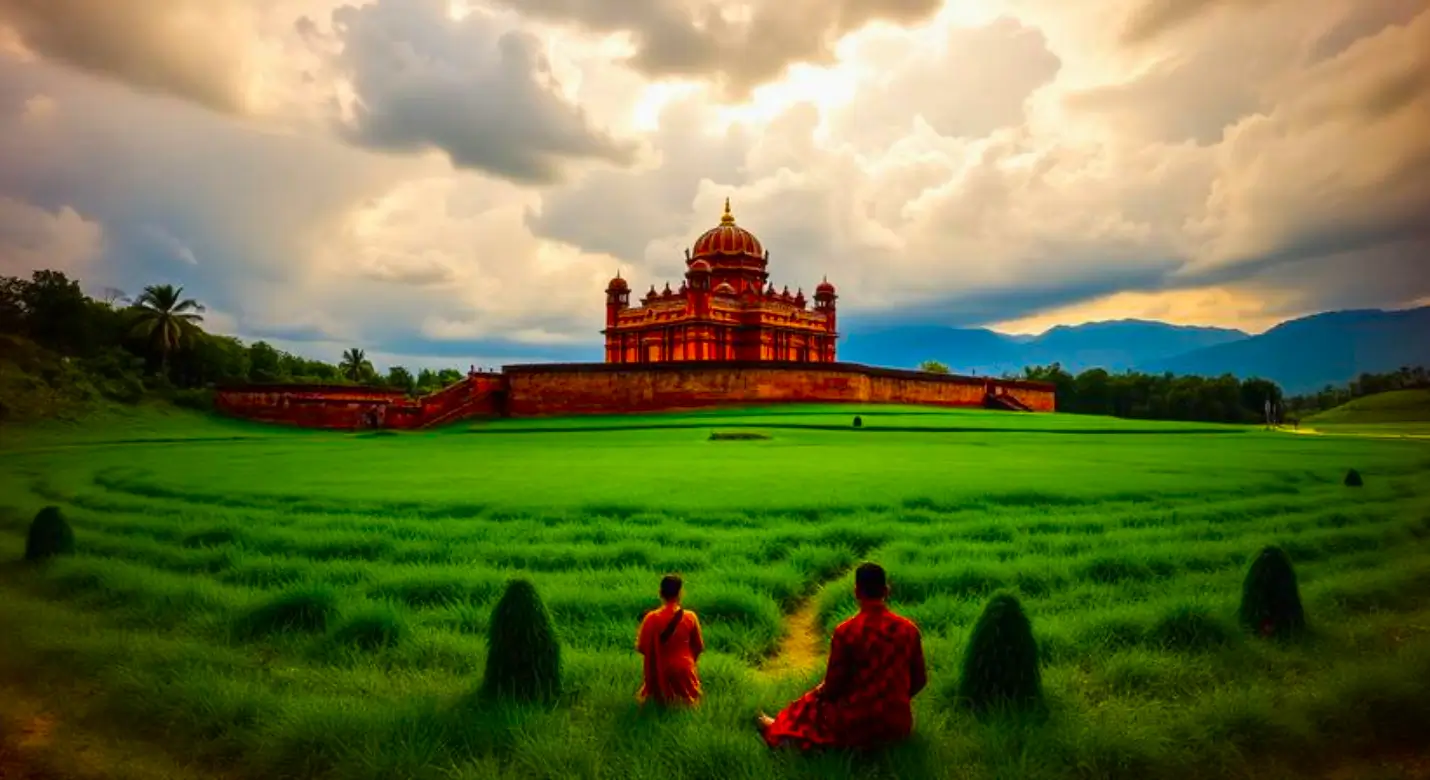
Religion profoundly shapes culture — architecture, music, art, literature, law, calendars, festivals, and ethics. Culture also shapes religion: every tradition reflects the languages, histories, and social structures of its communities. The relationship is dynamic.
The modern relationship between religion and public life is complex. Some states maintain official religions; others remain secular. Secularization is debated: in some regions observance has declined, while elsewhere it has intensified or gained new public forms.
| Topic or Element | Meaning, Role, or Significance | Cultural / Historical Context | Important Distinction / Context |
|---|---|---|---|
| Religion | A cultural system of beliefs, practices, values, and institutions | Documented across world cultures from antiquity to the present | No universal definition; varies by culture, discipline, and tradition |
| Myth | Sacred narrative explaining origins, identity, and meaning | Found in Mesopotamia, Egypt, India, Greece, and oral traditions | Not equivalent to "false story"; distinct from historical documentation |
| Ritual | Formalized symbolic action expressing and reinforcing belief | Universally present — rites of passage, festivals, sacrifice, prayer | Practices vary regionally and change over time within every tradition |
| Symbol | Object, image, or sign conveying sacred meaning | Examples: cross, lotus, menorah, wheel of dharma | Interpretations differ across denominations, eras, and communities |
| Faith / Belief | Inner conviction or trust in religious truths | Central in many traditions, especially Abrahamic ones | Some religions emphasize practice and orthopraxy more than belief |
The term "religion" carries Western historical assumptions and does not map neatly onto every culture. Religious belief, traditional narrative, and historical evidence are distinct types of knowledge, and responsible study keeps them separate. Primary sources, later traditions, and scholarly interpretation may disagree. Readers may also check the Lore Unbound FAQ section for answers to common questions.
The Ongoing Significance of Religion
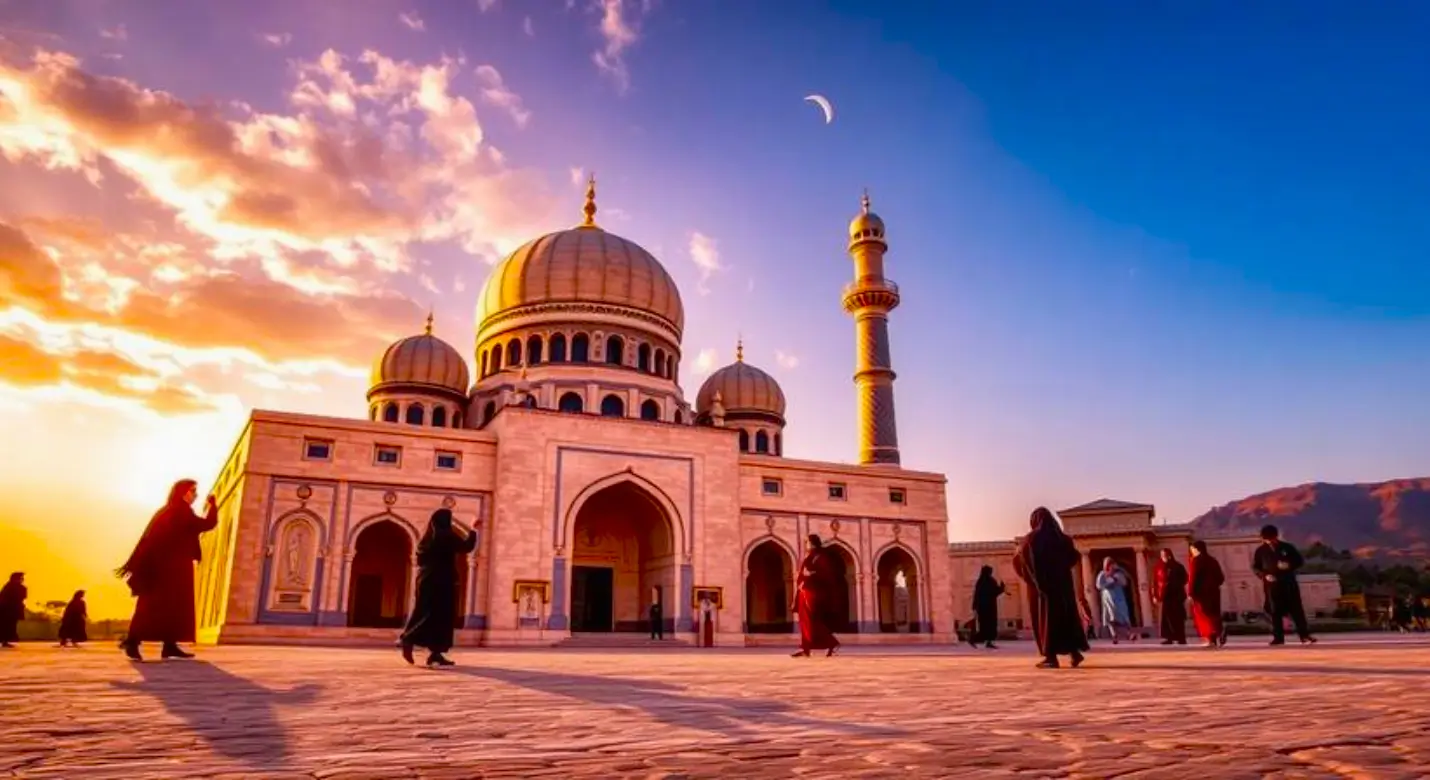
Religion remains a vital force in global affairs, personal identity, ethics, and culture. It is neither a relic nor a single unchanging essence; religions have always adapted and interacted with other spheres of life.
Understanding religion means seeing how beliefs are lived, how symbols work, and how traditions change while maintaining continuity. Lore Unbound offers impartial reference content; readers may read the about page, review the editorial policy, or consult the privacy policy and terms of use.
This content was created with the assistance of Artificial Intelligence as an editorial tool and reviewed by Pedro Neves in accordance with Lore Unbound's editorial standards for clarity, neutrality, cultural context, responsible sourcing, and the distinction between documented evidence, scholarly interpretation, religious belief, mythology, folklore, legend, and traditional narrative. The content is prepared following Lore Unbound's editorial guidelines and quality standards for SEO, GEO, and Artificial Intelligence answer systems.
FAQ About What Is Religion?
What is religion?
Religion is a complex cultural and social system that typically includes beliefs about existence, ultimate reality, morality, and the sacred, along with rituals, ethics, narratives, symbols, and community practices. Different traditions define it differently, and scholars often describe it as a family of practices and worldviews rather than a single uniform thing.
Where does the word religion come from?
The English word religion comes from the Latin term religio, which in ancient Rome referred to reverence for the gods, conscientiousness, or binding obligation. The exact root is debated, with some scholars linking it to religare, meaning to bind, and others to relegere, meaning to reread or carefully consider. The modern concept of religion as a distinct category of human activity developed gradually in European history.
How old is religion?
Religion in some form appears to be very old, but the exact origins are unknown. Archaeological evidence such as burial practices, cave art, and figurines suggests symbolic and ritual behavior among prehistoric humans tens of thousands of years ago. However, organized religions with written texts, formal institutions, and codified doctrines emerged much later, starting around the third millennium BCE in regions such as Mesopotamia, Egypt, the Indus Valley, and China.
What are the common elements found in most religions?
Most religions include beliefs about the nature of reality or the divine, sacred stories or myths, moral guidelines, rituals and worship practices, symbols, and a community of adherents. They often also address questions about suffering, death, purpose, and the afterlife. The presence and importance of these elements vary widely among different traditions and even among followers of the same tradition.
How is religion different from spirituality?
Religion generally refers to organized systems of belief and practice shared by a community, often with institutions, texts, and rituals. Spirituality is a broader term that often describes an individual sense of connection to something greater than oneself, which may or may not involve a specific tradition. People can be spiritual without being religious, and they can be religious while understanding their faith in highly personal ways.
Are all religions based on belief in God or gods?
No. Some religions are theistic, such as Christianity, Islam, and Hinduism in many of its forms, involving belief in gods or a supreme God. Others, such as Buddhism and Jainism in their classical forms, do not center on a creator God, though they include supernatural beings and religious practices. Nontheistic and non-theistic religious traditions focus on teachings, practices, and states of liberation or enlightenment rather than divine beings.
What is the difference between religion and mythology?
Mythology refers to the traditional narratives and sacred stories that religions use to explain origins, values, and the nature of the world. Religion is the broader system that includes beliefs, rituals, ethics, institutions, and personal devotion. A myth can be considered sacred scripture to believers, while scholars study myths as cultural and historical expressions without treating them as literal truth.
Why is religion significant in human culture?
Religion has shaped moral codes, law, politics, art, architecture, music, literature, family life, and social organization throughout history. It provides meaning, identity, and community for many people and influences how they understand birth, marriage, sickness, and death. At the same time, religious institutions and ideas have also been sources of conflict and change, making them important subjects of study.
What are common misconceptions about religion?
Common misconceptions include assuming that all religions share the same idea of God, that ancient religions are simple or primitive, that religion is solely a private matter, or that myth means falsehood. Another misconception is that religion and science are always opposed, when in fact their relationship has varied across times, traditions, and specific questions. Religions are internally diverse and change over time, so broad generalizations often fail.
How is religion studied and how does Lore Unbound approach it?
Scholars study religion through disciplines such as anthropology, sociology, history, psychology, philosophy, and comparative religion. They examine texts, rituals, material culture, oral traditions, and lived practices in their historical and social contexts. Lore Unbound follows the same spirit as an independent educational encyclopedia, explaining religions and beliefs, mythology, folklore, symbols, rituals, traditions, and cultural history clearly and impartially, without advocating for any religion or claiming any belief is true or false.
Author: Editorial Team – Lore Unbound
Reviewed by: Pedro Neves
Article produced and published in accordance with our Editorial Policy: https://loreunbound.com/editorial-policy/
Published on: August 22, 2026
Website content categories:
This content is part of the Lore Unbound editorial ecosystem, which includes:
Related Content