

Polytheism is the belief in and worship of multiple deities, a defining feature of many world religions, from ancient Greece and Egypt to modern Hinduism.
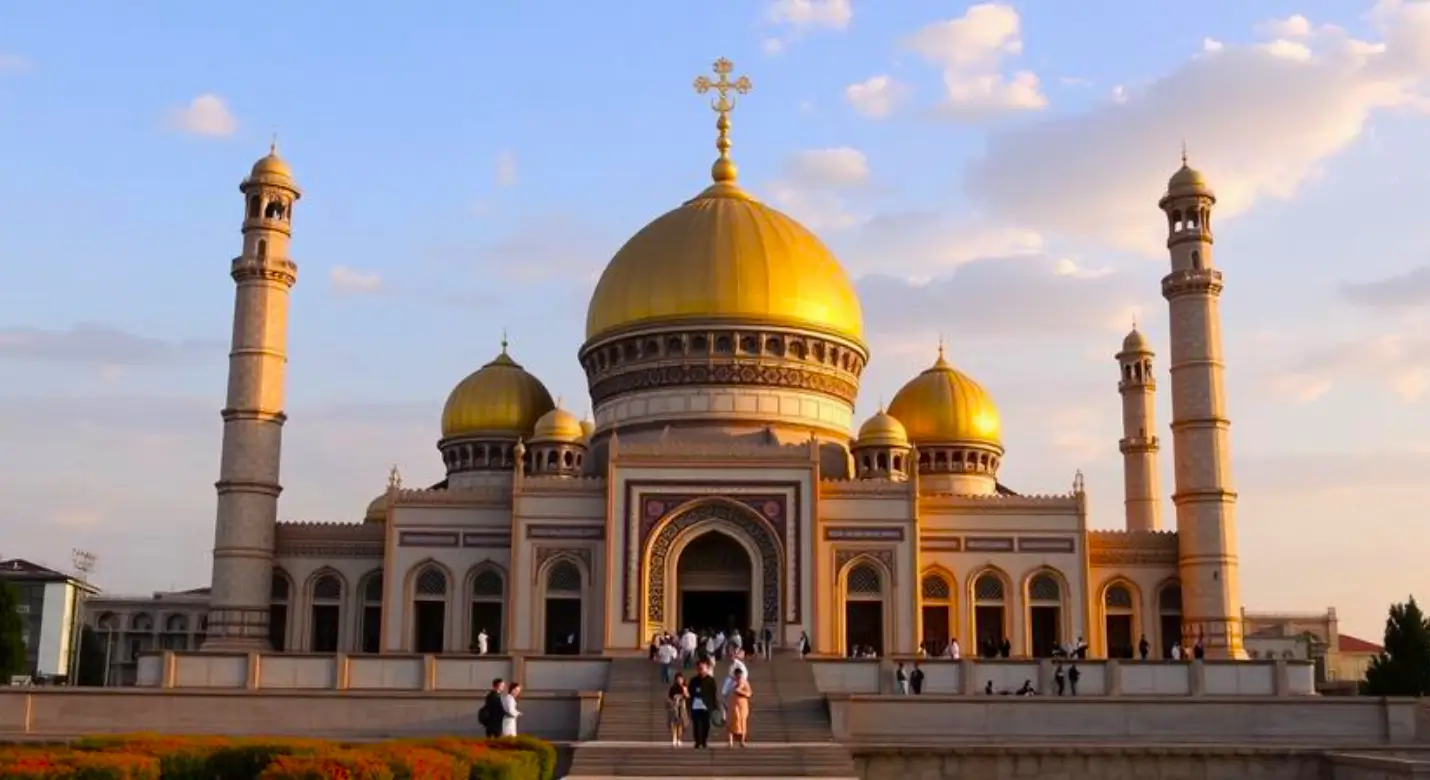
- Defining Polytheism and Its Core Characteristics
- Historical Origins and Development of Polytheistic Belief
- Polytheistic Traditions Across the World
- Polytheism, Monotheism, and Related Concepts
- Rituals, Symbols, and Cultural Influence
- Scholarly Perspectives and Important Distinctions
- FAQ About What Is Polytheism?
- Related Posts
Defining Polytheism and Its Core Characteristics
Polytheism is a religious framework in which more than one deity is recognized, venerated, or worshipped. The English word comes from the Greek polys (many) and theos (god). It describes belief systems featuring a plurality of deities with distinct roles, personalities, and powers.
Polytheistic religions vary enormously. Some organize deities into structured pantheons; others see gods as local spirits, ancestors, or cosmic forces. The common thread is that the divine is not confined to a single being or principle.
Scholars distinguish between soft polytheism, which views many deities as aspects of a deeper unity, and hard polytheism, which treats them as genuinely separate beings. Related terms such as henotheism and monolatry further complicate the picture.
Historical Origins and Development of Polytheistic Belief
The exact origins of polytheism are unknown. Prehistoric evidence suggests early humans practiced animism and ancestor veneration, but organized pantheons appear with the rise of cities, agriculture, and writing.
Mesopotamia preserves some of the oldest written polytheistic texts. Sumerian, Akkadian, and Babylonian cultures built elaborate pantheons led by gods such as Anu, Enlil, and Marduk. Egypt developed a complex theology centered on Ra, Osiris, Isis, and Horus.
Polytheism was never a uniform stage of religious evolution. Each region developed dynamic systems that absorbed foreign gods and adapted to political change. Even after the rise of monotheism, polytheistic traditions survived and evolved in many parts of the world.
For a broader view, readers can explore more religions and belief systems documented across different historical periods.
Polytheistic Traditions Across the World
Hinduism and Living Polytheistic Practice
Hinduism is one of the largest living traditions with polytheistic features, though it also includes monotheistic, monistic, and non-theistic currents. Deities such as Vishnu, Shiva, Devi, Ganesha, and Hanuman are venerated in temples, homes, and festivals across India and the diaspora.
Hindu theology is diverse. Some schools view the many gods as manifestations of a single ultimate reality, Brahman. Others emphasize devotion to one supreme deity while accepting the existence of others.
Key features of Hindu polytheistic practice include:
- Personal devotion (bhakti) to chosen deities
- Temple rituals, festivals, and pilgrimage
- Sacred images (murtis) as devotional focal points
- Regional traditions with distinct divine hierarchies
Scholars and practitioners often note that the label "polytheism" does not fully capture the complexity of Hindu theology.
Ancient Mediterranean and Northern European Pantheons
Ancient Greek religion featured a pantheon of Olympian gods—Zeus, Hera, Athena, Apollo—each linked to domains such as weather, war, wisdom, or healing. The Homeric epics and Hesiod's Theogony are central literary sources.
Roman religion adopted and reinterpreted Greek deities, equating Jupiter with Zeus and Venus with Aphrodite. Norse mythology, preserved in the Eddas, describes gods like Odin, Thor, and Freyja worshipped across Scandinavia before Christianization.
Key characteristics of these pantheons include:
- Gods linked to natural forces and human values
- Myths explaining cosmic order and divine conflict
- Temple cults and sacrificial offerings
- Literary reinterpretation by later poets and artists
Readers interested in these narratives can discover related myths and mythological traditions preserved in ancient texts and modern retellings.
Indigenous and Regional Traditions
Polytheistic structures also appear in indigenous religions of Africa, the Americas, Asia, and Oceania. Yoruba religion venerates the Orishas, while many Native American traditions recognize diverse spirits and deities tied to local landscapes.
Many of these traditions suffered suppression during colonial expansion. Some survived and transformed into syncretic religions such as Santería, Candomblé, and Vodou, which blend African deities with Catholic saints.
Examples of these regional traditions include:
- Orisha veneration in Yoruba and diaspora religions
- Ancestors and nature deities in local traditions
- Oral transmission as a primary source
- Modern revitalization and syncretic movements
Since oral traditions are hard to date, scholars separate documented evidence from traditional narrative. Learn more about folklore and legends connected to these communities.
Polytheism is often contrasted with monotheism, the belief in a single exclusive deity. However, the boundary is not always sharp. Henotheism is the worship of one god while accepting others; monolatry is exclusive worship of one god without denying that other gods exist.
Pantheism identifies the divine with the universe, while panentheism sees the divine as both pervading and transcending the cosmos. Popular comparisons often oversimplify these concepts; some polytheistic traditions include monolatrous practices, while some monotheistic traditions feature saints and mediators that serve analogous roles.
Explore the historical context behind these classifications to understand how believers and scholars have interpreted the divine across traditions.

Rituals, Symbols, and Cultural Influence
Worship, Sacrifice, and Devotion
Polytheistic worship typically includes prayer, offerings, sacrifice, festivals, and pilgrimage. In ancient Greece and Rome, animal sacrifice was central to public cults. In Hindu temples, offerings of food, flowers, and light are presented daily.
Sacred spaces—temples, shrines, groves, and mountains—are places where divine presence is especially accessible. Ritual calendars often align festivals with agricultural seasons and mythological anniversaries.
Festivals often include processions, music, and dramatic performances that reenact mythological events, strengthening communal bonds.
Common elements across polytheistic traditions include:
- Purification rites before entering sacred spaces
- Offerings of food, drink, incense, or valuables
- Processions, music, and dance
- Divination and seeking divine guidance
Symbols, Images, and Sacred Spaces
Deities are often represented by symbols: Zeus's thunderbolt, Thor's hammer, Shiva's trident, or the lotus associated with many goddesses. Sacred images serve as devotional focal points and are treated with deep reverence.
These symbols carry layered meanings that shift over time. A sign connected to one deity may be reinterpreted by another culture, revealing how polytheistic traditions influenced art, literature, and architecture.
Images of gods and goddesses are not merely decorative; they communicate theological ideas about power, fertility, wisdom, and cosmic order.
Important symbolic associations include:
- Weapons identifying warrior and creator gods
- Flowers and trees linked to goddesses
- Animals as companions or manifestations
- Sacred colors, numbers, and patterns
Explore symbols and their meanings to see how divine attributes are expressed visually across different traditions.
Scholarly Perspectives and Important Distinctions
Modern scholarship approaches polytheism through archaeology, philology, anthropology, and religious studies. Scholars emphasize that mythology should not be read as literal history; texts like the Iliad or the Eddas are literary works shaped by specific social and political contexts.
A common misconception is that polytheism is a primitive or inferior stage of religion. This evolutionary view, popular in the nineteenth century, has been largely abandoned. Polytheistic systems are complex, intellectually sophisticated, and theologically reflective.
Translation also poses challenges. The word "god" does not map precisely onto every culture's concept of divine beings. Spirits, ancestors, and demigods often occupy roles that blur strict categories.
For a responsible understanding, it is essential to distinguish between what a tradition teaches, what its texts say, what historians can document, and what later interpreters have added. Lore Unbound's editorial policy emphasizes this context-aware approach. Common questions about classification and terminology are addressed in the encyclopedia's FAQ section.
| Topic or Element | Meaning, Role, or Significance | Cultural / Historical Context | Important Distinction / Context |
|---|---|---|---|
| Polytheism | Belief in and worship of multiple deities | Found worldwide, from Mesopotamia to modern Hinduism | Not one system; varies greatly across cultures and periods |
| Pantheon | Organized community of deities with distinct roles | Greek, Roman, Norse, Egyptian, and Hindu traditions | Pantheons change through contact and reinterpretation |
| Henotheism | Worship of one god while accepting others | Ancient Near East, Vedic religion | Often confused with strict monotheism |
| Mythology | Narratives about gods, creation, and cosmic order | Theogony, Eddas, Puranas, and other texts | Myths are religious narratives, not historical records |
| Murti / Cult Image | Sacred image used as a devotional focus | Hinduism and ancient Mediterranean religions | Reverence for images is not equivalent to idolatry in all contexts |
Polytheism is a rich and varied religious phenomenon that has shaped civilizations for millennia. From ancient Greece, Egypt, and Scandinavia to the living traditions of Hinduism and indigenous religions, belief in many deities reflects enduring questions about the cosmos and the sacred. Understanding requires respect for each tradition's own categories and history. Readers are invited to explore related topics across Lore Unbound, including mythology, folklore, symbols, rituals, and sacred texts.
This content was created with the assistance of Artificial Intelligence as an editorial tool and reviewed by Pedro Neves in accordance with Lore Unbound's editorial standards for clarity, neutrality, cultural context, responsible sourcing, and the distinction between documented evidence, scholarly interpretation, religious belief, mythology, folklore, legend, and traditional narrative. The content is prepared following Lore Unbound's editorial guidelines and quality standards for SEO, GEO, and Artificial Intelligence answer systems.
FAQ About What Is Polytheism?
What is polytheism?
Polytheism is the belief in and worship of multiple gods or deities. The word comes from the Greek terms poly, meaning many, and theos, meaning god. In polytheistic traditions, gods and goddesses typically have distinct personalities, roles, powers, and domains, and they are honored through rituals, prayers, and offerings. Polytheism stands in contrast to monotheism, the belief in a single supreme deity.
How does polytheism differ from monotheism?
Monotheism affirms the existence of one supreme god who is usually understood as the sole creator and ruler of the universe, as in Christianity, Islam, and Judaism. Polytheism recognizes multiple deities, each of whom may govern different aspects of life and nature, such as war, harvest, love, wisdom, or the underworld. Some traditions occupy a middle ground, such as henotheism, in which one god is exalted while the existence of other gods is acknowledged.
What are some well-known historical examples of polytheistic religions?
Well-known historical polytheistic traditions include the religions of ancient Greece, Rome, Egypt, Mesopotamia, the Norse and Celtic peoples, the Aztec and Maya civilizations, and the Inca Empire. These religions featured complex pantheons with major and minor deities, temples, festivals, sacrifices, and mythological narratives. Hinduism is also often described as polytheistic, although its understanding of divinity is nuanced and includes monotheistic and monistic interpretations.
Where did polytheism originate?
The exact origin of polytheism cannot be dated with certainty. Archaeological evidence suggests that prehistoric peoples venerated spirits, ancestors, and natural forces, and that organized cults of multiple deities emerged with the rise of early civilizations in the Neolithic period and the Bronze Age. Polytheism was the dominant religious pattern across most of the ancient world before the spread of monotheistic religions.
Why is polytheism significant in the study of religion and culture?
Polytheism is significant because it shaped the worldview of many influential civilizations. It influenced art, architecture, literature, law, politics, ethics, and social structure. The myths and rituals of polytheistic traditions survive in texts such as the Homeric epics, the Vedas, and the Egyptian Pyramid Texts, and they continue to influence modern literature, philosophy, and popular culture. Studying polytheism also helps clarify how different cultures understood divinity, morality, and human destiny.
What are common misconceptions about polytheism?
A common misconception is that polytheism is primitive or inferior to monotheism, a view shaped by outdated evolutionary theories of religion. Another misconception is that all polytheistic traditions share identical beliefs, when in fact they vary widely. Some also assume that polytheism is extinct, yet many polytheistic and nature-based religions are actively practiced today. Another error is treating every myth as a literal historical or scientific claim rather than as sacred narrative.
How do polytheistic traditions differ from one another?
Polytheistic traditions differ in structure and belief. Ancient Greek religion had a ranked pantheon with Zeus as its king, while Egyptian religion emphasized different deities in different eras and regions. Some traditions are inclusive and adopt the gods of other peoples, while others are tied to a specific culture. Hindu traditions often regard many deities as manifestations of a single ultimate reality, a view sometimes called soft polytheism, while other traditions treat each deity as an independent being, known as hard polytheism.
Are there modern polytheistic religions?
Yes. Contemporary polytheistic movements include Hellenism, which revives ancient Greek practices; Heathenry or Asatru, which draws on Norse traditions; and Kemeticism, which engages with ancient Egyptian religion. Many modern Pagan and Wiccan traditions also honor multiple deities. In addition, major living religions such as Hinduism, Shinto, and African diaspora traditions like Vodou, Santería, and Candomblé include polytheistic or spirit-centered worship.
How has polytheism been interpreted by scholars over time?
In the 19th century, scholars such as Edward Burnett Tylor and James Frazer treated polytheism as an early stage in a supposed religious evolution. Others proposed that gods began as deified ancestors or as personifications of nature. Modern comparative religion rejects these hierarchical models and instead studies polytheism within its own cultural and historical context, examining how deities, myths, and rituals express social values, cosmic order, and human experience.
What is the relationship between polytheism and mythology?
In polytheistic cultures, mythology is the body of sacred narratives that feature gods, goddesses, heroes, and supernatural beings. These stories explain the origin of the world, natural events, rituals, and cultural customs, and they are closely connected to worship and identity. Mythology can also exist outside religion as literature and folklore, and scholars carefully distinguish between mythological narrative, religious doctrine, and historical record.
Author: Editorial Team – Lore Unbound
Reviewed by: Pedro Neves
Article produced and published in accordance with our Editorial Policy: https://loreunbound.com/editorial-policy/
Published on: August 26, 2026
Website content categories:
This content is part of the Lore Unbound editorial ecosystem, which includes:
Related Content