

Pantheism is the belief that the divine and the universe are identical. Explore its meaning, origins, philosophical forms, and cultural impact.
Defining Pantheism: The Universe as Divine
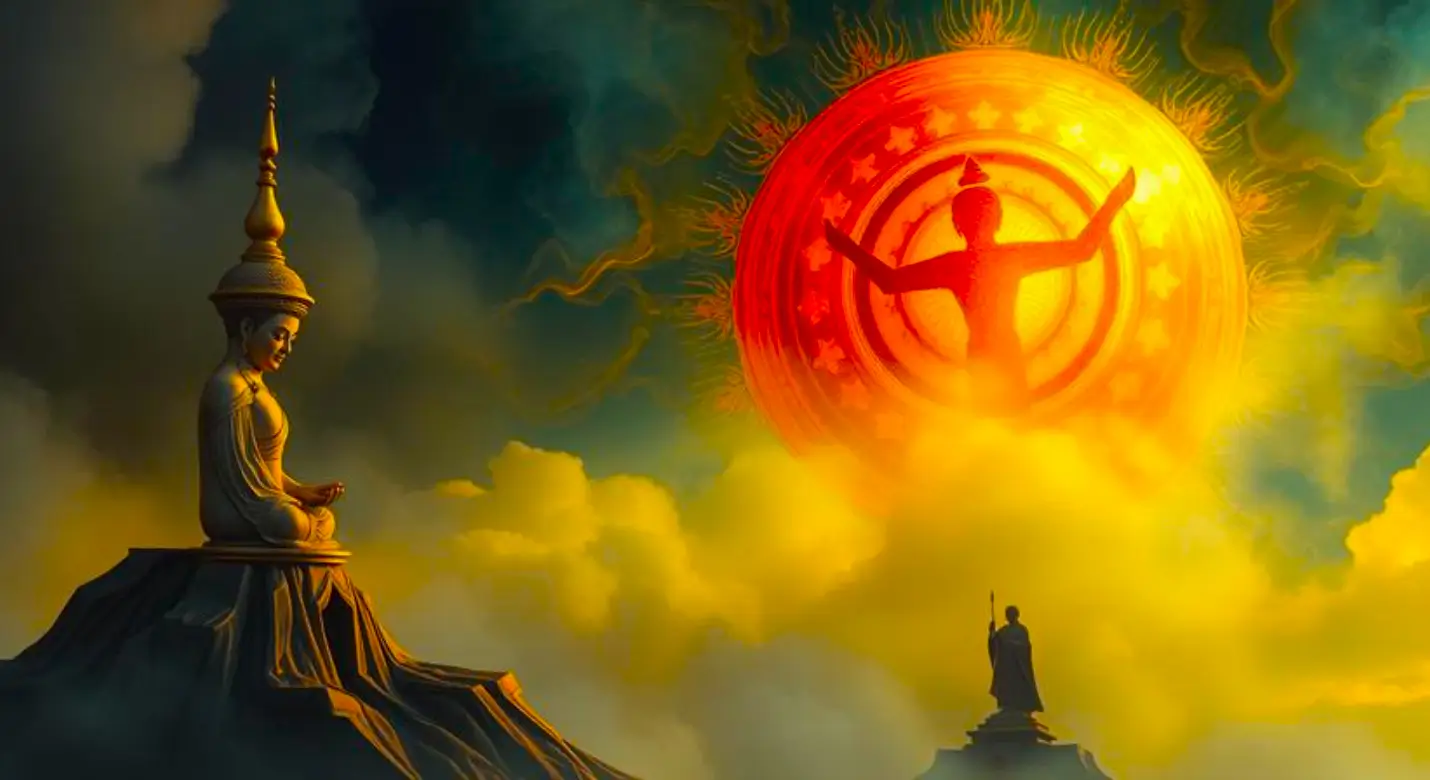
Pantheism is a philosophical and religious perspective in which God or the divine is identified with the totality of existence. In pantheism, the universe itself—its matter, energy, natural laws, and unfolding processes—is understood as divine. The word derives from the Greek pan ("all") and theos ("God"), literally meaning "all is God" or "God is all."
Unlike classical theism, which sees God as a personal being separate from creation, pantheism rejects any fundamental distinction between creator and creation. There is no transcendent God observing the world from outside; instead, the world itself embodies the sacred.
- The absence of a personal, separate creator deity
- The view that nature and the cosmos are inherently sacred
- An emphasis on natural laws, reason, and immanent divinity
- Diversity of expression across philosophical, religious, and artistic traditions
Historical Origins and Development
The term "pantheism" was coined in the early eighteenth century. Irish writer John Toland introduced it in his 1705 work Socinianism Truly Stated. The underlying ideas, however, are far older and appear across multiple cultures. Readers can explore more religions and belief systems to see this broader landscape.
In ancient Greece, pre-Socratic thinkers explored the notion of a divine principle permeating reality. Heraclitus spoke of a cosmic logos, while the Stoics taught that God is the rational order animating all things. In the third century CE, the philosopher Plotinus developed Neoplatonism, which described all existence as flowing from a single divine source.
The most influential early modern exponent was Baruch Spinoza. In his Ethics (1677), Spinoza argued that God and nature are one and the same substance—a position famously summarized as Deus sive Natura ("God or Nature"). His ideas influenced later philosophers, poets, and scientists, while also drawing accusations of atheism from critics who believed he had eliminated a personal God entirely.

Pantheism Across Religious and Philosophical Traditions
Pantheism is not a single organized religion but a worldview that has emerged in many forms throughout history. Its expressions differ according to cultural context, language, and religious background.
Pantheism in Western Philosophy
In Western thought, pantheism developed mainly as a philosophical position. After Spinoza, German Idealists such as Friedrich Schelling and G.W.F. Hegel incorporated pantheistic themes into their metaphysical systems.
The Romantics celebrated nature as a manifestation of the divine, while the American Transcendentalists, especially Emerson and Thoreau, drew pantheistic inspiration from nature's beauty and power.
These movements did not form churches or establish rituals. Instead, they influenced literature, ethics, and the relationship between humanity and nature.
- Nature understood as divine revelation
- Rejection of dogmatic religious authority
- Focus on intuition, experience, and individual insight
Eastern Perspectives
Several Eastern traditions include elements that scholars often describe as pantheistic or closely related, though the comparison requires caution. In Hinduism, Brahman is understood as the ultimate reality that pervades all things.
Advaita Vedanta, the non-dual school of Indian philosophy, teaches that the individual soul and Brahman are ultimately one. The visible world is not separate from the divine but a manifestation of it.
In Daoism, the Dao is the impersonal, ever-flowing principle underlying all existence. Some forms of Buddhism emphasize interdependence and the absence of a fixed self, which interpreters sometimes connect to pantheism.
- Brahman in Hinduism as all-pervading reality
- Non-dualism in Advaita Vedanta
- The Dao as the way of all things
- Buddhist interdependence and the teaching of no-self
Scholars caution that these traditions are not identical to Western pantheism. Their metaphysical frameworks, goals, and practices differ in fundamental ways.
Scientific and Naturalistic Pantheism
In modern times, pantheism has found new expression in secular and scientific forms. Albert Einstein said he believed in "Spinoza's God," a God revealed in the harmony of the universe rather than a personal being.
Naturalistic pantheism, associated with philosopher Paul Harrison and similar thinkers, treats nature itself as worthy of reverence without invoking supernatural claims. It combines scientific awe with a sense of belonging to the cosmos.
For many contemporary pantheists, ethical responsibility toward the environment follows directly from the conviction that nature is sacred. Ecology becomes not merely a scientific concern but a spiritual one.
- Respect for scientific method and evidence
- Reverence for the natural world
- Integration of awe, ethics, and ecological awareness

Panentheism holds that the universe exists within God, while God also transcends the universe. Pantheism, by contrast, asserts that God and the universe are identical: there is no divine reality beyond the cosmos. This is a common source of confusion between the two terms, and the distinction matters for interpreting texts and traditions accurately.
Other related positions include theism, which affirms a personal God who creates and interacts with the world; deism, which sees a creator who does not intervene; and atheism, which denies deities. Monism holds that all reality consists of a single substance.
Panentheism appears in some Christian theology and process philosophy, while pantheism arises more often in philosophical, scientific, and nature-centered contexts. The table below summarizes the main positions and their historical contexts.
| Topic / Element | Meaning, Role, or Significance | Cultural / Historical Context | Important Distinction / Context |
|---|---|---|---|
| Pantheism | Belief that God and the universe are identical | Term coined by John Toland in 1705; concepts found in ancient Greek and Eastern thought | Distinct from panentheism, which affirms divine transcendence |
| Spinoza's Deus sive Natura | God and nature as one substance | 17th-century Dutch philosopher Baruch Spinoza, Ethics (1677) | Often labeled pantheistic, though scholars debate the precise classification |
| Advaita Vedanta | Non-dual reality: Brahman as ultimate being | Classical Indian philosophy within Hinduism | Similar to pantheism in some aspects, but not identical to Western formulations |
| Naturalistic pantheism | Reverence for nature without a supernatural deity | Modern movement associated with Paul Harrison and scientific spirituality | Emphasizes empirical worldview and does not require religious doctrine |
| Panentheism | The universe exists within God, who also transcends it | Present in Christian theology and process philosophy | Frequently confused with pantheism despite the important difference |

Contemporary Significance and Cultural Impact
Pantheism has shaped literature, art, environmental philosophy, and contemporary spirituality. It offers a worldview in which the natural world is sacred, turning environmental responsibility into a form of spiritual commitment.
In popular culture, pantheistic themes appear in films, poetry, and ecological movements. Many people today describe themselves as "spiritual but not religious" while holding views close to naturalistic pantheism.
The worldview continues to evolve, blending respect for scientific discovery with wonder and reverence for existence. Readers can explore symbols and their meanings or discover related rituals and traditions to understand how pantheistic ideas connect with broader cultural expressions.
Pantheism is a rich and varied worldview that identifies the divine with the universe. From ancient Greek and Eastern thought to Spinoza and modern scientific spirituality, it has offered an alternative to both traditional theism and atheism. Understanding its history and variations allows readers to recognize pantheistic ideas in philosophy, literature, and contemporary spirituality.
For those interested in exploring further, Lore Unbound provides resources on related belief systems and mythological narratives. Readers may also consult the FAQ section for concise answers to common questions about religious and philosophical terms.
This content was created with the assistance of Artificial Intelligence as an editorial tool and reviewed by Pedro Neves in accordance with Lore Unbound's editorial standards for clarity, neutrality, cultural context, responsible sourcing, and the distinction between documented evidence, scholarly interpretation, religious belief, mythology, folklore, legend, and traditional narrative. The content is prepared following Lore Unbound's editorial guidelines and quality standards for SEO, GEO, and Artificial Intelligence answer systems.
FAQ About What Is Pantheism?
What is pantheism?
Pantheism is a worldview or philosophical position that identifies God with the universe and all of reality. Rather than viewing God as a separate personal being who created the world, pantheism treats the totality of existence as divine. The word comes from Greek pan meaning all and theos meaning God, so it literally means God is all. Pantheistic ideas have appeared in many cultures, but pantheism has no single founder, central text, or official church.
Where did the term pantheism come from?
The word pantheism is generally attributed to the Irish writer John Toland, who used it in the early 1700s. The Greek roots mean all and God. Toland was associated with freethinking and deism, but pantheistic ideas go back much further. Ancient Greek thinkers, Hindu texts, and medieval mystics have all expressed views that later interpreters described as pantheistic.
How is pantheism different from panentheism?
Both terms sound similar but differ in a key way. Pantheism says that God and the universe are identical: everything is God. Panentheism says God is in everything, but God is also more than the universe, so the world exists within a wider divine reality. Panentheism preserves divine transcendence, while pantheism emphasizes divine immanence.
Is pantheism a religion?
Pantheism is not a unified religion. It is a philosophical and spiritual worldview that can take many forms. There is no pantheistic pope, no required scriptures, and no single set of rituals. Some pantheists practice nature-based spirituality, while others adopt pantheism as a secular or scientific worldview. The term may also appear within existing religions, such as Hinduism, Judaism, Christianity, and Islam, where certain mystical traditions have been described as pantheistic.
What are some historical examples of pantheistic ideas?
In the Western tradition, the Dutch philosopher Baruch Spinoza is the most famous thinker associated with pantheism. His phrase Deus sive Natura means God or Nature. Earlier Greek Stoics and the pre-Socratic thinker Heraclitus also described a divine principle within the world. In Indian thought, parts of the Upanishads describe Brahman as the ultimate reality underlying everything, which some scholars interpret as pantheistic or panentheistic. Giordano Bruno, a Renaissance philosopher, also held views often described as pantheistic.
How does pantheism relate to nature and the universe?
For pantheists, nature is not a creation separate from God. The universe itself is sacred, and natural laws are understood as the workings of divine reality. Respect for nature follows logically: since everything is divine, harming the natural world can be seen as harming the divine. However, pantheism does not require a belief that trees, animals, or planets have individual souls. It typically views the whole of reality as divine rather than only its parts.
What is the difference between pantheism and atheism?
Atheism is the absence of belief in any god or the denial of the existence of God. Pantheism, in contrast, affirms a concept of God by identifying God with nature or the universe. A pantheist may reject a personal creator, a divine judge, or a supernatural being, but they still use the word God to describe ultimate reality. Many atheists and pantheists agree that a personal creator God does not exist, but they disagree about whether the word God can meaningfully apply to the universe itself.
What are common misconceptions about pantheism?
One misconception is that pantheists worship every tree or rock individually. Most pantheists regard the whole universe as divine, not each object as a separate deity. Another is that pantheism is simply a synonym for nature worship, but nature worship often involves spirits or gods within nature, while pantheism identifies nature with God itself. It is also a mistake to assume pantheism is a single organized movement. Pantheists can be religious, spiritual, philosophical, or scientific in their outlook.
How has pantheism been interpreted by philosophers and scientists?
Philosophers have used pantheism to address the relationship between God and the world without relying on supernatural intervention. Spinoza's system is the classic model. In science, some thinkers have used pantheistic language when describing the universe and its laws. Albert Einstein sometimes referred to a cosmic religious feeling and to the God of Spinoza, although he explicitly rejected a personal God. Scholars caution that Einstein's remarks were his personal expressions and do not make him a systematic pantheist philosopher.
Is pantheism compatible with other religious beliefs?
Compatibility depends on each religion's core teachings. Some mystical traditions, such as certain forms of Hindu Vedanta, Jewish Kabbalah, Sufism, and Christian mysticism, contain ideas that resemble pantheism or panentheism. However, most mainstream monotheistic traditions reject strict pantheism because it removes the distinction between creator and creation. Some people combine pantheistic views with other beliefs or call themselves Christian pantheists or Jewish pantheists, but those labels remain contested and are not official doctrines of those religions.
Author: Editorial Team – Lore Unbound
Reviewed by: Pedro Neves
Article produced and published in accordance with our Editorial Policy: https://loreunbound.com/editorial-policy/
Published on: August 27, 2026
Website content categories:
This content is part of the Lore Unbound editorial ecosystem, which includes:
Related Content