

Creation myths explain how the universe, world, and humanity began. This guide examines their origins, meanings, and cultural significance across civilizations.
Defining the Creation Myth
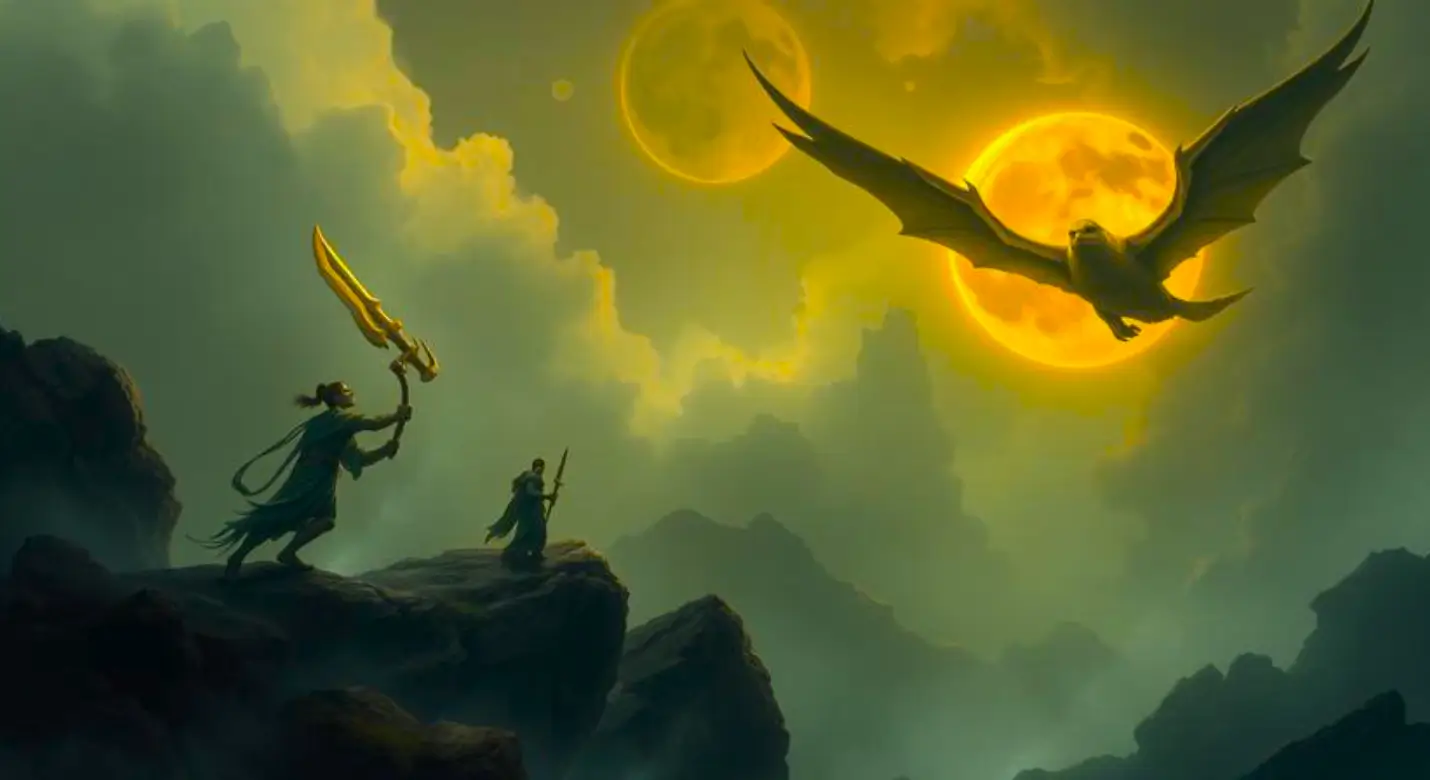
A creation myth is a traditional narrative or symbolic story that explains how the universe, the world, life, or humanity came into existence. It is one of the most universal forms of storytelling, found in nearly every known culture. These narratives respond to profound questions about origins, order, and human purpose.
Scholars generally treat creation myths as cosmological narratives rather than scientific or historical records. They express how a community understands reality, divinity, and human purpose. Many religious communities regard their own creation accounts as sacred truth; Lore Unbound presents both perspectives without favoring one.
Most creation myths share common functions. They establish cosmic order, define relationships among gods, humans, and nature, and provide foundations for ritual, ethics, and social identity. They also often explain the origins of suffering, death, labor, and social institutions.
Common Types of Creation Myths
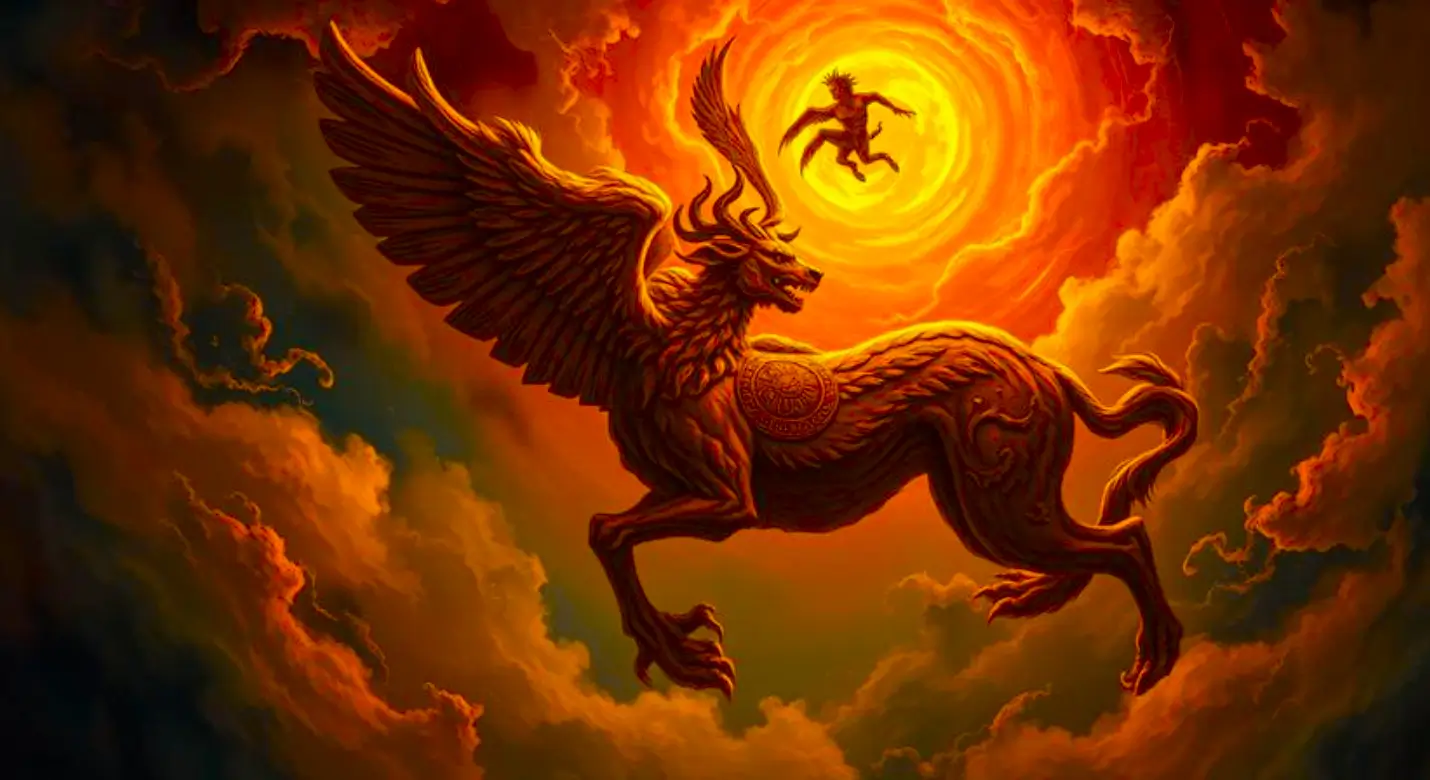
Comparative mythologists have identified recurring patterns in creation narratives worldwide. These categories are analytical tools, not rigid boxes, and many myths combine more than one pattern.
Ex Nihilo Creation
Ex nihilo creation myths describe the world emerging from nothing through the thought, word, or will of a divine being. The Latin term means "out of nothing." The biblical book of Genesis provides a well-known example: God speaks, and the world comes into existence.
Similar themes appear in ancient Egyptian, Hindu, and Islamic traditions, though each has distinct theological meanings. These myths emphasize divine transcendence and the complete dependence of creation on its source.
Points of attention include:
- The concept is not universal; some cultures describe creation from pre-existing matter.
- Interpretations range from literal history to theological allegory.
- Ancient terms for "create" carry nuances lost in the Latin phrase.
Earth-Diver Myths
Earth-diver myths tell of a being diving into a primeval ocean to bring up mud or sand, which expands to form the earth. These stories are especially common among Indigenous peoples of North America and Central Asia.
Creation in these myths is often cooperative or contested. Animals such as the muskrat, turtle, or raven may succeed or fail before the land is formed. The pattern emphasizes struggle and relationship rather than a single all-powerful act.
Important aspects include:
- They highlight cooperation, sacrifice, and trickery.
- They reflect views of nature as alive and sacred.
- Regional versions differ greatly in detail.
Emergence and Cosmic Egg Myths
Emergence myths describe the present world being reached through successive stages or worlds. They are particularly significant in many Pueblo and other Indigenous North American traditions, where people journey upward into the light of the current world.
Cosmic egg myths portray the universe as hatching from an original egg. Examples appear in Hindu, Chinese, Greek Orphic, and Finnish traditions. The egg symbolizes latent potential and the birth of order from undifferentiated unity.
Key features include:
- Emergence myths connect creation with spiritual growth and identity.
- Cosmic egg narratives symbolize wholeness and renewal.
- Both types differ in ritual uses and meanings.
World Parents and Cosmic Sacrifice
Some creation myths describe the cosmos forming from primordial parents or the body of a sacrificed being. In Egyptian tradition, the sky goddess Nut and earth god Geb are separated to create the world. In Norse myth, the giant Ymir's body becomes the earth, seas, and sky.
These narratives link creation to separation, violence, and sacred transformation. The world emerges through relationship, conflict, or divine sacrifice. Such myths often ground ritual practice and social hierarchy in the original ordering of reality.
Considerations include:
- These myths are symbolic, not physical descriptions.
- They express ideas about order, balance, and cost.
- Similar motifs do not prove direct cultural contact.
| Topic or Element | Meaning, Role, or Significance | Cultural / Historical Context | Important Distinction / Context |
|---|---|---|---|
| Ex nihilo creation | World originates from nothing through divine will or word | Genesis; some Islamic, Egyptian, Hindu traditions | Interpreted as history or allegory; not universal |
| Earth-diver myth | A being retrieves mud from primeval waters to form the earth | Indigenous North American and Central Asian traditions | Emphasizes cooperation; details vary by region |
| Emergence myth | The world is reached through successive stages or worlds | Pueblo and other Indigenous North American traditions | Linked to spiritual journey; not a single event |
| Cosmic egg myth | The universe hatches from a primordial egg | Hindu, Chinese, Greek, Finnish traditions | Symbolizes potential; details differ widely |
| World parents / sacrifice | Cosmos formed from primordial beings or their bodies | Egyptian, Norse, and other traditions | Symbolic; connected to ritual and order |

Cultural and Historical Significance
Creation myths have shaped religious rituals, political authority, and cultural identity across history. In many traditions, festivals reenact creation to renew cosmic order and communal prosperity. Rulers have also used these narratives to legitimize their power.
Understanding creation myths demands historical and cultural context. A story of gods shaping humans from clay is not a failed scientific explanation but a symbolic language expressing a community's relationship with the sacred, nature, and others. Modern readings may be literal, allegorical, or poetic; ancient meanings were often layered.
The Babylonian Enuma Elish explains cosmic origins and elevates the god Marduk and the city of Babylon. The Genesis accounts have been read across Jewish and Christian history in multiple ways — as history, allegory, liturgy, and moral teaching. For further study, discover related myths and mythological traditions across cultures.
Creation Myths in Modern Context
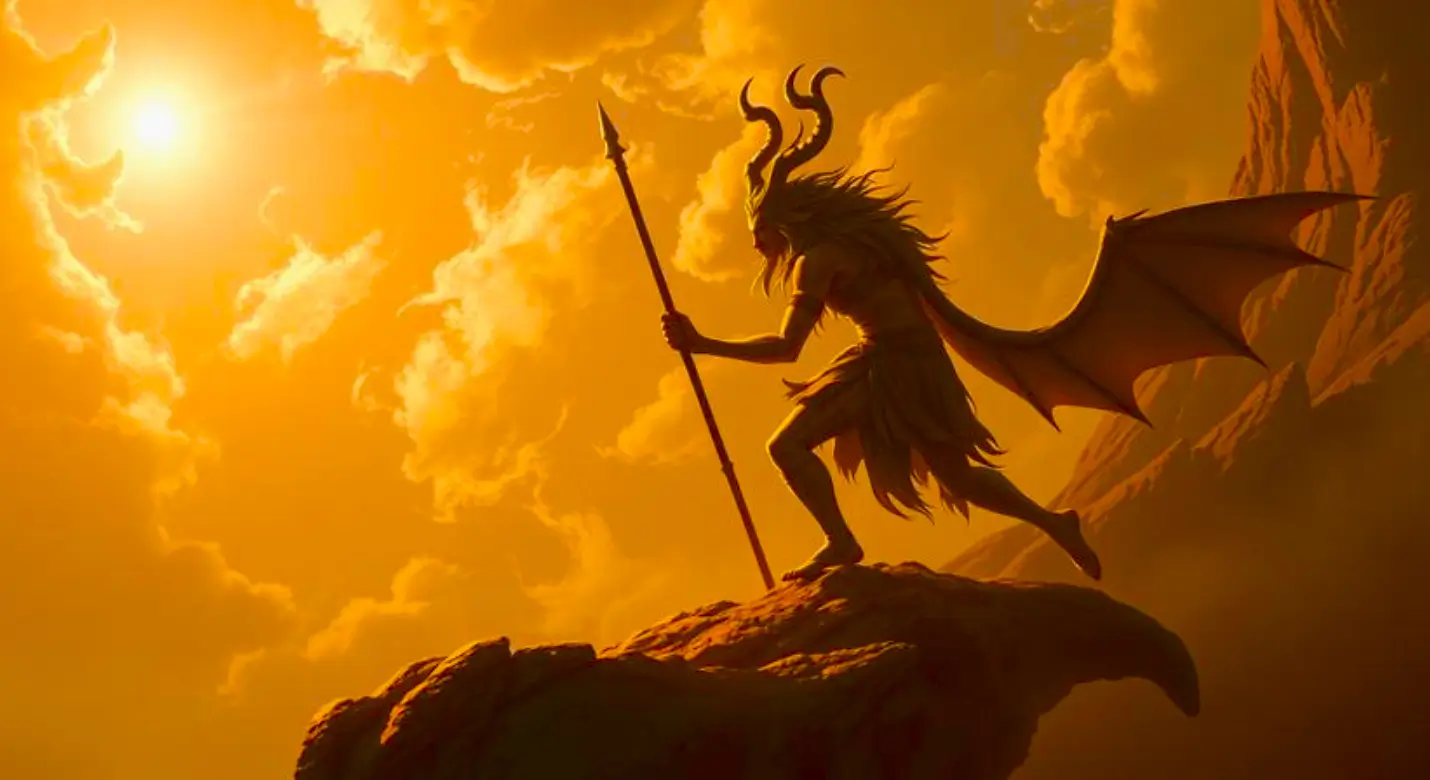
Creation myths remain influential in literature, art, film, and popular culture. The phrase "origin story" now applies to superheroes, corporations, and nations. Modern storytellers continually adapt mythological patterns to explore identity, technology, and meaning.
Comparative scholars approach creation myths from many angles. Structuralist analyses examine patterns of thought; symbolic interpretations explore religious meaning; psychological readings investigate the imagination. These approaches ask different questions from theological readings.
Creation myths also appear in modern secular forms and connect with folklore, where origin stories circulate through oral and popular traditions. Scientific narratives about the Big Bang, political founding histories, and national epics can function as origin stories, answering questions about where we come from and why it matters.

Conclusion: The Enduring Power of Creation Myths
Creation myths are among humanity's most enduring cultural expressions. They answer fundamental questions about origins, order, and purpose, and they continue to shape religious belief, cultural identity, and creative imagination.
By distinguishing documented evidence, scholarly interpretation, religious belief, and traditional narrative, readers can approach these stories with respect and critical awareness, following the approach outlined in Lore Unbound's editorial policy. Each myth reflects its community's worldview while speaking to universal human concerns.
Lore Unbound invites readers to explore more religions and belief systems, learn more about folklore and legends, and examine symbols and their meanings across the world's origin narratives. Understanding creation myths is a doorway into the broader story of human culture.
This content was created with the assistance of Artificial Intelligence as an editorial tool and reviewed by Pedro Neves in accordance with Lore Unbound's editorial standards for clarity, neutrality, cultural context, responsible sourcing, and the distinction between documented evidence, scholarly interpretation, religious belief, mythology, folklore, legend, and traditional narrative. The content is prepared following Lore Unbound's editorial guidelines and quality standards for SEO, GEO, and Artificial Intelligence answer systems.
FAQ About What Is a Creation Myth?
What is a creation myth?
A creation myth is a traditional symbolic narrative that explains how the universe, Earth, life, or a particular people came into being. It expresses a culture's deepest ideas about origins, order, purpose, and the relationship between humanity and the divine or natural world. Scholars approach creation myths not as literal histories or scientific reports but as culturally meaningful stories that reveal a society's worldview.
How do creation myths differ from scientific explanations of origins?
Creation myths are symbolic and sacred accounts that answer questions of meaning and identity, while scientific explanations rely on empirical evidence, testable hypotheses, and natural processes. Science describes how the universe and life developed through mechanisms like cosmic expansion and evolution. A creation myth may incorporate historical or natural elements, but its central truth is usually religious, moral, or philosophical, outside the scope of scientific verification.
What are common types of creation myths found worldwide?
Common types include world parent myths where a primal couple produces the world, emergence myths where people ascend from underground worlds, cosmic egg myths where creation hatches from an egg, ex nihilo myths where a creator makes everything from nothing, earth diver myths where an animal brings mud from primordial waters, and creation from chaos myths where order arises from formless or disordered conditions. These types reflect recurring cultural patterns across continents.
Which religions and cultures are associated with famous creation myths?
Many traditions have famous creation accounts, including the Genesis narratives in Judaism, Christianity, and Islam; the Hindu hymn of Nasadiya Sukta in the Rigveda; the Chinese story of Pangu; the Japanese Kojiki account of Izanagi and Izanami; the Babylonian Enuma Elish; and various Indigenous traditions like the Diné emergence story and the Iroquois earth diver story. These are only examples; nearly every culture has some creation narrative.
What is the historical significance of creation myths?
Historically, creation myths helped communities establish origins, define sacred times and places, ground social institutions and customs, and legitimize kingship or priesthood. They were passed down orally and later written in texts. Ancient rulers often used creation stories to connect their authority to divine order. Scholars also use these myths to trace cultural contacts, beliefs, and worldviews across time.
How have creation myths been interpreted by scholars?
Scholars interpret creation myths in multiple ways: as symbolic expressions of cosmology, as social charters that justify customs and roles, as reflections of psychological structures, as narratives of ritual renewal, and as early attempts to render the universe intelligible. These interpretations come from comparative mythology, anthropology, religious studies, psychology, and literary analysis and often complement rather than contradict one another. Interpretations remain debated because myths are complex and polyvalent.
What is the relationship between creation myths and religion?
In many religious traditions, creation myths are sacred narratives that express foundational truths about the cosmos and humanity's place in it. They may be recited in rituals, referenced in doctrine, and treated as authoritative accounts. In other contexts, the same story may be regarded as mythology or folklore by outsiders while still being sacred to insiders. Scholarly study treats them as religious and cultural phenomena without judging their truth claims.
Are creation myths the same as origin stories?
The terms are often used interchangeably, but origin stories can refer to the beginnings of particular things such as a people, a city, a clan, a natural feature, or an institution, not only the whole universe. Every creation myth is a type of origin story, but not every origin story is a creation myth. Creation myths usually explain the ultimate order of all existence, while origin stories often have a narrower scope.
What are some common misconceptions about creation myths?
A common misconception is that creation myths are simply false stories or primitive science. Another is that all creation myths share a single literal meaning or that they are entirely unique to each culture. In fact, creation myths are culturally, historically, and theologically complex, and many share structural patterns due to creativity, cultural contact, and common human experiences. They are not meant to be evaluated only as true or false historical records.
Why are creation myths still significant today?
Creation myths continue to inform religious identity, cultural values, art, literature, and debates about origins. They are studied in educational settings and preserved by communities as living traditions. They also provide perspectives on human questions about purpose, relationship to nature, and the sacred. Modern readers can appreciate them as profound narrative worldviews without requiring scientific proof.
Author: Editorial Team – Lore Unbound
Reviewed by: Pedro Neves
Article produced and published in accordance with our Editorial Policy: https://loreunbound.com/editorial-policy/
Published on: September 5, 2026
Website content categories:
This content is part of the Lore Unbound editorial ecosystem, which includes:
Related Content