
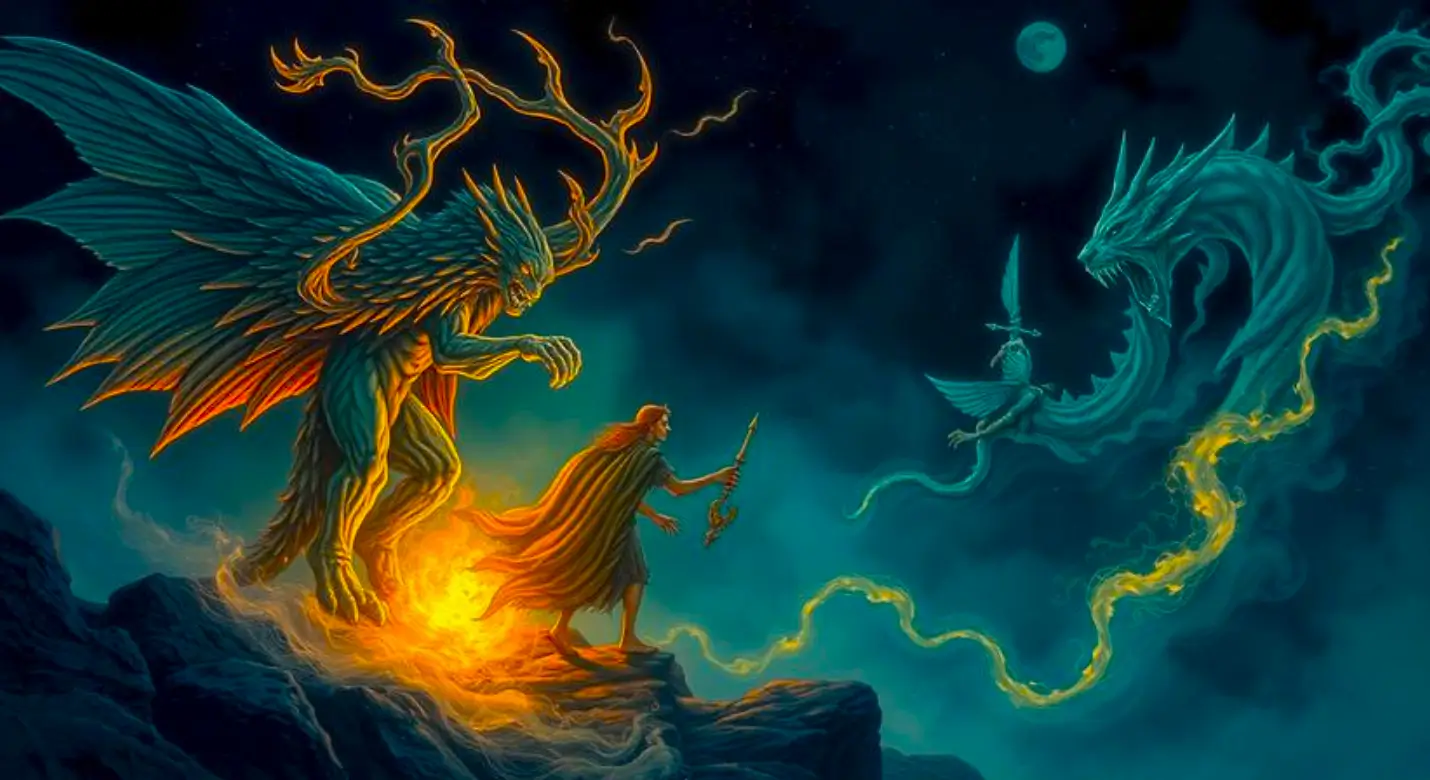
The hero's journey is a universal narrative pattern found across world mythologies, describing the stages of a hero's adventure, transformation, and return.

What Is the Hero's Journey in Mythology?
The hero's journey, also known as the monomyth, is a narrative framework that describes the recurring structure of heroic adventures in world mythology, folklore, and religious literature. It outlines a pattern in which a protagonist leaves a familiar world, faces trials, and returns transformed. This Lore Unbound guide examines the concept as a comparative model used by scholars to identify common structures across traditional narratives.
In the historical context of comparative mythology, the hero's journey is not a rigid formula imposed on all stories. It is a descriptive tool that helps readers recognize similarities among heroes from different cultures and periods. The framework also reveals how myths address shared human concerns such as courage, identity, mortality, and community responsibility.
It appears in ancient epics, sacred texts, folktales, and modern fiction. To see how this pattern appears across traditions, readers can explore related myths and mythological traditions.
Origins and Development of the Monomyth
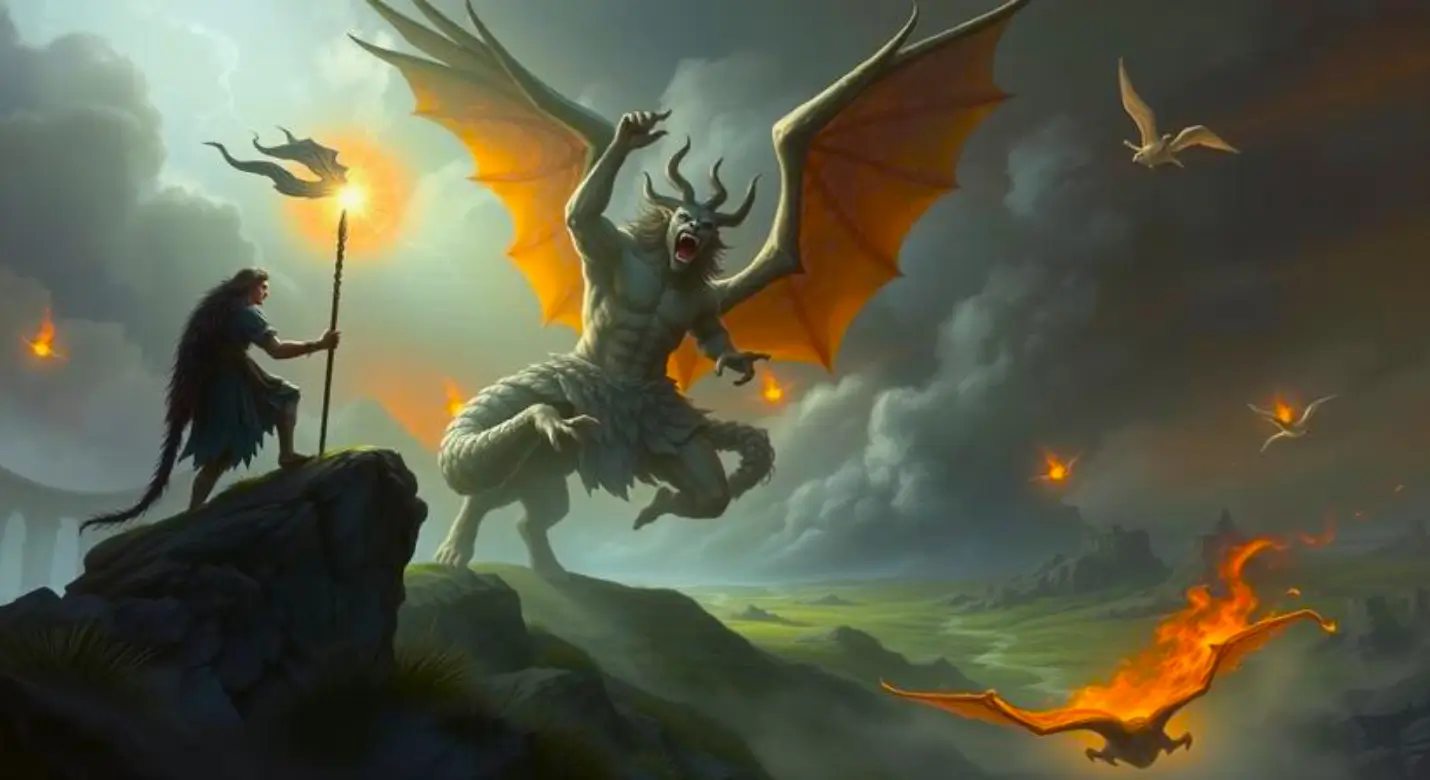
The term monomyth was popularized by American mythologist Joseph Campbell in his 1949 work The Hero with a Thousand Faces. Campbell proposed that many heroic narratives throughout the world share the same fundamental structure. He drew on earlier comparative studies by James Frazer, Otto Rank, and Carl Jung, as well as on psychoanalysis and ethnology.
Campbell was influenced by Carl Jung's theory of archetypes. According to this perspective, myths express universal psychological patterns through symbolic imagery. Campbell identified recurring figures such as the hero, the mentor, and the shadow across many traditions. His work generated considerable scholarly debate.
Modern researchers emphasize the importance of historical and cultural context when applying the monomyth. The framework has been criticized for minimizing differences between distinct traditions, but it remains influential in literary studies and film theory. Readers interested in narrative traditions can learn more about folklore and legends.
- Campbell proposed that myths from different cultures share structural similarities.
- The monomyth concept drew on Jungian psychology and comparative religion.
- Modern scholarship questions the universality of the framework.
- Despite criticism, the monomyth remains widely used in narrative analysis.

The Three Major Stages of the Hero's Journey
Campbell divided the hero's journey into three major phases: departure, initiation, and return. Each phase contains substages such as the call to adventure, the crossing of the threshold, the road of trials, and the master of two worlds.
The Departure Stage
The departure stage opens with the hero living in an ordinary world. A call to adventure disrupts their routine and invites them toward an unknown realm. The hero may initially refuse the call, but supernatural aid or a mentor often encourages them to proceed.
Crossing the threshold marks the point of no return. The hero leaves behind the familiar and enters a world of danger, wonder, or spiritual testing. This stage appears in countless myths, from Odysseus leaving Ithaca to the Buddha leaving his palace, though each tradition frames it differently.
Key elements of the departure phase include the call, the refusal, the mentor's guidance, and the crossing of the threshold. These elements are not always present in every narrative.
- The call to adventure draws the hero away from ordinary life.
- The mentor provides tools, wisdom, or encouragement.
- The threshold crossing commits the hero to the journey.
- The belly of the whale symbolizes spiritual death and rebirth.
The Initiation Stage
During initiation, the hero faces a series of trials, meets allies and enemies, and approaches the innermost cave or place of greatest danger. These challenges test the hero's courage, skill, and moral character.
The experience often involves symbolic death and rebirth, leading to profound personal transformation. The hero may lose old identities, face fears, or discover hidden strengths.
The climax is the supreme ordeal, where the hero confronts a powerful force or truth. After surviving, the hero receives a boon such as treasure, knowledge, or reconciliation, meant to benefit the community.
- Trials test the hero's physical, mental, and moral limits.
- Allies and enemies shape the hero's path.
- The supreme ordeal is the central crisis of the journey.
- The reward is a gift intended for the wider community.
The Return Stage
The return phase describes the hero's journey back to the ordinary world. Some narratives include a difficult return, a chase, or the hero's initial refusal to come back. The hero may need rescue or external help to cross the return threshold.
Upon returning, the hero must integrate what they learned into daily life. This integration is often the most challenging part of the journey.
The reward includes the ability to move freely between worlds, known as the master of two worlds. The hero's transformation benefits society and completes the monomyth.
- The return is not always peaceful or voluntary.
- The hero often carries new responsibility toward their community.
- The master of two worlds represents full integration.
- Some traditions omit the return entirely.
| Topic or Element | Meaning, Role, or Significance | Cultural / Historical Context | Important Distinction / Context |
|---|---|---|---|
| The Call to Adventure | The event that invites the hero to leave ordinary life | Found in myths, epics, and folktales across cultures | Not always present; some heroes begin already in crisis |
| The Mentor | Guides and equips the hero for the journey | Associated with figures like Merlin or Athena | Absent in many traditions where the hero relies on their own strength |
| The Supreme Ordeal | The central crisis that transforms the hero | Common in initiation narratives worldwide | Interpreted psychologically or spiritually depending on tradition |
| The Return | The hero brings wisdom or treasure back to society | Emphasized in Campbell's monomyth model | Some myths end before the return; others treat the return as tragic |
| The Monomyth | Campbell's term for the shared hero narrative structure | Coined in The Hero with a Thousand Faces, 1949 | Scholarly interpretation, not an ancient concept or universal law |

Archetypes and Recurring Symbols
The hero's journey includes a set of recurring archetypes and symbols. In Jungian-influenced analysis, the hero represents the ego seeking wholeness, while the mentor embodies wisdom and guidance. The shadow symbolizes repressed fears or enemies, and the trickster introduces chaos and unpredictability.
Symbols such as the threshold, the road, the forest, and the underworld carry shared meanings across many cultures. Descent into the underworld, for example, appears in Greek, Mesopotamian, and Mesoamerican traditions, though its meaning varies widely.
Readers interested in the visual and conceptual language of heroic tales can explore symbols and their meanings across different cultural contexts.
The Hero, the Mentor, and the Shadow
The hero is the central figure who undergoes transformation. The mentor provides wisdom, weapons, or magical aid. The shadow appears as the antagonist or as the hero's own darker nature.
These figures are not fixed types but adaptable roles. In some traditions, the hero is a warrior; in others, a healer, priest, or trickster. The mentor may be divine, human, or animal, and the shadow may be an external enemy or an inner doubt.
This variation demonstrates that the monomyth is a flexible pattern rather than a universal recipe. Cultural context shapes how each archetype appears.
- The hero undergoes growth through trials and challenges.
- The mentor reflects cultural ideals of wisdom and guidance.
- The shadow represents opposition or inner conflict.
- Symbolic places mark the hero's transformation.
Cultural Variations, Criticisms, and Modern Relevance
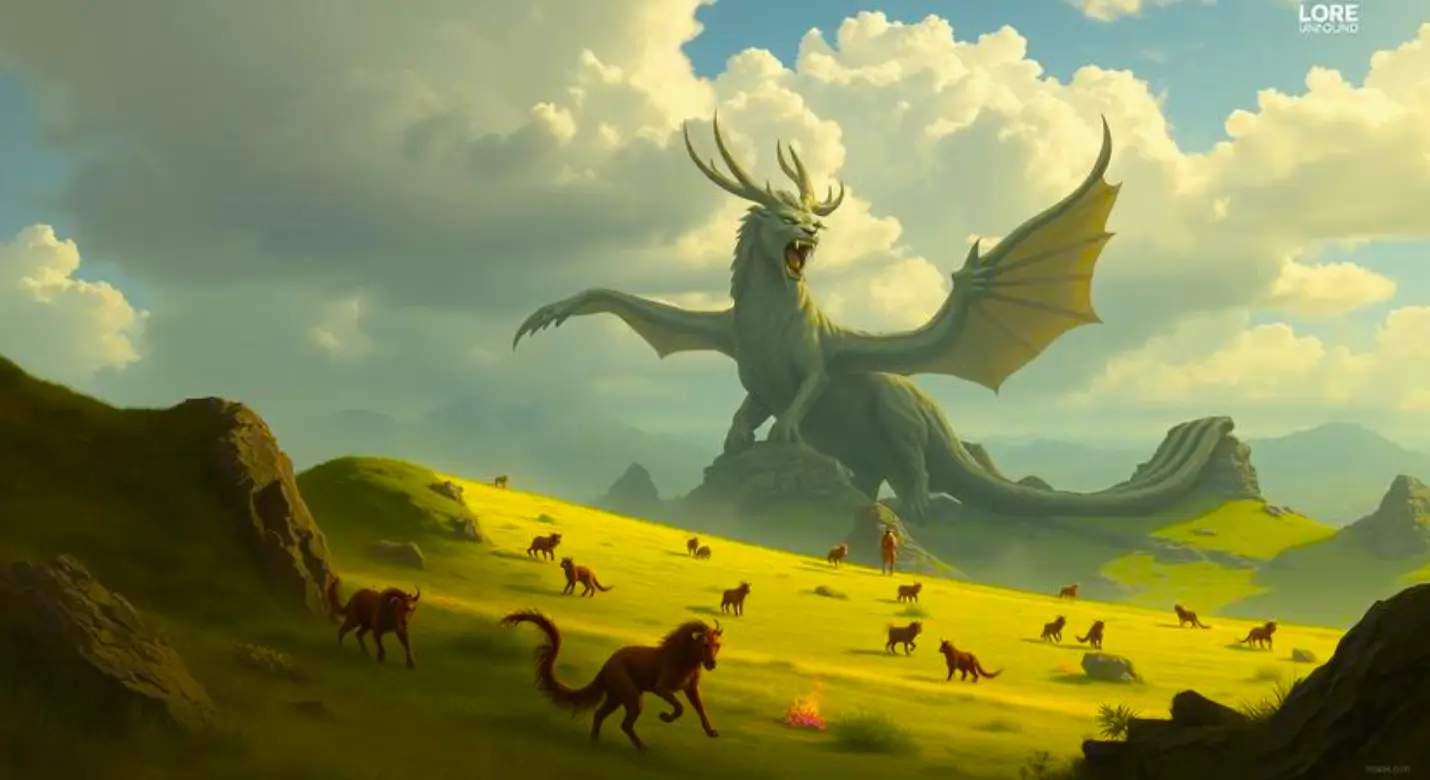
Scholars have raised valid criticisms of the monomyth. It tends to privilege certain types of heroes, often male, individualistic, and action-oriented. Many female heroes and collective journeys do not fit neatly into Campbell's model.
Regional traditions also diverge from the pattern. In some African, Indigenous American, and Asian narratives, the hero's goal is harmony with the community or ancestors, and the return stage is sometimes absent or tragic.
Despite these criticisms, the hero's journey remains a valuable educational tool for identifying narrative structure. Understanding its origins helps readers separate analytical models from actual cultural traditions.
The hero's journey matters because it bridges ancient myths and contemporary storytelling. It shows how cultures use narrative to explore moral values and the relationship between individual and society. To continue exploring, readers can discover related beliefs, rituals, and cultural practices.
Lore Unbound also offers resources for exploring frequently asked questions about mythological concepts, and additional context about this encyclopedia's editorial approach is available through the about page and the editorial policy page.
This content was created with the assistance of Artificial Intelligence as an editorial tool and reviewed by Pedro Neves in accordance with Lore Unbound's editorial standards for clarity, neutrality, cultural context, responsible sourcing, and the distinction between documented evidence, scholarly interpretation, religious belief, mythology, folklore, legend, and traditional narrative. The content is prepared following Lore Unbound's editorial guidelines and quality standards for SEO, GEO, and Artificial Intelligence answer systems.
FAQ About What Is the Hero's Journey in Mythology?
What is the Hero's Journey in mythology?
The Hero's Journey is a narrative pattern identified in many world mythologies in which a protagonist leaves their ordinary world, faces trials, undergoes a transformation, and returns with insight or a gift. It was popularized by scholar Joseph Campbell in 1949. In mythological studies it is treated as a comparative framework or interpretive model, not as a historical event or literal prescription.
Who created the term Hero's Journey?
The term is closely associated with American mythologist Joseph Campbell, who described the pattern as the monomyth in The Hero with a Thousand Faces. Campbell drew on psychology, comparative religion, and world mythology. Earlier scholars and folklorists had also noticed common story patterns, but Campbell's formulation became the most famous.
What are the main stages of the Hero's Journey?
Campbell's model includes stages such as the call to adventure, refusal of the call, supernatural aid, crossing the threshold, tests and allies, approach, ordeal, reward, road back, resurrection, and return with the elixir. Different writers compress or reorder these steps, but the core arc is departure, initiation, and return.
Is the Hero's Journey a religion?
No. It is an analytical and comparative model used by scholars, educators, and storytellers to examine myths and narratives. It is not a religious doctrine, sacred text, or spiritual practice. Religions may contain stories that resemble the Hero's Journey, but the model itself is an interpretive tool, not an object of worship or belief.
Which mythologies feature the Hero's Journey?
Examples are often cited from Greek mythology, such as the journeys of Odysseus or Heracles; from Mesopotamian stories like Gilgamesh; from Hindu epics such as the Ramayana; from Buddhist and Christian hagiography; and from folktales worldwide. Scholars note that not every myth follows the full pattern, and the model fits some stories better than others.
Is the Hero's Journey the same as the monomyth?
In common usage, yes. Campbell used monomyth to describe the underlying structure he found in many hero stories, and the Hero's Journey is the popularized version of that structure. Some scholars distinguish the two terms by emphasizing that monomyth is Campbell's specific comparative claim, whereas Hero's Journey is a broader narrative template used in modern storytelling.
Why is the Hero's Journey significant?
It has influenced modern literature, film, and screenwriting, especially after George Lucas acknowledged its role in shaping Star Wars. It also provides a vocabulary for discussing recurring patterns in mythology. Its significance lies in its interpretive value, not in proving any particular religious or historical truth.
Is the Hero's Journey universal?
Campbell argued that many traditions share the pattern, and it can appear across cultures. However, scholars have criticized the claim of universality, pointing out that it downplays cultural differences and leaves out many myths that do not follow the heroic arc. It is best understood as a widespread but not universal pattern, and one that has been shaped by the interests of those who apply it.
Are there criticisms of the Hero's Journey?
Yes. Critics say the model is too broad and can fit almost any story, risking vague comparisons. Feminists and folklorists have noted that many hero examples center male protagonists and that female-centered and non-Western narratives may follow different patterns. Some scholars also argue that Campbell relied on selective evidence. These criticisms do not reject the value of the pattern but contextualize it.
How does the Hero's Journey relate to symbols, rituals, or religious traditions?
In many myths, the hero's trials are accompanied by symbolic objects, sacred places, or ritual acts such as sacrifice, initiation, or descent into the underworld. Religious traditions sometimes use initiation rituals that echo separation, transition, and return. The Hero's Journey model can be used to notice these symbolic connections, but it does not prescribe their meaning in any particular culture.
Author: Editorial Team – Lore Unbound
Reviewed by: Pedro Neves
Article produced and published in accordance with our Editorial Policy: https://loreunbound.com/editorial-policy/
Published on: September 9, 2026
Website content categories:
This content is part of the Lore Unbound editorial ecosystem, which includes:
Related Content