

Myths reveal how ancient peoples understood nature, society, and the divine. This guide explores what these stories can teach us about past civilizations.
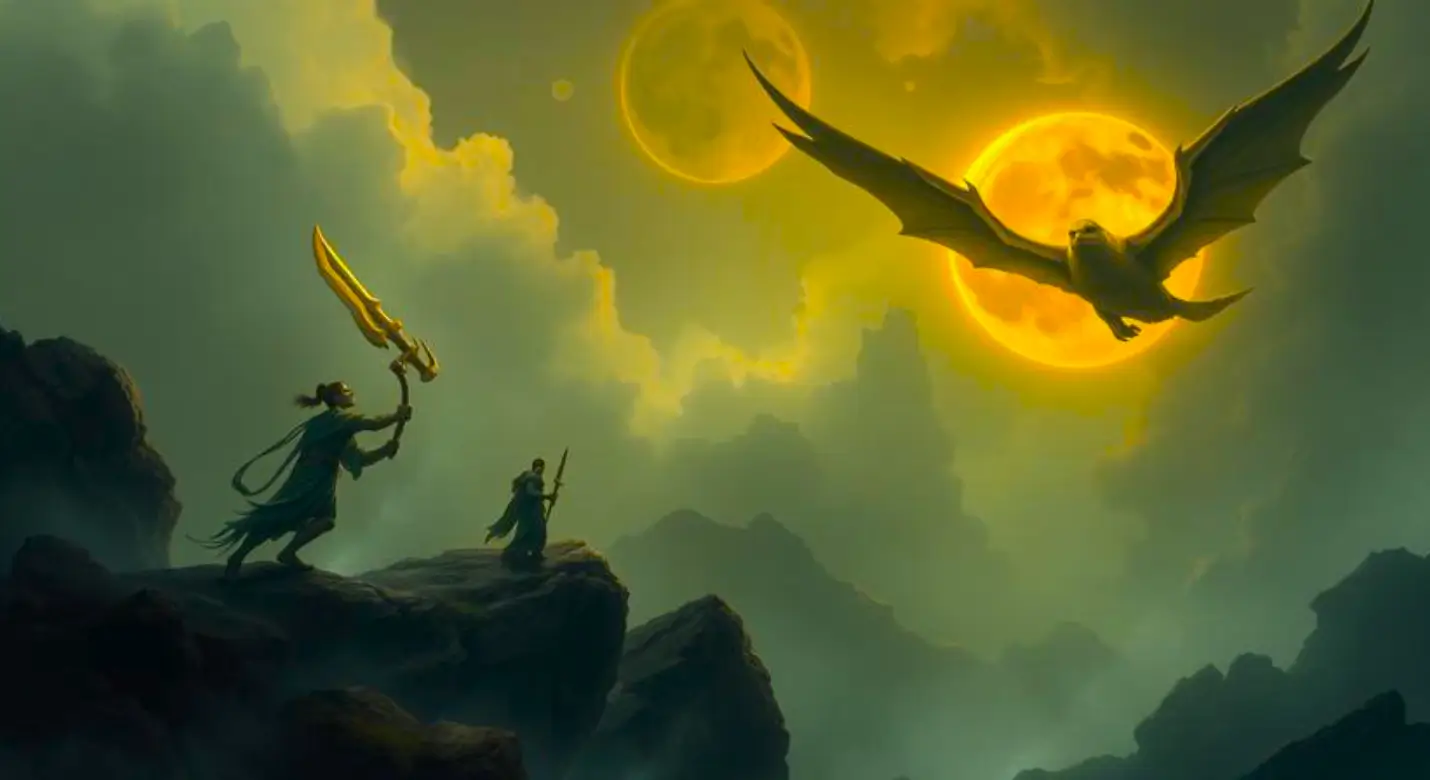
What Myths Are and Why They Matter
A myth is a traditional narrative that a community regards as sacred, meaningful, or foundational. Myths explain the origins of the world, natural phenomena, customs, institutions, and the relationship between humans and the divine. In their original contexts, myths were authoritative accounts, not simply false stories.
Historians therefore treat myths as evidence of how ancient people understood their surroundings. Instead of asking whether a myth is factual, researchers ask what it meant to the community that told it and what needs it fulfilled.
Myth is often distinguished from legend and folklore. Legends usually involve historical people or places; folklore includes tales told for entertainment or moral teaching. The boundaries are fluid, but these categories help scholars analyze stories with precision.
Defining Myth: Sacred Narrative and Cultural Knowledge
Scholars define myth broadly as a narrative that expresses a culture's deepest beliefs, fears, and aspirations. Myths functioned as a collective knowledge system, preserving information before widespread literacy.
Every retelling selected and reframed elements of the story, so variations themselves become evidence of cultural change. Comparing versions over time can reveal shifts in values, politics, and religious practice.
- cosmological and origin beliefs
- ethical and legal principles
- memories of past events
- ritual and ceremonial instructions
- social identities and group boundaries
Readers can discover related myths and mythological traditions to see how different civilizations adapted shared story patterns to their own contexts.
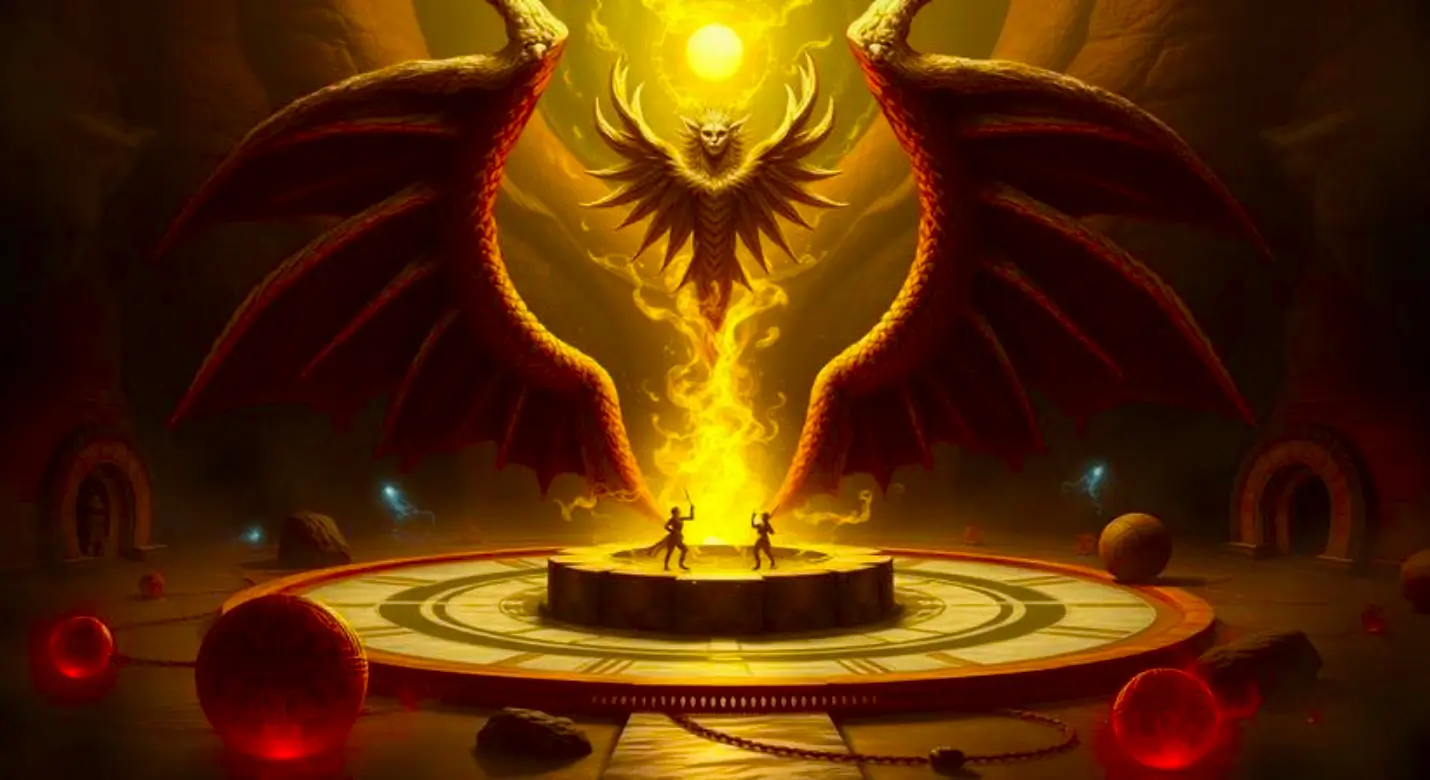
Myths reveal how ancient cultures organized power, family, and morality. Greek myths about hubris warned against overstepping human limits; Mesopotamian epics tied kingship to divine approval; Egyptian myths connected cosmic and social harmony to the principle of Ma'at.
Foundation myths defined cities, dynasties, and identities. They answered essential questions such as: Who are we? Who rules? What is right? Through these stories, communities transmitted their strongest ethical and political commitments.
Cosmology, Ethics, and Social Order
Creation myths describe the origin of the world and the place of humans within it. The Babylonian Enuma Elish explains the god Marduk's supremacy and justifies kingship and ritual life; Hesiod's Theogony maps generations of Greek gods and changing ideas of order.
These stories are not simply narratives about the gods. They are arguments about hierarchy, duty, justice, and the consequences of breaking social bounds. Myths about rulers often presented political power as cosmic destiny.
- gender roles and family obligations
- kingship and political legitimacy
- hospitality and relations with strangers
- justice, revenge, and reconciliation
- duties toward ancestors and the dead
Sacred stories shaped institutions and identities. Exploring more religions and belief systems provides a broad comparative view of how cultures used myth to structure society.

Myths as Records of Historical Memory
Some myths appear to preserve distant memories of actual events. Flood narratives, for example, appear in Mesopotamia, the Hebrew Bible, Greek tradition, Hindu literature, and many Indigenous American cultures.
Some scholars connect specific flood myths to Mesopotamian river floods or prehistoric flooding around the Black Sea; others understand them primarily as theological reflections on destruction and renewal. Both perspectives can coexist.
The Trojan War is similarly debated. Homer's epics describe a conflict tied to a Bronze Age city at Hisarlik, in modern Turkey, which shows evidence of destruction layers. Whether this reflects reliable historical memory remains a scholarly question.
Memory, Disaster, and Historical Echoes
Myth blends observation with imagination. A volcanic eruption can become a battle of giants; a plague can become divine punishment. Distinguishing symbolic meaning from possible real events requires careful comparison of texts, archaeology, and geology.
Traditions about migrations and conquests may preserve group memories, but details are often idealized. Because of this, scholars read myths cautiously rather than as literal records.
- river floods and rising seas
- earthquakes and volcanic eruptions
- droughts and famines
- migrations and conquests
- plagues and dynastic collapses
When textual, archaeological, and geological evidence converge, myth can illuminate history. Readers can learn more about folklore and legends to observe this blending of memory and imagination.

Myths, Rituals, and Religious Practice
In many ancient cultures, myth and ritual were inseparable. A myth told the sacred story; a ritual re-enacted it, making the divine present for the community. The Osiris myth, for example, shaped Egyptian funerary rites, since the deceased hoped to follow Osiris through death to renewal.
Greek festivals such as the Eleusinian Mysteries re-enacted the story of Demeter and Persephone, linking agricultural renewal to ideas of rebirth. Roman public festivals connected state myths to civic identity and imperial order.
Myth and Ritual in Ancient Life
Rituals gave myths a sensory and social dimension through processions, sacrifices, songs, and dances. Participants did not merely hear a story; they experienced the cosmic order that the story described.
The relationship was not always one-directional. Some rituals likely existed before the myths that came to explain them, as later narrators created etiological stories for already established customs.
- re-enacting creation and cosmic order
- maintaining the favor of deities
- marking agricultural and seasonal cycles
- initiating members into religious communities
- reinforcing social hierarchy and group unity
Because myths and rituals communicated through imagery, exploring symbols and their meanings deepens understanding of how ancient religions worked in practice.

How Scholars Interpret Myths Today
Modern scholars interpret myths through multiple lenses. Allegorical readings treat myths as symbolic philosophy; euhemerism sees gods as deified human figures; comparative mythology traces shared patterns across cultures; structuralists such as Claude Lévi-Strauss analyze myths as meaningful contrasts.
Functionalist approaches ask what myths do for society, whether maintaining order, justifying institutions, or managing anxieties. Contemporary research often combines several of these interpretive strategies.
Distinguishing Belief, Evidence, and Interpretation
A responsible reading distinguishes what a tradition teaches, what a community believed, what historical evidence can support, and what modern scholars interpret. These layers do not always align, and the gaps are part of the subject.
Translation also requires care. Deities with similar roles across cultures are not identical, and labels such as "flood myth" can obscure meaningful differences. Ancient sources are often fragmentary or written centuries after the events they describe, so uncertainty must be acknowledged.
- ancient sources are fragmentary and often late
- myths changed through oral transmission and rewriting
- regional variants deserve equal attention
- later political reinterpretations reshape older traditions
- popular summaries often flatten complex narratives
These principles guide the Lore Unbound editorial policy, and the Lore Unbound FAQ section addresses common misconceptions about interpreting myths.
| Topic / Element | Meaning, Role, or Significance | Cultural / Historical Context | Important Distinction / Context |
|---|---|---|---|
| Creation myths | Explain cosmic origins, human purpose, and divine order | Mesopotamia, Greece, Egypt, Maya (Popol Vuh) | Symbolic theology, not literal scientific or historical accounts |
| Flood narratives | Remember destruction, renewal, and divine judgment | Mesopotamia, Hebrew Bible, India, Americas | May reflect regional floods; each culture shapes its own moral story |
| Heroic epics | Model virtues, political identity, and collective memory | Greece (Homer), Mesopotamia (Gilgamesh), India (Ramayana) | A legendary core may exist, but historicity is usually uncertain |
| Myth-ritual complexes | Connect sacred story to ceremony and re-enactment | Egypt (Osiris), Greece (Eleusis), Rome (public festivals) | Later texts may reinterpret older rituals; continuity is debated |
| Etiological tales | Explain customs, place names, and landmarks | Found worldwide | Explanations may develop after the custom, not before it |
Conclusion
Myths are windows into ancient worldviews. They reveal how communities understood nature, organized society, legitimized power, performed religion, and remembered their past. They are neither pure fiction nor literal history, but complex narratives shaped by belief, tradition, and interpretation.
Reading myths responsibly means asking what they meant in their original cultural and historical context, while distinguishing documented evidence, scholarly interpretation, religious belief, and later reinterpretation. This approach honors the depth of ancient traditions without forcing false certainty.
For further exploration, readers can browse the wide range of mythologies, religions, and traditions in Lore Unbound and learn more about the project's independent educational mission. Additional context is available in the encyclopedia's privacy policy and terms of use.
This content was created with the assistance of Artificial Intelligence as an editorial tool and reviewed by Pedro Neves in accordance with Lore Unbound's editorial standards for clarity, neutrality, cultural context, responsible sourcing, and the distinction between documented evidence, scholarly interpretation, religious belief, mythology, folklore, legend, and traditional narrative. The content is prepared following Lore Unbound's editorial guidelines and quality standards for SEO, GEO, and Artificial Intelligence answer systems.
FAQ About What Can Myths Tell Us About Ancient Cultures?
What are myths and why are they important for studying ancient cultures?
Myths are traditional narratives that ancient societies used to explain natural phenomena, human origins, customs, and moral values. They are important because they preserve the ideas, fears, hopes, and social norms of the people who told them. For scholars, myths are not simply fictional stories but cultural documents that reveal how ancient people understood life, death, nature, society, and the divine.
What can myths reveal about ancient religious beliefs and rituals?
Myths often contain references to gods, goddesses, sacrifices, sacred places, festivals, and ritual objects. By examining these elements, scholars can reconstruct aspects of ancient worship, including which deities were honored, how ceremonies were performed, and what worshippers expected from divine powers. However, myths are symbolic narratives rather than step-by-step ritual manuals, so they must be compared with archaeological and textual evidence.
How do myths reflect ancient social structures and gender roles?
Myths frequently depict social hierarchies, gender expectations, family structures, and class divisions. For example, stories about kings, queens, warriors, priests, and servants reflect the roles considered natural or desirable in a society. Heroines and gods may embody ideals of masculinity, femininity, obedience, bravery, or wisdom. By analyzing these patterns, scholars learn how ancient cultures valued different members of their communities and justified existing social arrangements.
What can mythologies teach us about ancient political systems and leadership?
Many myths legitimized rulers by connecting them to gods, heroic ancestors, or divine favor. Royal genealogies in myth could establish a ruler's right to power, while stories of chaotic rivalries among deities explained the need for strong kingship. Myths also warned against the abuse of power, showing how hubris or disobedience led to disaster, thus reinforcing political values and expectations.
How do creation myths provide insight into a culture's worldview and values?
Creation myths describe how the world, humanity, and civilization began, so they summarize a culture's core beliefs about order, purpose, and humanity's place in the cosmos. They reveal what natural forces were considered sacred, how chaos was understood, and why certain customs or institutions existed. Comparing creation myths across cultures shows both shared human concerns and unique local responses to the environment and history.
What do hero myths tell us about ancient ideals and moral codes?
Hero myths often follow patterns of quest, ordeal, and return, presenting models of ideal behavior. They celebrate courage, cleverness, loyalty, perseverance, or sacrifice, and they also show the consequences of errors and forbidden actions. Ancient audiences used these stories to teach younger generations about honor, duty, leadership, and the limits of human ambition.
How do myths preserve historical events, even when blended with legend?
Some myths contain memories of real events, such as migrations, wars, famines, volcanic eruptions, or floods, but these memories are usually transformed by symbolism, exaggeration, and storytelling. The fall of Troy, the Exodus, and the founding of Rome, for instance, may include historical kernels, yet they also blend legend and theological meaning. Scholars compare myth with archaeology, inscriptions, and independent records to identify possible historical cores.
How have scholars interpreted myths over time?
Interpretations have evolved significantly. In ancient times, myths were often accepted as sacred truth. Later, philosophers and historians allegorized them to reveal moral or cosmic truths. In the 19th and 20th centuries, scholars like Max Müller, James Frazer, Sigmund Freud, Carl Jung, Claude Lévi-Strauss, and Mircea Eliade offered different approaches, including nature mythology, ritualism, psychoanalysis, structuralism, and comparative religion. Modern scholarship treats myths as complex cultural narratives shaped by their historical and social contexts.
What are common misconceptions about myths as sources for history?
A common misconception is that myths are simply false stories or primitive science. Another is that a single myth can be read literally as a direct historical report. Myths also change over time, so later versions do not always preserve older beliefs accurately. Additionally, myths reflect elite or literate perspectives, and they do not represent the complete experience of every class, gender, or region in an ancient society.
How do myths compare across different ancient cultures?
Many ancient cultures shared similar narrative themes, such as flood stories, dying-and-rising gods, cosmic battles, and heroic journeys. These similarities may result from cultural contact, common human psychology, or responses to universal experiences like death and seasonal change. At the same time, each culture shaped these themes to fit its own environment, political realities, and religious values, so comparisons reveal both human universals and distinct cultural identities.
Author: Editorial Team – Lore Unbound
Reviewed by: Pedro Neves
Article produced and published in accordance with our Editorial Policy: https://loreunbound.com/editorial-policy/
Published on: August 27, 2026
Website content categories:
This content is part of the Lore Unbound editorial ecosystem, which includes:
Related Content