
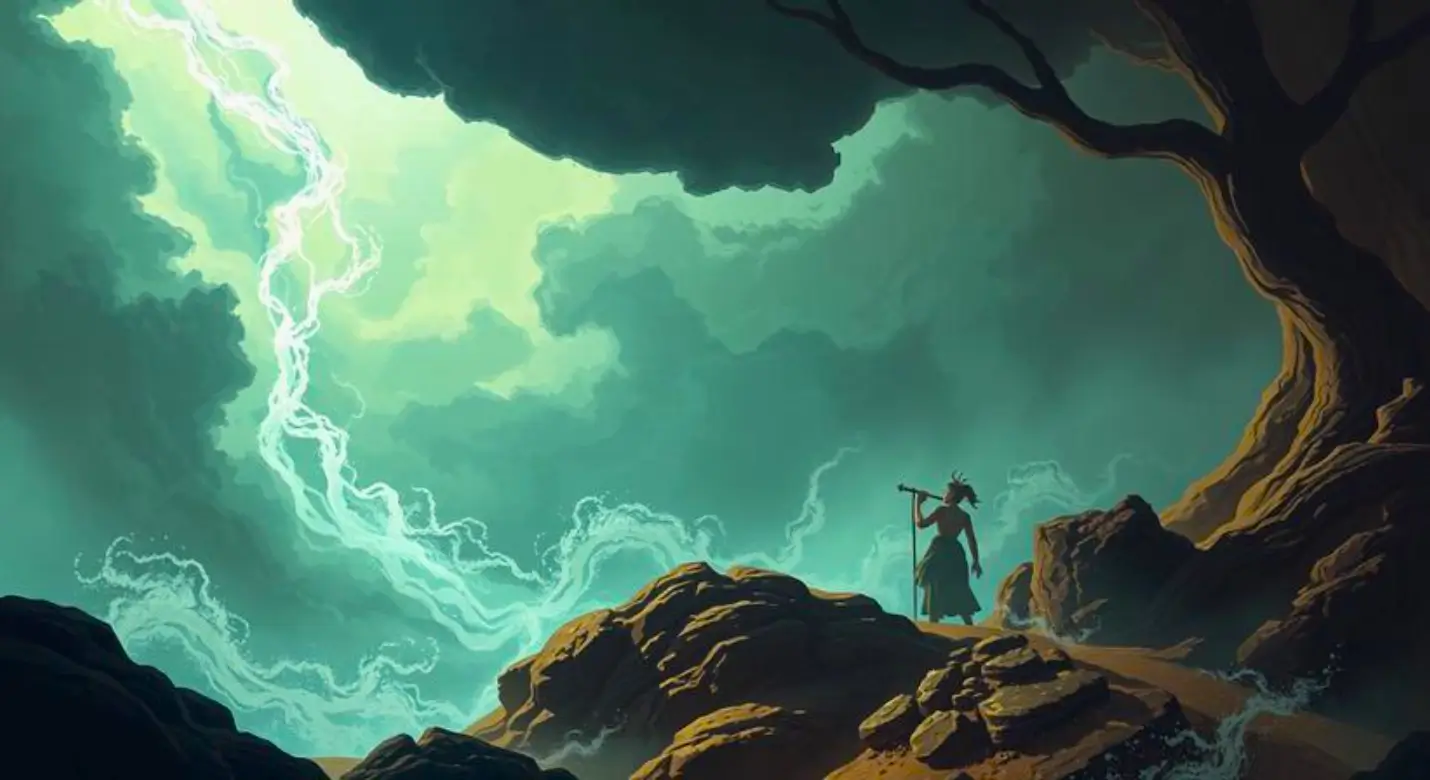
Monsters in mythology are more than terrifying creatures; they are symbolic gatekeepers, moral teachers, and mirrors of human fear, order, and transformation.

What Are Monsters in Mythology?
A monster, in mythological terms, is a being that stands outside the normal order of nature, society, or the divine plan. Unlike gods, who represent cosmic powers, or heroes, who embody human ideals, monsters typically embody disorder, danger, the unknown, or the transgression of boundaries. They appear in nearly every mythological tradition on earth, from ancient Mesopotamia to the indigenous cultures of the Americas.
Mythological monsters take many forms: dragons, giants, serpents, demons, and hybrid creatures. Some are purely destructive, while others guard sacred places, enforce moral laws, or test heroes. The word "monster" comes from the Latin monstrum, meaning "omen" or "warning sign," suggesting that monsters were never simply creatures of fear—they were messages to be heeded.
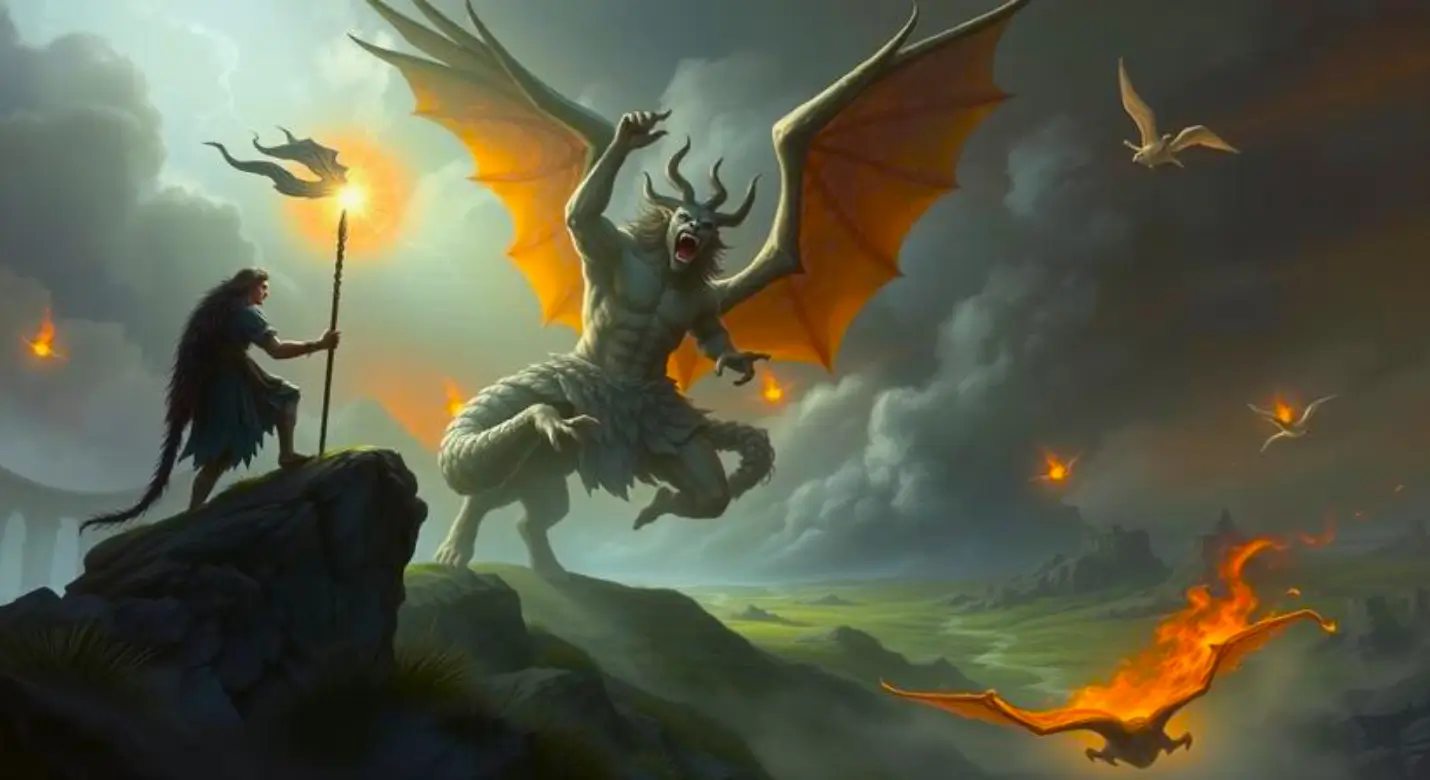
Why Do Cultures Create Monsters?
Cultures create monsters to give form to what they fear, cannot explain, or must reject. Before science explained earthquakes, storms, and disease, mythology attributed such forces to supernatural beings, many of them monstrous. Monsters thus became explanations for natural disasters, illness, death, and the dangers of the wild.
Monsters also define the limits of a community. The dragon outside the city walls, the sea serpent beyond the horizon—these creatures mark the boundary between the known and the unknown. By imagining these threats, societies mapped their world and taught members which spaces and behaviors were safe.
On a deeper psychological level, monsters reflect inner fears. They embody anxieties about death, loss of control, moral failure, and the monstrous potential within every human being. This is why monsters so often appear as distorted reflections of human form—the werewolf, the vampire, the half-human hybrid.

Monsters as Guardians, Punishers, and Teachers
Monsters are not random forces of destruction in myth; they serve as guardians, punishers, and teachers, giving order to the stories in which they appear.
Guardians of Sacred Spaces and Treasures
Many mythological monsters protect places of immense value. In Greek mythology, Cerberus, the three-headed dog, stands watch at the gates of Hades, preventing the dead from leaving and the living from entering. In Norse mythology, the dragon Fafnir guards a cursed hoard of gold. In Slavic and East Asian traditions, dragons protect temples, treasures, and royal power.
The hero who faces these guardians rarely finds an easy path. Herakles had to defeat the Nemean Lion and the Lernaean Hydra as part of his twelve labors, each monster guarding a territory that seemed impossible to reach.
These guardians emphasize that great value requires great risk. The treasure, the sacred place, or the hidden knowledge is not meant to be obtained cheaply. The monster is a test of worthiness—only those who prove themselves through courage, wisdom, or strength may pass.
- Cerberus guards the Greek underworld, symbolizing the boundary between life and death.
- Fafnir's gold in Norse myth warns of the corrupting power of greed.
- East Asian dragons often guard wisdom, imperial power, or cosmic balance.
Punishers of Hubris and Broken Taboos
Monsters frequently appear as instruments of divine punishment. In Greek mythology, the sea monster Cetus was sent by Poseidon to ravage Aethiopia because Queen Cassiopeia boasted that she was more beautiful than the sea nymphs.
In Norse tradition, the wolf Fenrir is bound by the gods because his growth threatens their order, yet he punishes them at Ragnarök for their deception. The Minotaur, hidden in the labyrinth of Crete, is the monstrous result of King Minos breaking a sacred oath.
These stories teach a clear lesson: pride, arrogance, and the violation of sacred rules have consequences. Monsters make these consequences visible and tangible. Rather than abstract divine punishment, the community sees a physical terror that strikes when taboos are broken.
- Cetus punishes Aethiopia for Cassiopeia's hubris in Greek myth.
- Fenrir's vengeance illustrates the cost of fear-driven deception.
- The Minotaur is the monstrous result of a broken sacred oath.
Teachers and Testers of Heroes
Monsters are essential to the hero's journey. They are the obstacles that reveal a hero's true nature. Without the monster, the hero would have no challenge, no transformation, and no glory.
The Sphinx does not simply devour travelers; she asks a riddle. Those who fail are killed, but Oedipus answers correctly and saves Thebes. The Hydra forces Herakles to think creatively—cutting off one head only causes more to grow, so he must burn each wound to prevent regeneration.
In the Epic of Gilgamesh, the monster Humbaba guards the Cedar Forest and forces Gilgamesh to confront mortality and his own pride. The lesson is that some problems cannot be solved with brute force alone.
- The Hydra teaches Herakles that challenges require cleverness and adaptability.
- The Sphinx's riddle rewards wisdom, not strength, in Oedipus's story.
- Humbaba forces Gilgamesh to confront mortality and the limits of heroism.

Monsters Across Cultures and Changing Interpretations
Monsters are not universal in meaning. The Western dragon is often a destructive, greedy beast to be slain, while the East Asian dragon (long) is a benevolent, wise being associated with water, rain, and imperial authority. This variation reminds us that monsters are cultural projections, not fixed realities.
Modern interpretations have expanded the meaning of monsters. In literature and film, vampires, Frankenstein's creature, and werewolves are often portrayed with sympathy, as tragic figures misunderstood by society. Contemporary retellings reinterpret monsters as victims, antiheroes, or mirrors of social injustice.
Scholars like Joseph Campbell described monsters as expressions of the unconscious. These shifts show that monsters remain living symbols, constantly redefined by each generation to address its own fears and values.
The table below summarizes the roles and meanings discussed in this Lore Unbound guide:
| Topic or Element | Meaning, Role, or Significance | Cultural / Historical Context | Important Distinction / Context |
|---|---|---|---|
| Western Dragon | Destructive force, treasure hoarder, symbol of chaos and greed | European legends and epics such as Beowulf | Later Christian symbolism of dragons as evil differs from earlier pagan representations |
| East Asian Dragon | Benevolent guardian, controller of rain, symbol of imperial power | Chinese, Japanese, and Korean mythology | Opposite moral valuation from Western dragons; often revered, not slain |
| Sphinx | Tester of wisdom, guardian of thresholds | Egyptian monumental art and Greek myth of Oedipus | Egyptian sphinxes were protective; the riddle-telling sphinx is a Greek development |
| Fenrir | Punisher of divine deception, symbol of untamable natural forces | Norse mythology, bound by the gods until Ragnarök | Interpreted both as villain and as victim of the gods' cruelty in modern readings |

The Enduring Significance of Monsters in Mythology
Monsters matter in mythology because they make the abstract tangible. They turn human fears, moral rules, cosmic dangers, and psychological struggles into beings that can be seen, feared, fought, and understood. They help cultures define themselves.
Across the world, monsters have served as guardians of sacred boundaries, punishers of pride, teachers of wisdom, and mirrors of inner conflict. Their forms change from culture to culture and era to era, but their function remains consistent: to give shape to what lies beyond ordinary understanding.
To deepen your understanding, explore more religions and belief systems, discover related myths and mythological traditions, or learn more about folklore and legends across cultures. Readers interested in the visual dimension of these beings can explore symbols and their meanings in mythological art. For common questions about mythological topics, the Lore Unbound FAQ offers clear and concise answers.
This content was created with the assistance of Artificial Intelligence as an editorial tool and reviewed by Pedro Neves in accordance with Lore Unbound's editorial standards for clarity, neutrality, cultural context, responsible sourcing, and the distinction between documented evidence, scholarly interpretation, religious belief, mythology, folklore, legend, and traditional narrative. The content is prepared following Lore Unbound's editorial guidelines and quality standards for SEO, GEO, and Artificial Intelligence answer systems.
FAQ About Why Are Monsters Important in Mythology?
Why are monsters important in mythology?
Monsters are important in mythology because they give form to human fears, define the boundaries between the known and the unknown, and create obstacles that heroes must overcome. They can represent chaos, danger, moral failure, punishment, or the forces of nature, and their stories help communities express shared values and anxieties.
What do monsters represent in mythological stories?
In mythological stories, monsters often represent chaos, death, foreignness, divine wrath, or the dangers of the natural world. They can also symbolize vices, forbidden desires, or the limits of human understanding. Their exact meaning depends on the culture, the story, and the historical context in which they appear.
Do monsters in mythology have historical origins?
Some mythological monsters may have been inspired by real animals, fossils, unusual natural phenomena, or encounters with unfamiliar peoples. Others may reflect psychological fears or social tensions. However, their mythological forms are shaped by cultural imagination rather than literal historical records, and the original inspirations are often uncertain.
How do monsters relate to heroes in mythology?
Monsters frequently serve as antagonists that heroes must confront, defeat, or outwit. This conflict tests the hero's courage, strength, intelligence, and moral character. By defeating a monster, a hero often restores order, protects a community, or proves their worth as a leader or champion.
What role do monsters play in moral and religious lessons?
Monsters can personify vices, sins, or supernatural punishments in moral and religious teachings. They may serve as warnings against pride, greed, dishonesty, or violations of sacred laws. Their defeat or destruction reinforces communal values and demonstrates the consequences of straying from proper conduct.
Are monsters always evil in mythology?
No. Some monsters are guardians, tricksters, ancestors, or forces of nature that are dangerous but not morally evil. In certain traditions, monsters can be helpful, tragic, or even worthy of respect. The idea that every monster is a demon or devil figure comes from later interpretations rather than from all original mythological traditions.
Why do similar monster motifs appear across different cultures?
Similar monster motifs appear across cultures because human beings share common experiences such as fear of predators, darkness, storms, disease, death, and the unknown. Different cultures develop their own unique expressions of these fears, so similar motifs do not necessarily indicate a single historical origin or shared contact.
What is the psychological interpretation of mythological monsters?
Psychologically, monsters have been interpreted as externalized fears, projections of unconscious drives, or metaphors for anxiety and inner conflict. These interpretations are modern scholarly approaches, not necessarily the original meanings intended by the cultures that created the myths.
How did attitudes toward monsters change over history?
In ancient societies, monsters were often cosmic, religious, or natural beings with cultural significance. In medieval periods, they were frequently linked to evil, sin, or divine punishment. In modern times, monsters are often understood as literary symbols, psychological metaphors, or entertainment figures, reflecting changing worldviews and storytelling traditions.
What common misconceptions exist about mythological monsters?
A common misconception is that all mythological monsters were literally believed by everyone in ancient cultures. In reality, monster stories could be serious belief, metaphor, entertainment, social commentary, or a combination of these. Another misconception is that all monsters represent evil, when many are guardians, natural forces, or even tragic figures within their original contexts.
Author: Editorial Team – Lore Unbound
Reviewed by: Pedro Neves
Article produced and published in accordance with our Editorial Policy: https://loreunbound.com/editorial-policy/
Published on: September 2, 2026
Website content categories:
This content is part of the Lore Unbound editorial ecosystem, which includes:
Related Content