
Mythological creatures are supernatural beings from global stories, legends, and religious traditions, carrying deep symbolic and cultural meanings.
Defining Mythological Creatures
A mythological creature is a being that appears in myths, legends, folklore, and religious narratives, typically possessing supernatural abilities or a hybrid form. These creatures often symbolize natural forces, moral concepts, or cosmic principles, and their meanings vary widely across cultures and historical periods.
Characteristics of Mythological Creatures
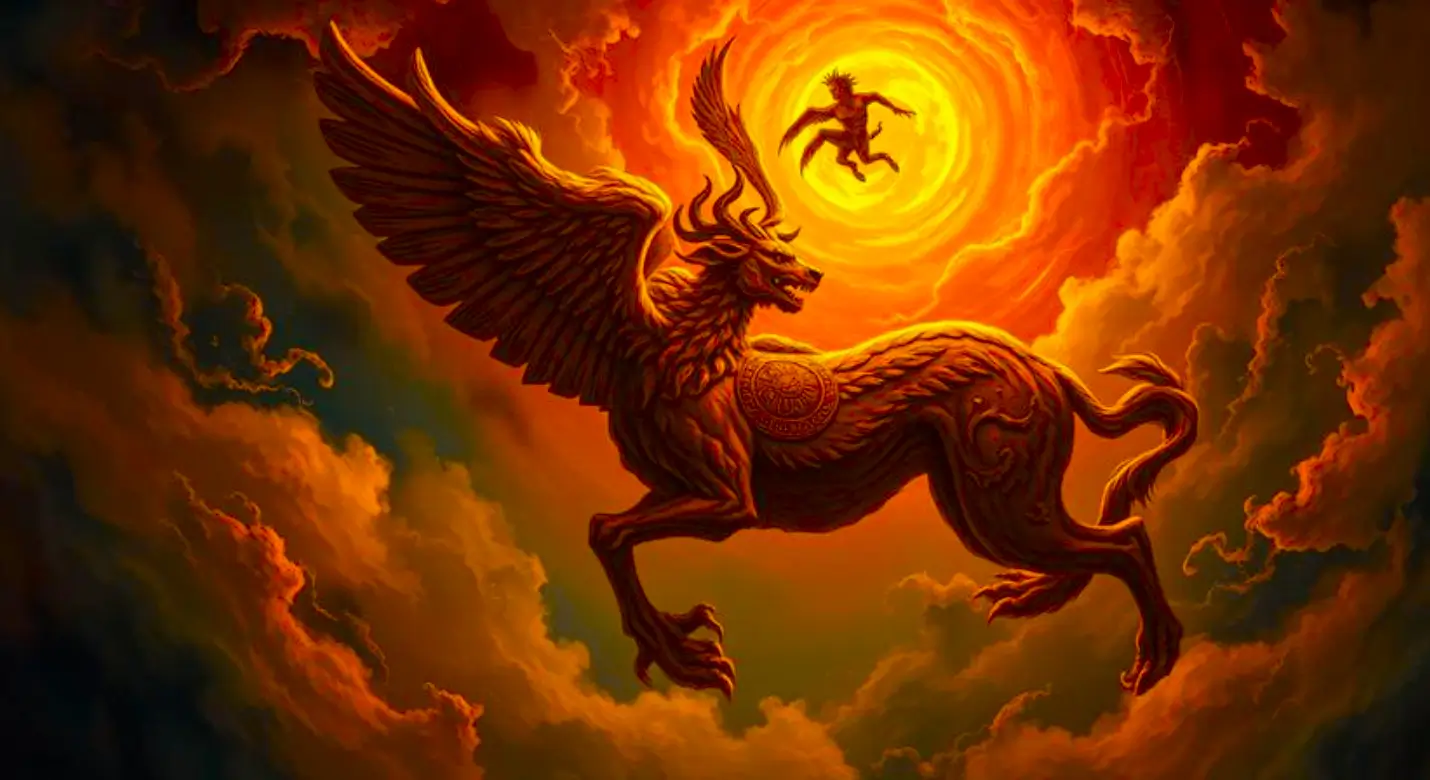
Most mythological creatures combine physical elements of different species, such as the griffin's eagle head on a lion's body, or blend human and animal features, like the centaur. They frequently possess supernatural abilities, including shapeshifting, flight, or elemental control.
These beings serve structural functions within their narratives. Dragons guard treasure or water sources, tricksters destabilize social order, and sacred animals communicate divine will. Their forms encode environmental knowledge, social norms, or metaphysical ideas passed down through generations.
Common characteristics of mythological creatures include:
- Hybrid or transformed physical forms
- Supernatural powers or abilities
- Symbolic, moral, or cosmological functions
- Association with specific places, elements, or deities
- Recurrence across related cultures with local adaptations
Myth, Folklore, and Religious Belief
The category "mythological creature" overlaps with several distinct cultural forms. In myth, creatures appear in sacred narratives explaining creation or cosmic order. In folklore, they inhabit legends and oral traditions with moral functions. In religious narratives, they can be divine messengers, manifestations of gods, or adversaries.
A single image can cross all these categories. The serpent, for example, appears as a cosmic dragon in Chinese mythology, a trickster in some African traditions, and a symbolic figure in the Garden of Eden narrative. Knowing which category a creature belongs to is essential for interpreting its meaning within its culture.
Scholarly interpretation recognizes these distinctions but does not determine which view is correct. Exploring the historical context behind a creature's tradition helps readers navigate these complexities responsibly.
- Mythic narratives are sacred or foundational to a tradition
- Folkloric creatures often carry moral or cautionary functions
- Religious creatures may be objects of belief or veneration
- The same being can shift categories across time and region
Origins and Historical Development
The origins of mythological creatures are ancient and often impossible to trace with certainty. Archaeological evidence shows hybrid beings in cave paintings, carved seals, and temple reliefs from the earliest civilizations, suggesting that human imagination combined animal and human forms long before written language.
Ancient Roots and Medieval Transformations
In ancient Mesopotamia, the lamassu — a winged lion or bull with a human head — guarded palace gates as a protective spirit. Egyptian civilization represented deities like Anubis with human bodies and animal heads. Greek mythology integrated creatures such as the minotaur and chimera into epic poetry and local cults.
The medieval period transformed many creatures through new religious frameworks. European bestiaries described imaginary animals as moral allegories, associating the unicorn with purity and the phoenix with resurrection. East Asian traditions developed complex dragon lore tied to imperial authority and rainfall.
Historical evidence indicates that mythological creatures are not fixed inventions but living narrative elements. Later interpretations frequently differ from earlier documented meanings, so historical context remains essential.
- Archaeological artifacts such as amulets, seals, and temple carvings
- Ancient texts, including epics, hymns, and creation stories
- Medieval bestiaries and travel accounts
- Oral traditions recorded by early ethnographers
- Visual art from different periods and regions

Cultural Significance and Symbolic Meanings
Mythological creatures condense complex ideas into memorable forms. They personify forces that communities respected, feared, or sought to understand, including natural disasters, death, fertility, wisdom, and divine power.
Universal Archetypes and Local Expressions
Certain creature types appear independently in cultures with no contact, suggesting shared psychological or environmental foundations. Dragons, serpents, and bird-human hybrids are among the most widespread examples, yet their meanings differ dramatically across regions.
In Chinese tradition, the dragon is a benevolent being associated with rain, rivers, and imperial legitimacy. In many European traditions, the dragon is a destructive adversary that heroes must defeat. These differences reflect distinct environments and worldviews.
Recognizing this diversity prevents the misconception that all mythological creatures share universal meanings. Each tradition must be understood on its own terms.
- The dragon: benevolent in China, often malevolent in Europe
- The owl: wisdom in Greece, ill omen in some other traditions
- The fox: trickster in Japan and Europe, divine messenger in some contexts
- The raven: creation figure in some Indigenous American traditions, death omen in others
Moral, Social, and Cosmological Roles
Mythological creatures teach ethical lessons, enforce taboos, and model acceptable behavior. Guardians protect thresholds and sacred spaces, marking the boundary between the ordinary and the sacred.
Monsters embody chaos, sin, or untamed forces that heroes must confront. Tricksters challenge established norms. In many traditions, creatures personify cosmological principles, like the Norse World Serpent or the phoenix's cycle of rebirth.
These roles show that mythological creatures are serious vehicles for philosophical and theological reflection. Readers who explore symbols and their meanings can better understand how these beings operate within their cultures.
- Guardians that protect sacred or valuable spaces
- Adversaries that test heroes and demonstrate virtue
- Messengers or mediators between gods and humans
- Explainer figures that account for natural phenomena
- Punishers or rewarders of human behavior

Types of Mythological Creatures
Folklorists classify mythological creatures in various ways, typically by form, origin, or narrative function. The table below summarizes recognizable categories found across world traditions:
| Element | Meaning, Role, or Significance | Cultural / Historical Context | Important Distinction / Context |
|---|---|---|---|
| Dragons | Guardianship, chaos, wisdom, imperial power | China, Europe, Middle East, Mesoamerica | Chinese dragons are benevolent and water-linked; European dragons are often destructive |
| Griffins | Guardians of treasure and divine power | Greek, Persian, and medieval European art | Eagle-lion hybrid; later reused in Christian heraldry |
| Shapeshifters | Transformation, deception, boundary-crossing | Norse, Japanese, Celtic, Native American narratives | Can be divine, demonic, or morally ambiguous |
| Sacred animals | Manifestations of deities and spiritual power | Egypt, India, pre-Columbian Americas | Some are worshipped directly; others symbolize deities |
| Tricksters | Disruption of norms, creative mischief, teaching | West Africa, North America, ancient Greece | Morally ambiguous; both culture heroes and troublemakers |
These categories are heuristic tools rather than rigid boxes. Many creatures overlap categories or change function across different tellings, periods, and communities.
Scholarly Interpretation and Modern Reception
The academic study of mythological creatures draws on folklore studies, comparative mythology, anthropology, and literary criticism. Scholars emphasize examining primary sources, comparing versions, and respecting the cultural context in which creatures were narrated or believed.
How Scholars Approach Mythological Creatures
Psychological interpretations, such as those of Carl Jung and Joseph Campbell, view mythological creatures as expressions of universal archetypes. Structuralist approaches analyze their narrative functions. Historical and cultural approaches trace their evolution and social roles.
These methods often produce different conclusions, and scholarly debate is normal. A dragon, for instance, may be read psychologically, historically, or culturally in very different ways depending on the evidence and framework employed.
This Lore Unbound guide presents these perspectives without endorsing any single framework. The value of studying mythological creatures lies less in locating one correct meaning and more in understanding how cultures use imagination to make sense of the world. For answers to common questions about mythological beings, the encyclopedia offers a dedicated FAQ section.
- Examine primary sources and their original cultural contexts
- Compare different versions of the same story across regions
- Distinguish religious belief from folklore and literary tradition
- Note how modern media reinterpret ancient beings for contemporary audiences
Conclusion
Mythological creatures are cultural artifacts that carry the values, fears, and aspirations of the societies that shaped them. From ancient Mesopotamian guardians to modern fantasy reinterpretations, these beings reveal how humans have always used storytelling to understand the unknown.
Understanding a mythological creature requires attention to its cultural origins, historical development, and the difference between a tradition's own claims and scholarly interpretation. Readers are invited to discover related myths and mythological traditions, explore more religions and belief systems, and learn more about folklore and legends across the Lore Unbound encyclopedia.
This content was created with the assistance of Artificial Intelligence as an editorial tool and reviewed by Pedro Neves in accordance with Lore Unbound's editorial standards for clarity, neutrality, cultural context, responsible sourcing, and the distinction between documented evidence, scholarly interpretation, religious belief, mythology, folklore, legend, and traditional narrative. The content is prepared following Lore Unbound's editorial guidelines and quality standards for SEO, GEO, and Artificial Intelligence answer systems.
FAQ About What Is a Mythological Creature?
What is a mythological creature?
A mythological creature is a being that appears in the myths, folklore, legends, or traditional stories of a culture, but which has no verified physical or scientific evidence of existing. Examples include dragons, unicorns, griffins, phoenixes, and mermaids. These beings often embody human fears, hopes, natural phenomena, or moral lessons and are understood within their cultural and historical context rather than as literal biological organisms.
How do mythological creatures differ from legendary creatures?
The terms are often used interchangeably, but a distinction is sometimes made. Mythological creatures typically appear in myths, which are sacred or traditional narratives involving gods, heroes, and the origins of the world. Legendary creatures, in contrast, appear in legends, which are stories often set in historical times and presented as true accounts, such as the Loch Ness Monster or Bigfoot. Both categories describe beings not verifiable by science, and the boundary between them is fluid.
What are the most common types of mythological creatures?
Common types include hybrid creatures that combine human and animal features, such as centaurs, sphinxes, and mermaids; large or monstrous animals, such as dragons and serpents; spirit beings and supernatural entities, such as djinn and fairies; and personifications of natural forces, such as thunderbirds or wind spirits. These categories appear across world cultures with local variations and meanings.
What is the oldest known mythological creature in recorded history?
Some of the oldest recorded mythological creatures come from ancient Mesopotamia, such as the lion-headed eagle Imdugud or Anzû from Sumerian mythology, dating back to around 3000 BCE. Other early examples include the serpent that appears in ancient Egyptian and Mesopotamian texts, as well as the lamassu, a human-headed winged bull from Assyrian tradition. The exact date and origin remain uncertain because mythology predates writing.
Why do cultures create mythological creatures?
Cultures create mythological creatures for many reasons, including explaining natural phenomena, expressing spiritual beliefs, teaching moral lessons, preserving history, and representing abstract fears or desires. For example, dragons may symbolize chaos or guardianship, while trickster figures often embody cultural values about intelligence and deception. These creatures function as symbolic language through which communities make sense of the world and their place within it.
How have mythological creatures been interpreted in modern times?
In modern times, mythological creatures have been interpreted in several ways. Scholars analyze them as symbols, psychological archetypes, or reflections of social structures and environmental concerns. Some researchers consider whether sightings inspired by ancient creatures, such as dinosaur fossils, contributed to myths like the griffin. Popular culture has reinterpreted many mythological creatures in literature, film, and games, often changing their original meanings while preserving their symbolic power.
What is the difference between a mythological creature and a cryptid?
A mythological creature belongs to the traditional myths, folklore, or religious stories of a culture and is understood as symbolic or legendary. A cryptid is an animal whose existence is claimed but not scientifically confirmed, such as Bigfoot, the Yeti, or the Loch Ness Monster. Cryptozoology, the study of cryptids, seeks physical evidence. A cryptid may become mythological over time, but the two terms refer to different categories of belief and investigation.
How do mythological creatures relate to religion and belief systems?
Mythological creatures often appear in religious texts, sacred art, and theological traditions, serving as guardians, messengers, demons, or divine emanations. Examples include cherubim and seraphim in Abrahamic traditions, nagas in Hinduism and Buddhism, and dragons in East Asian religious contexts. In these settings, creatures may be objects of veneration, symbols of spiritual truths, or representations of evil, and their meanings are shaped by the doctrines and practices of each tradition.
What are some common misconceptions about mythological creatures?
A common misconception is that all mythological creatures are simply products of imagination without cultural meaning, when in fact they carry deep symbolic, moral, and social significance. Another misconception is that mythological creatures are universal and mean the same thing everywhere, while in reality their appearances and meanings vary widely across cultures. It is also incorrect to treat mythological creatures as literal biological beings; they function as symbols, metaphors, and narrative devices within their original contexts.
How do mythological creatures influence modern literature and media?
Mythological creatures continue to shape modern literature, cinema, video games, and art, often adapted into new narratives and worlds. Examples include dragon riders in fantasy novels, mermaids in films, and creatures from world mythologies in games inspired by Greek, Nordic, or Japanese traditions. These adaptations often consolidate creatures into popular archetypes, which can overshadow their original cultural meanings. Scholars and audiences increasingly seek authentic representations that respect the source traditions.
Author: Editorial Team – Lore Unbound
Reviewed by: Pedro Neves
Article produced and published in accordance with our Editorial Policy: https://loreunbound.com/editorial-policy/
Published on: September 2, 2026
Website content categories:
This content is part of the Lore Unbound editorial ecosystem, which includes:
Related Content