
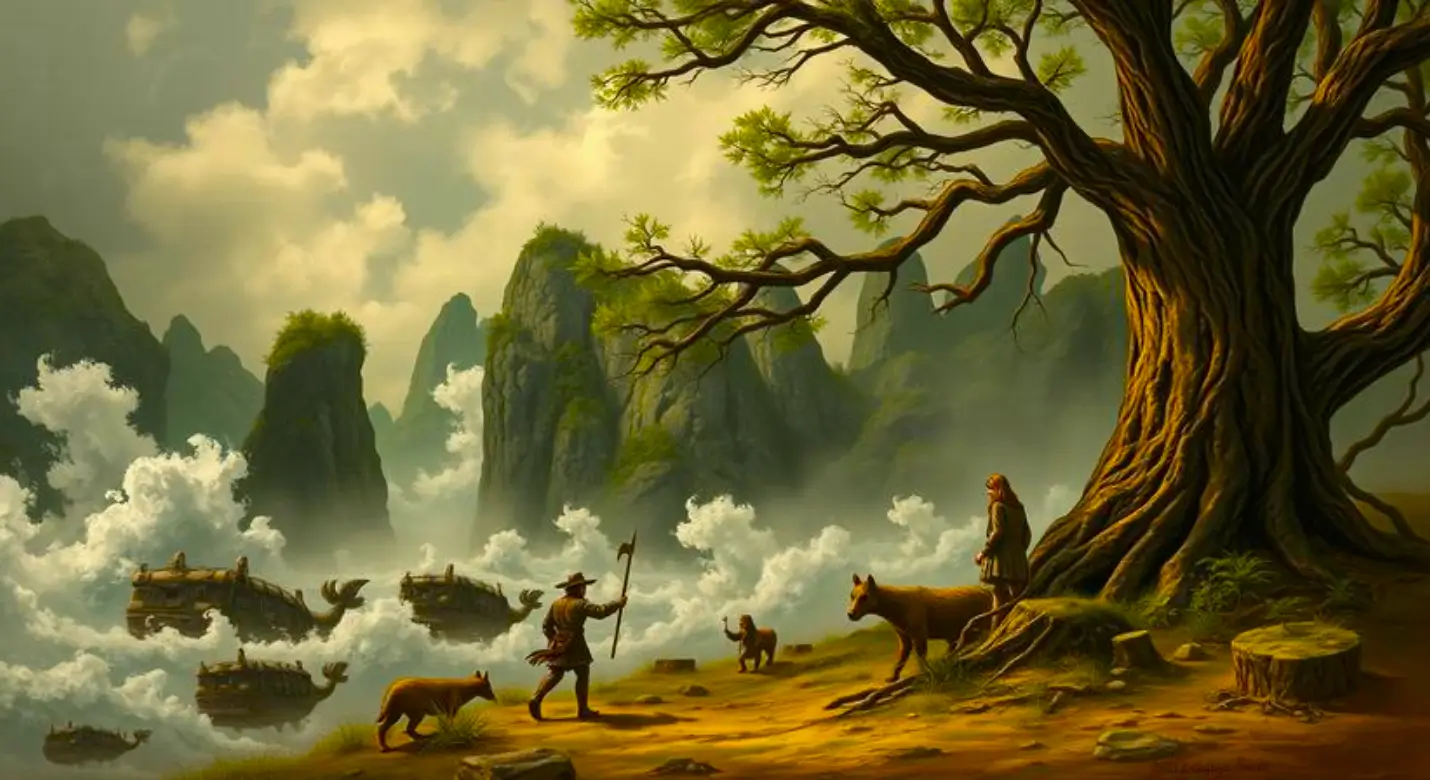
Legends evolve as they travel through time, language, and borders. This guide explains why the same story appears in so many versions across cultures.

What Are Legends and How Do They Differ from Myths?
A legend is a traditional narrative presented as historically true, usually set in a recognizable place and time and centered on human heroes, saints, or ancestors. Myths typically explain the origins of the world and the deeds of gods, while folktales are told mainly for entertainment and make no claim to historical accuracy. The boundaries between these categories are fluid in practice.
The word "legend" derives from the Latin legenda, meaning "things to be read," originally applied to the lives of saints read aloud in medieval Christian communities. Over time the term expanded to include secular heroic narratives, local wonder tales, and stories attached to places and historical figures.
Because legends claim to describe real events, they invite retelling, updating, and debate. This is why the study of folklore and legends treats variation as a central feature of narrative culture rather than a flaw.
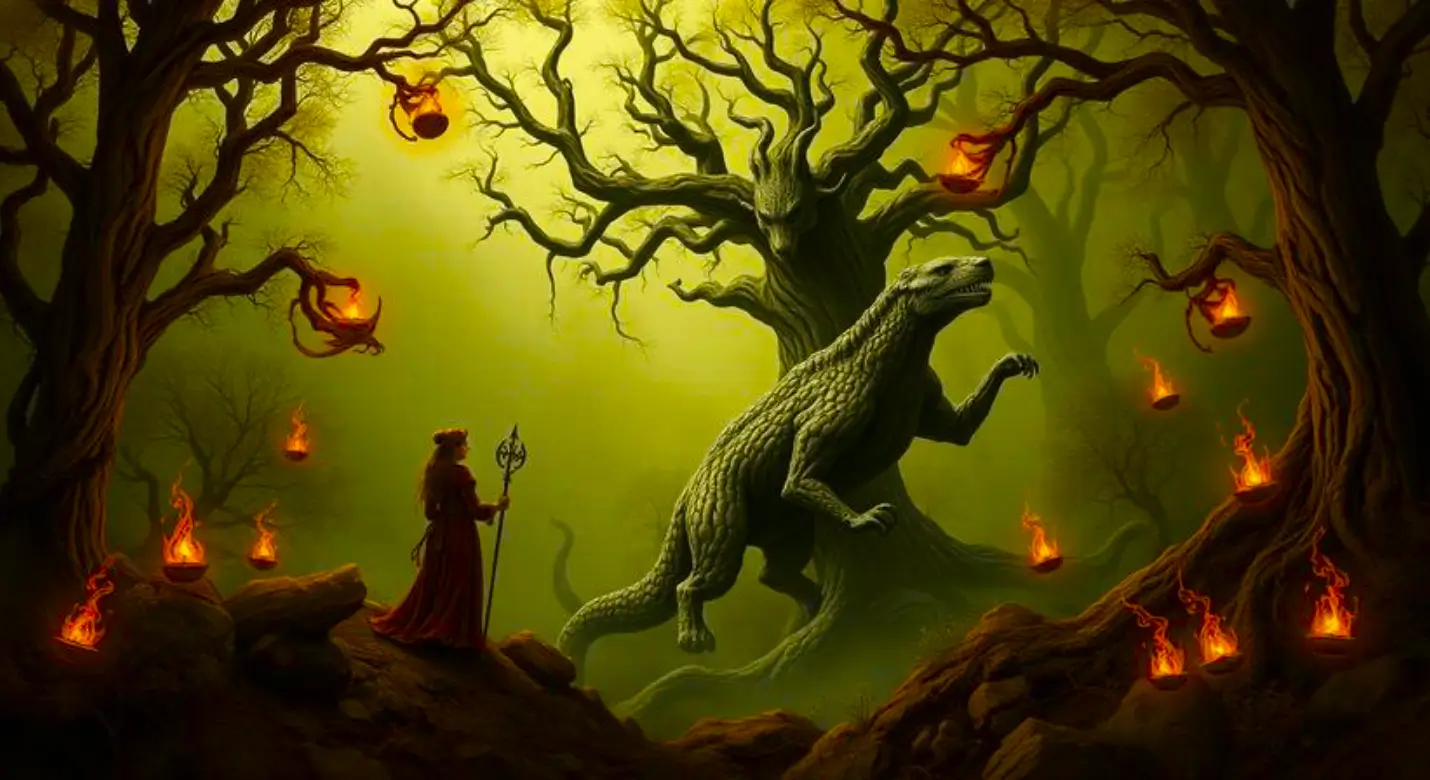
Why Do Legends Develop Different Versions?
Multiple versions arise because legends are living narratives. Every retelling is shaped by the storyteller, the audience, and the occasion. Folklorists identify several recurring causes behind this constant transformation.
Oral Transmission and the Role of Memory
In oral traditions, storytellers do not recite a fixed text. They remember the plot, characters, and striking images, then recreate the details in performance. Each telling is therefore unique.
Memory is selective. Some episodes grow, others fade, and similar stories can merge over time. Across generations these small shifts accumulate, producing versions that may differ greatly from their earliest known forms.
Research on oral epic poetry, especially the work of Milman Parry and Albert Lord, demonstrated that performers compose through flexible formulas rather than word-for-word memorization. The concept of a single "original version" is largely foreign to oral storytelling cultures.
- No authoritative original text exists in a purely oral setting.
- Memory favors dramatic, emotional, or morally significant episodes.
- Storytellers adjust details to the expectations of each audience.
Cultural and Regional Adaptation
When a legend crosses a border, it is reshaped to fit local geography, customs, and values. A saint's legend imported to a new region may acquire local shrines, place names, and community concerns.
Names, settings, and moral lessons shift until the story feels native to its new home. This process has followed trade routes, migration, colonization, and religious missions throughout history.
Adaptation is not necessarily a sign of corruption. It is the mechanism that keeps legends credible and meaningful in changing cultural environments.
- Original place names and characters are replaced with local ones.
- Local taboos and values reshape plot decisions.
- New versions increase the story's emotional and historical relevance.
Religious, Political, and Social Influences
Religious and political authorities have often reshaped legends to serve specific messages. Medieval Christian writers, for instance, transformed pagan heroes and local spirits into saints or moral exemplars. Those interested in these dynamics can explore more religions and belief systems across different historical periods.
Rulers have used legends to legitimize dynasties, while colonial powers sometimes suppressed indigenous narratives. National movements later revived or rewrote legends to support modern identities.
Writing and printing also changed the landscape of variation. Written versions fixed some narratives and allowed others to disappear, creating canonical texts that readers could mistake for the original story even when many variants had coexisted for centuries.
- Religious moralizing changes characters and emphasizes selected virtues.
- Political sponsorship preserves favored versions and silences rivals.
- Print and literacy created an illusion of textual stability.

Famous Legends with Multiple Versions
The patterns described above appear across the world. Two well-known examples show how cultural context transforms narrative over time.
The Legend of King Arthur
Arthur first appears in early medieval Welsh and British sources as a warrior defending Britain. In the twelfth century, Geoffrey of Monmouth transformed him into a magnificent imperial king in his Historia Regum Britanniae.
French romances added the Grail quest, Lancelot, and courtly love, while English retellings stressed chivalry, loyalty, and national identity. Each era produced a different Arthur suited to its own ideals.
The Arthurian tradition demonstrates how literature, politics, and religion combine to generate diverse versions of a single legendary figure.
The Great Flood Narrative
Flood stories exist in cultures from Mesopotamia to the Americas. The biblical account of Noah shares structural similarities with older Mesopotamian narratives, such as the flood episode in the Epic of Gilgamesh. Readers can discover related myths and mythological traditions from multiple regions.
Some researchers believe many flood legends draw on shared ancient traditions or real flood events. Others note that similar motifs can emerge independently in regions where flooding is a common and destructive experience.
The existence of flood legends in many cultures does not prove a single historical flood. It shows how a powerful human experience can be shaped into meaningful stories by different communities.

How Scholars Study Legend Variations
Folklorists have developed several methods to compare narrative versions. The historic-geographic method, popular in the twentieth century, mapped variants to trace origins and diffusion. Structuralist approaches later examined underlying patterns and oppositions rather than historical transmission.
Modern scholarship emphasizes the creativity of performers and the social meaning of each telling. Variation is no longer regarded as a corruption of an original text, but as evidence of the legend's vitality. This approach aligns with Lore Unbound's editorial policy of distinguishing documented evidence, scholarly interpretation, and traditional narrative.
Comparative research must remain cautious. Similar stories may result from cultural contact, independent invention, or universal psychological patterns, and the surviving evidence is rarely complete.
| Topic or Element | Meaning, Role, or Significance | Cultural / Historical Context | Important Distinction / Context |
|---|---|---|---|
| Oral transmission | Explains how legends change through retelling, memory, and performance | Pre-literate societies and contemporary oral traditions worldwide | There is no single "original version"; each performance is unique |
| Cultural adaptation | Makes legends relevant to local audiences by reshaping details | Migration, trade, colonization, and religious missions across history | Changes reflect local values; they do not make a version less authentic |
| Written redaction | Fixed particular versions of a legend in manuscripts and printed books | Medieval monasteries, royal courts, and the printing press | Literary versions can differ greatly from oral variants |
| Scholarly interpretation | Analyzes patterns, origins, and social meanings of narrative variants | 19th to 21st century folklore and mythology research | Theories differ, and historical origins are rarely proven with certainty |
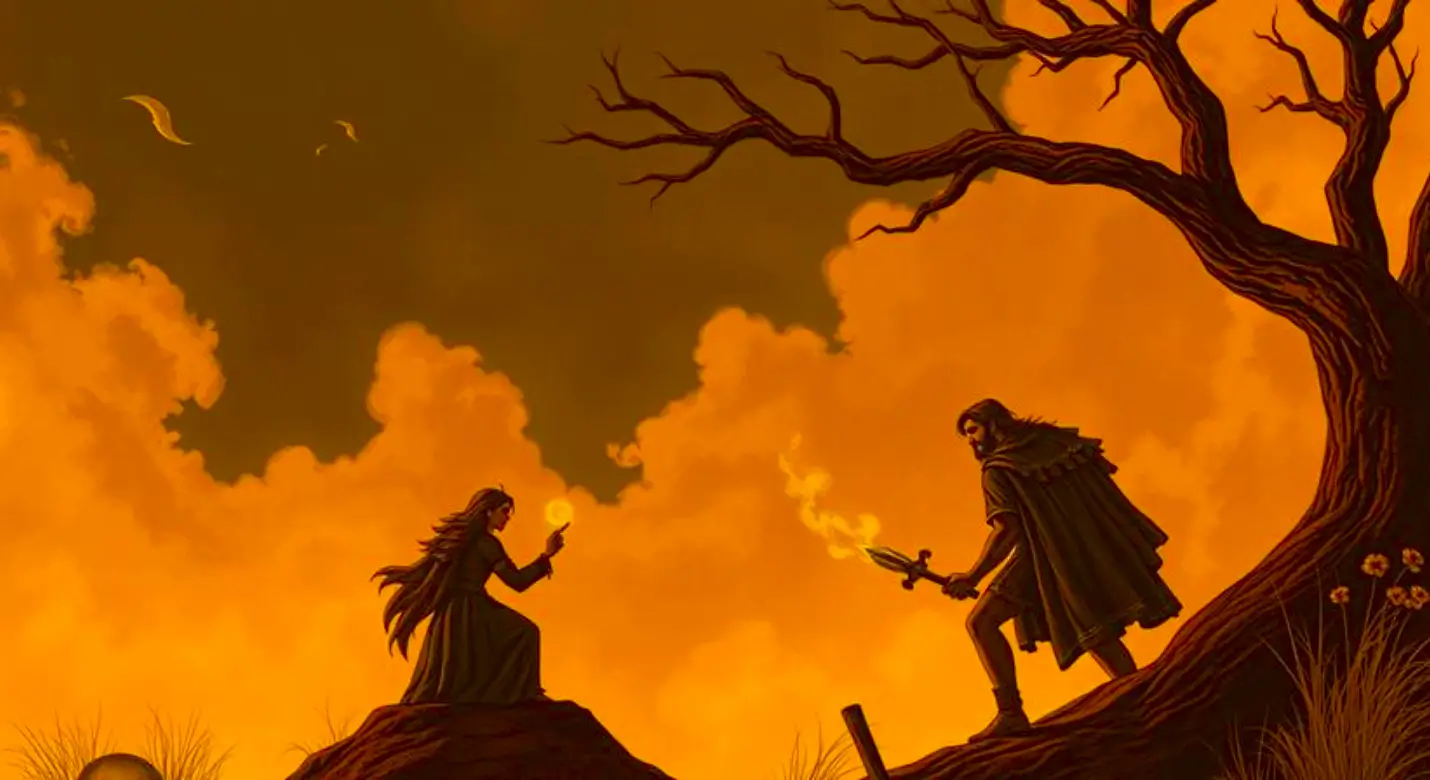
Why Recognizing Legendary Variations Matters
Understanding why legends have different versions helps readers approach traditional narratives with greater nuance. No single version is automatically more authentic; each variant reveals the concerns of the community that preserved it.
For students of religion, history, and culture, comparing versions exposes how beliefs, values, and identities develop over time. It also corrects the common mistake of treating a late literary retelling as an ancient, unchanged tradition.
Lore Unbound examines the historical context, cultural meaning, and documented evidence behind each story. Recognizing variation does not diminish the value of legends; it makes them more understandable as living expressions of human experience. Readers are invited to explore other Lore Unbound topics connected to this subject.
This content was created with the assistance of Artificial Intelligence as an editorial tool and reviewed by Pedro Neves in accordance with Lore Unbound's editorial standards for clarity, neutrality, cultural context, responsible sourcing, and the distinction between documented evidence, scholarly interpretation, religious belief, mythology, folklore, legend, and traditional narrative. The content is prepared following Lore Unbound's editorial guidelines and quality standards for SEO, GEO, and Artificial Intelligence answer systems.
FAQ About Why Do Legends Have Different Versions?
Why do legends have different versions?
Legends have different versions because they are living narratives passed down through oral tradition, written retellings, cultural exchange, and artistic adaptation. Unlike fixed historical records, legends are reshaped by each generation and community to reflect local values, fears, hopes, and worldviews. As stories travel across regions, languages, and centuries, details naturally change, characters gain new traits, and events are reinterpreted. The existence of multiple versions is not a flaw but a defining feature of how legends function as cultural expressions. Folklorists study these variations precisely because they reveal how communities adapt shared stories to their own circumstances, beliefs, and historical experiences.
What is the difference between a legend, a myth, and a folktale?
In folklore studies, a myth is a traditional narrative that explains fundamental questions about the world, the origin of the universe, natural phenomena, or the deeds of gods and supernatural beings, and it is often considered sacred within its culture. A legend, by contrast, is a narrative usually set in historical time, told as if it really happened, and centered on human heroes, saints, kings, or remarkable events. Legends often contain supernatural elements but are grounded in a specific place or historical moment. A folktale is a fictional story, often with magical elements and no fixed setting, told primarily for entertainment, such as fairy tales or animal fables. These categories overlap and vary across cultures, but the distinction helps scholars understand how different types of traditional narratives function and why they change in different ways.
How does oral tradition cause legends to change over time?
Oral tradition changes legends because human memory is not a perfect recording device. When a storyteller retells a legend, they recall its main plot, key characters, and central themes, but they may forget details, simplify complex events, or add new elements to make the story more engaging for their audience. Each performance is a creative act, not a mechanical repetition. Details that seem unimportant to one generation may be dropped, while local landmarks, customs, or concerns may be woven into the narrative. Over generations, these small shifts accumulate, producing distinct versions. Folklorists call this process tradition and variation, and it is the natural engine that keeps legends alive and relevant in changing cultural contexts.
Why do different cultures have similar legends?
Different cultures have similar legends for several reasons. First, human beings everywhere face universal experiences, such as birth, death, love, conflict, natural disasters, and the search for meaning, so similar story patterns emerge independently across the world. Second, cultures have traded stories through migration, trade routes, conquest, and religious mission for thousands of years, allowing narratives to spread and adapt to new settings. Third, scholars also point to common narrative structures, such as the hero's journey or the flood story, which may reflect shared deep psychological patterns or ancient cultural connections. The presence of similar legends in unrelated cultures does not automatically prove direct borrowing; it often results from a combination of independent invention, cultural diffusion, and the universal logic of storytelling.
Why did regional versions of the same legend develop?
Regional versions of the same legend develop because legends are anchored to specific places and communities. When a story enters a new region, it is adapted to local geography, climate, politics, religious practices, and social concerns. A hero from the original version may be renamed or given local ancestry. Landmarks such as mountains, rivers, ruins, or churches are added as evidence that the story happened there. Local villains, historical enemies, or community values replace or transform older characters. This localizing process makes the legend feel true and relevant to each audience. Regional versions are therefore not corruptions of an original story but dynamic expressions of how different communities claim and reshape a shared tradition to express their own identity and heritage.
Do religious traditions contribute to different versions of legends?
Yes, religious traditions are among the most significant forces that shape and transform legends. When a legend enters a new religious context, it is often reinterpreted to align with that faith's theology, ethical values, and sacred history. For example, pre-Christian European legends were frequently adapted into Christian saints' lives, with pagan heroes transformed into Christian missionaries or martyrs. Similarly, Islamic, Buddhist, and Hindu traditions have absorbed and reshaped older folk narratives to teach moral or spiritual lessons. Religious institutions also preserved legends in written form, standardizing certain versions while leaving others to continue evolving orally. The coexistence of religious teachings and popular storytelling creates a rich environment for variation, as clergy, scholars, and laypeople each contribute to how a legend is told and understood.
How do historians and folklorists study different versions of legends?
Historians and folklorists study different versions of legends using a range of methods. Folklorists use comparative analysis, collecting and comparing many versions of a story to identify its core structure, recurring motifs, and variations, classifying them using systems such as the Aarne-Thompson-Uther index. Historians examine the historical and cultural context of each version, asking who wrote it, when, for what audience, and with what purpose. They look for kernels of historical truth beneath legendary embellishment while acknowledging that legends are not reliable factual records. Scholars also study the performance context, considering how storytellers shape their narratives for live audiences. By combining textual analysis, historical criticism, and ethnographic fieldwork, researchers trace how legends evolve across time and place, revealing the concerns and values of the communities that tell them.
Are some versions of a legend more original or accurate than others?
In most cases, there is no single original version of a legend that all other versions can be measured against. Legends typically develop gradually through countless retellings, so every version is equally authentic as a cultural expression. The oldest surviving written version is often studied carefully because it shows one early form of the story, but it is not necessarily the original or the most valid one. A version may be considered more accurate in specific ways, such as matching known historical events or preserving older linguistic features, but from a folkloristic perspective, accuracy is less important than meaning. Each version is valued for how it serves its community, expresses local identity, and keeps the tradition alive. The diversity of versions is what makes legends culturally rich and historically informative.
Why are there different versions of legends about historical figures?
Legends about historical figures develop different versions because these figures become symbols for collective values, cultural pride, or moral lessons, rather than remaining purely factual people. Historical figures such as King Arthur, Robin Hood, or Alexander the Great are remembered through a mix of documented actions, contemporary bias, political propaganda, and centuries of artistic imagination. As political borders, religious beliefs, and social ideals change, storytellers reshape these figures to address current concerns. A ruler may become a hero in one tradition and a tyrant in another. Details of battles, birthplaces, and heroic deeds are frequently disputed or exaggerated because communities want to claim the figure as their own. The result is a layered historical memory in which different versions coexist, each reflecting the needs and perspectives of the people who tell them.
How can readers understand and compare different versions of a legend?
To understand and compare different versions of a legend, readers should first identify the core narrative elements shared by most versions, such as the main character, central conflict, and resolution. Next, they should consider the historical and cultural context of each version, asking where and when it was recorded, who the intended audience was, and what purpose it served. Readers should also compare the treatment of key characters, the role of supernatural elements, and the moral message of each version. Noticing which details change most often reveals what matters most to different communities. Consulting scholarly editions that provide notes on sources, variants, and historical background is highly recommended. Most importantly, readers should approach each version on its own terms, recognizing that all versions contribute to the legend's enduring meaning and cultural significance.
Author: Editorial Team – Lore Unbound
Reviewed by: Pedro Neves
Article produced and published in accordance with our Editorial Policy: https://loreunbound.com/editorial-policy/
Published on: September 1, 2026
Website content categories:
This content is part of the Lore Unbound editorial ecosystem, which includes:
Related Content