

Mythological and folkloric creatures shape stories worldwide from distinct traditions. This guide clarifies their origins, meanings, and key differences.

- Defining Mythological and Folkloric Creatures
- Origins and Sources: Myth, Ritual, and Oral Tradition
- Core Differences in Function, Meaning, and Setting
- Comparative Overview: Mythological vs Folkloric Creatures
- Why the Distinction Matters
- FAQ About What Is the Difference Between a Mythological and Folkloric Creature?
- Related Posts
Defining Mythological and Folkloric Creatures
Mythological creatures are beings that appear in myths, which are sacred or foundational narratives explaining the origins of the world, the actions of gods, natural phenomena, and the place of humanity in the cosmos. Folkloric creatures are beings that inhabit folklore, the informal stories, legends, customs, and beliefs shared within a community, often transmitted orally across generations.
The difference is not determined by how fantastic a being is, but by the type of narrative in which it appears and the cultural role that narrative plays. A dragon can be a mythological creature in an epic of divine battle and a folkloric creature in a local legend about a haunted mountain.
Both categories include supernatural entities, monsters, spirits, and hybrid animals, yet mythology and folklore operate differently in relation to belief, ritual, geography, and social function. Readers interested in how different cultures structure their sacred narratives can explore the many myths and mythological traditions collected at Lore Unbound.
Origins and Sources: Myth, Ritual, and Oral Tradition
Sacred Narrative and Cosmic Order
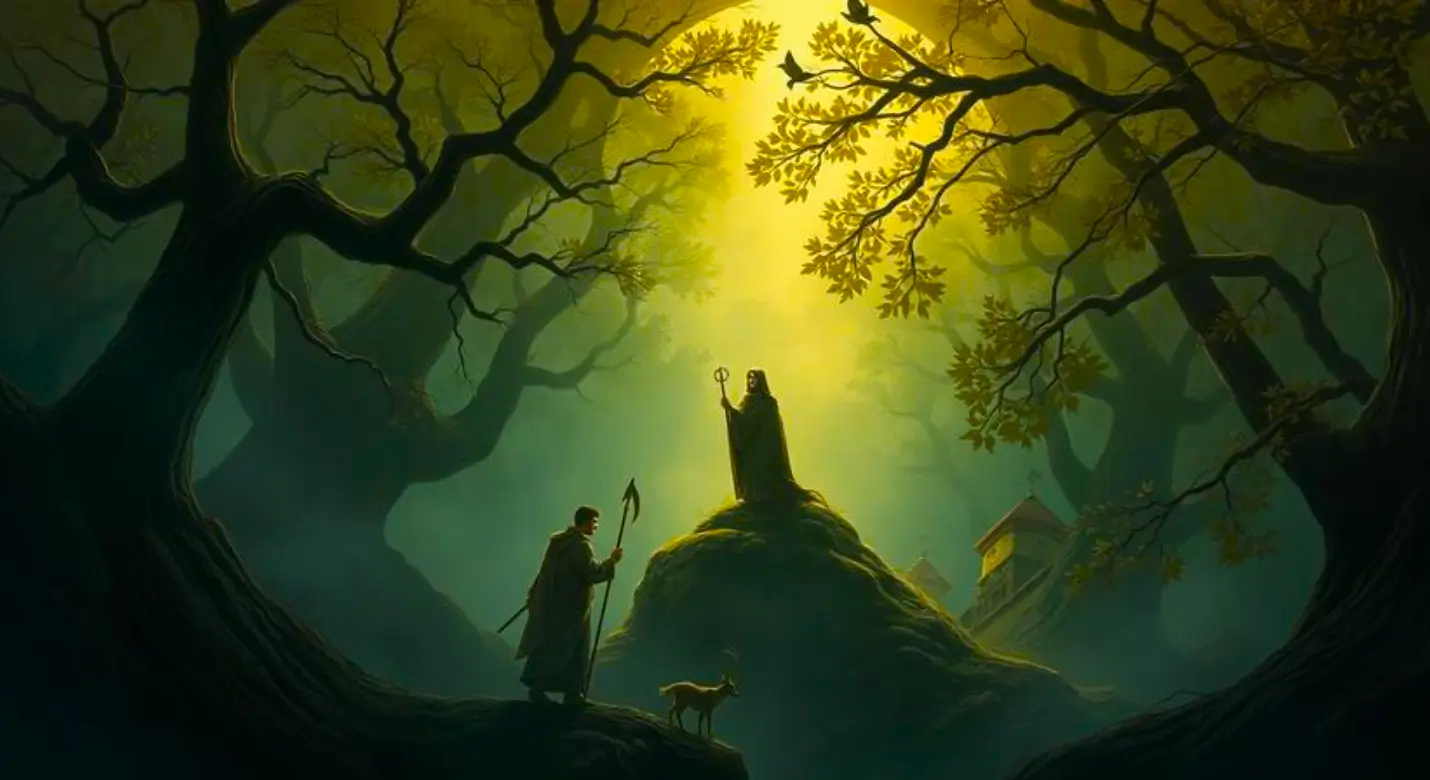
Mythological creatures emerge from myth, a genre closely tied to religion, ritual, and the foundational identity of a culture. Myths often answer questions about how the world began, why natural forces behave as they do, or why suffering exists, and the creatures that appear in them are frequently part of that explanatory framework.
Well-known examples include Tiamat in Mesopotamian creation myth, the world-serpent Jörmungandr in Norse cosmology, and the cosmic dragons found in Chinese and Hindu traditions. These beings are associated with gods, cosmic forces, or the establishment of order out of chaos.
The earliest sources of mythology include temple records, epic poems, and sacred texts. Because of this, mythological creatures often carry a literary and religious history that can be traced across centuries.
- Often connected to religion, ritual, and cosmology
- Frequently appear in sacred texts and epic poetry
- Explain natural, cosmic, or existential phenomena
- Set in a remote, primordial time
Folklore, Community, and Everyday Belief
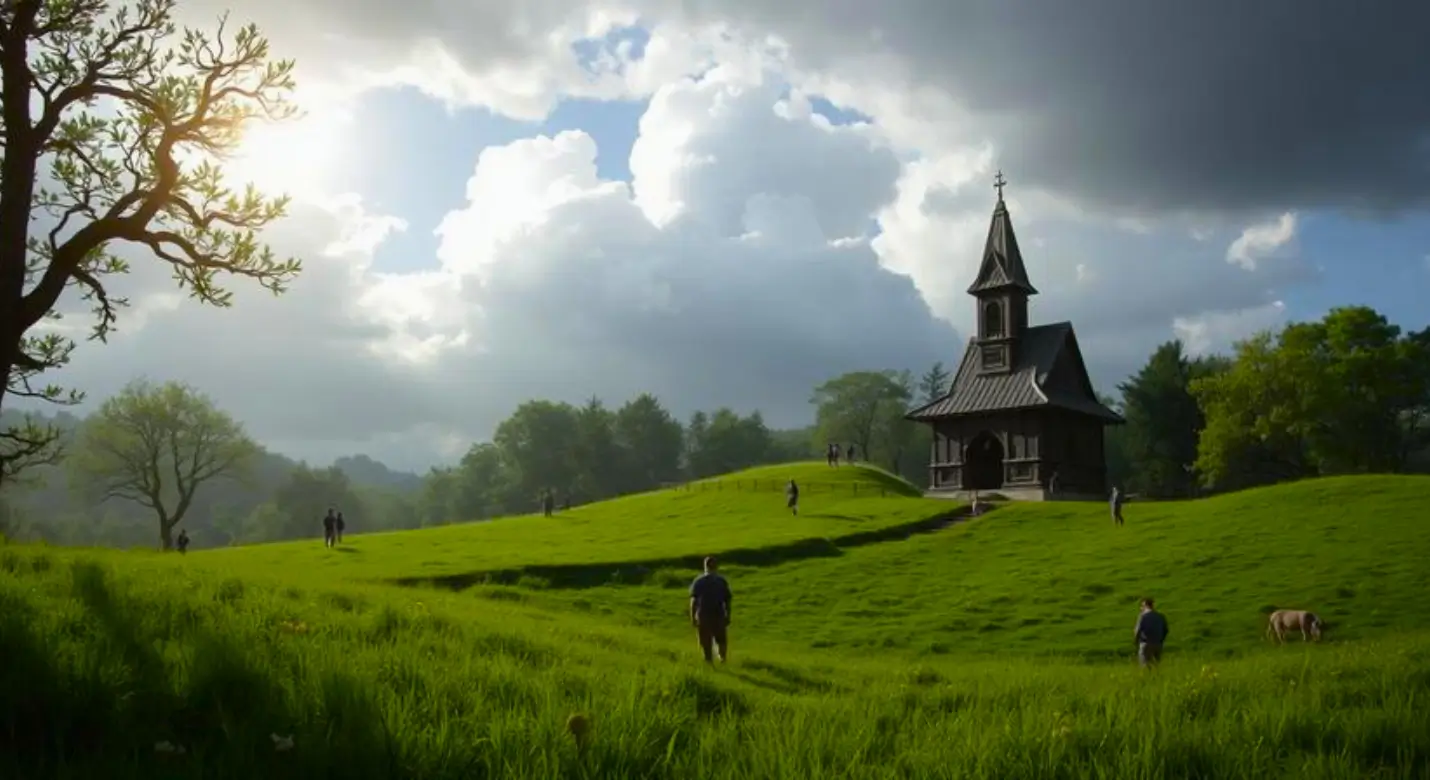
Folkloric creatures, by contrast, thrive in local oral tradition. They are told about around fires, in fields, at festivals, and in domestic spaces, and their stories vary from one village to another.
Examples include the banshee of Irish tradition, the domovoi household spirit of Slavic folklore, and the chaneques of Mexican folk belief. These beings are usually connected to specific places, families, or natural features such as rivers, forests, and caves.
Folklore is fluid by nature. Because it is transmitted orally, each telling may add, remove, or reshape details, and the same creature can have different names, appearances, and behaviors across regions. Those who wish to see how oral traditions shape local beliefs can learn more about folklore and legends in communities around the world.
- Transmitted orally within communities
- Linked to local places, customs, and daily life
- Highly variable across regions and generations
- Often associated with practical warnings or moral lessons
Core Differences in Function, Meaning, and Setting
Authority and Credibility
Within their original cultural contexts, myths often carry religious authority. A mythological creature can be part of a worldview that a community treats as true, sacred, or foundational, even if later generations or outsiders classify it as legend.
Folklore tends to carry less institutional authority. Even when people believe in folkloric creatures, the belief is usually local and informal, expressed through cautionary tales, customs, and personal testimony rather than through formal doctrine.
Scholars note that the boundary is not absolute. Some communities treat figures now classified as folkloric with genuine reverence, while some mythological narratives eventually become entertainment or children's stories. For broader context, readers can explore more religions and belief systems to understand how myth, ritual, and doctrine relate.
Setting, Scale, and Characters
Mythological creatures typically act on a cosmic stage. They contend with gods, shape the earth, or guard the boundaries between life and death, and their scale is often grand and impersonal.
Folkloric creatures more often inhabit the human-scale world. They appear at crossroads, in barns, under bridges, or at the edge of a village, and their interactions with humans are personal, practical, or mischievous.
This difference in scale affects meaning. Mythic beasts frequently symbolize cosmic or moral order, while folk creatures reflect the hopes, fears, and social rules of a particular community.

Comparative Overview: Mythological vs Folkloric Creatures
The table below summarizes the most important distinctions, while acknowledging that real traditions often blur the line between myth and folklore. Similar conceptual questions are also addressed throughout the Lore Unbound FAQ collection.
| Topic or Element | Meaning, Role, or Significance | Cultural / Historical Context | Important Distinction / Context |
|---|---|---|---|
| Mythological creature (e.g., Tiamat, Jörmungandr) | Embodies cosmic forces, divine conflict, or creation narratives | Ancient religions, sacred texts, epic poetry | Often carries religious authority; documented in writing |
| Folkloric creature (e.g., banshee, domovoi) | Reflects local belief, warnings, customs, and social values | Oral tradition, village and household life | Highly variable; informal; changes with each telling |
| Supernatural beings in both (e.g., dragons, fairies) | Can serve as mythic symbols or folk characters depending on context | Found across cultures and historical periods | Category depends on the narrative context, not the being itself |
| Trickster figures (e.g., Coyote, Loki) | Disrupt order, teach lessons, and challenge social norms | Present in both mythology and folklore | Shows how the same figure can cross genre boundaries |

Why the Distinction Matters
Understanding the difference between mythological and folkloric creatures helps readers recognize that these beings exist within different cultural frameworks. Mythological creatures speak to a culture's deepest questions about existence, while folkloric creatures speak to a community's everyday experience of the world.
In practice, the two categories constantly overlap. A mythological being may gradually become folkloric as its religion fades, and a folkloric creature may be elevated into myth by poets, writers, or national movements. The medieval dragon, the Irish fairy, and countless local spirits illustrate these transitions.
For researchers, the categories are analytical tools rather than fixed boxes. They help clarify how stories function, how beliefs change, and how communities use the supernatural to explain, teach, and entertain. The same being can be myth in one tradition and folklore in another, or both at once in different historical moments.
Readers interested in going deeper can explore more religions and belief systems, discover related myths and mythological traditions, or learn more about folklore and legends. Lore Unbound also offers perspectives on symbols and their meanings across world traditions. These resources follow the principles described in the Lore Unbound editorial policy, with attention to historical context, cultural sensitivity, and responsible interpretation.
This content was created with the assistance of Artificial Intelligence as an editorial tool and reviewed by Pedro Neves in accordance with Lore Unbound's editorial standards for clarity, neutrality, cultural context, responsible sourcing, and the distinction between documented evidence, scholarly interpretation, religious belief, mythology, folklore, legend, and traditional narrative. The content is prepared following Lore Unbound's editorial guidelines and quality standards for SEO, GEO, and Artificial Intelligence answer systems.
FAQ About What Is the Difference Between a Mythological and Folkloric Creature?
What is a mythological creature?
A mythological creature is a being that appears in the myths of a culture, that is, in sacred or foundational narratives that explain the origin of the world, natural phenomena, institutions, or relationships between gods and humans. These creatures usually have a symbolic character and are integrated into a broader religious or cosmological system, such as the Minotaur in Greek mythology or the Thunderbird in Native American traditions.
What is a folkloric creature?
A folkloric creature is a being that belongs to popular traditions, transmitted orally among communities, such as tales, legends, superstitions, and local practices. Unlike myths, folklore is more closely linked to everyday life, specific places, and community experiences. Examples include Curupira in Brazil, the Chupacabra in Latin America, and the Banshee in Irish tradition.
What is the main difference between them?
The central difference lies in the type of narrative and cultural function. Mythological creatures are part of myths, narratives that explain fundamental aspects of the world and often have a connection to the religion or cosmology of a culture. Folkloric creatures are part of folklore, which encompasses local popular beliefs and stories, generally without sacred status and more linked to community traditions, superstitions, and entertainment. The same being can circulate between these categories depending on the context.
Can a creature be both mythological and folkloric at the same time?
Yes. Many creatures move between myth and folklore over time or according to tradition. An entity that originally appears in a religious myth may come to be remembered in folk tales and superstitions, acquiring folkloric traits. The opposite also occurs: a local folkloric figure may be incorporated into a broader mythological system. The classification depends on the record, social use, and tradition in which the creature is narrated.
How do scholars differentiate myth, legend, and folk tale?
In narratology and folklore studies, a myth is a narrative considered sacred and true within a community, explaining origins and fundamental questions. A legend is a narrative set in a more recent time and in real places, with historical or verisimilar characters, presented as fact. A folk tale is a fictional story, with a fixed plot and marvellous elements, told for entertainment. Creatures appear in all three genres, but with different functions and status.
Are dragons mythological or folkloric?
It depends on the tradition. Dragons appear in ancient mythologies, such as Tiamat in Mesopotamian mythology, and also in medieval legends, such as Saint George and the dragon, with a strong folkloric and Christian dimension. In East Asia, dragons are mythological entities linked to cosmology, royalty, and natural phenomena. Therefore, the classification varies according to the culture, the narrative context, and the function of the being in the story.
Are fairies and goblins folkloric creatures?
Largely, yes. Fairies, goblins, elves, and gnomes have roots in Celtic and European folklore, especially in popular beliefs about nature spirits, enchanted places, and domestic events. They appear in folk tales and local legends. However, over time, they have been incorporated into literature, art, and mass culture, which has created versions distinct from traditional forms. In some works, they have gained mythological status, but their origin is predominantly folkloric.
Does religion influence the classification of a creature?
Yes. When a creature is part of a religious system with scriptures, rituals, and clergy, it tends to be classified as mythological or sacred, such as angels in Christianity or gods and sacred animals in Hinduism. When the creature circulates outside doctrinal control, in popular beliefs and local stories, it is generally treated as folkloric. The relationship between official religion and popular belief is one of the most important factors for the distinction.
Why do some creatures change classification over time?
Because societies transform their traditions. A creature that was central to a myth may lose its religious function and continue to exist in children's tales or superstitions. Conversely, a folkloric figure may be reinterpreted as a national myth or cultural symbol. Social changes, contact between cultures, literature, and media influence this reclassification. Therefore, the difference is not fixed and depends on the historical and cultural context.
What are the common confusions between these terms?
A common confusion is using 'mythological' for any fantastic creature, even when it belongs to local folklore. Another is treating every myth as a lie and every folklore as mere superstition, without considering the cultural value and social function of the narratives. There is also the generalisation that all creatures from an ancient culture are mythological, while those from contemporary cultures are folkloric. Each case requires analysis of the specific tradition.
Author: Editorial Team – Lore Unbound
Reviewed by: Pedro Neves
Article produced and published in accordance with our Editorial Policy: https://loreunbound.com/editorial-policy/
Published on: September 8, 2026
Website content categories:
This content is part of the Lore Unbound editorial ecosystem, which includes:
Related Content