
Why mythologies feature multiple gods reveals how ancient cultures explained nature, society, and fate. This guide explores the origins of polytheism.

What Is Polytheism in World Mythologies?
Polytheism is the belief in and worship of multiple deities, often organized into a structured pantheon. It appears in many of the world's most documented mythological systems, including ancient Greek, Roman, Egyptian, Norse, Mesopotamian, and Hindu traditions. Scholars treat polytheism not as a single religion but as a broad pattern of religious thought.
The word polytheism comes from the Greek polus meaning "many" and theos meaning "god." Unlike monotheism, which centers on a single supreme deity, polytheism presents a world of divine beings with distinct personalities, domains, and powers.
Defining Polytheism and Its Variations
Polytheism is not uniform across cultures. Scholars distinguish between "soft" or inclusive polytheism, in which many gods are understood as aspects of a single divine reality, and "hard" polytheism, in which gods are seen as distinct and independent beings. Some traditions also practice henotheism, the worship of one god without denying the existence of others.
Many cultures combined polytheism with ancestor veneration, nature spirits, and local cults. This flexibility helps explain why polytheistic systems often absorbed foreign gods rather than rejecting them.
The boundaries between polytheism, henotheism, and monotheism were often fluid in ancient practice. A community might honor one supreme god while still venerating many lesser deities, making rigid labels difficult to apply.
- Multiple deities with individual names, personalities, and domains
- Pantheons structured by family ties, ranks, or cosmic roles
- Myths explaining divine conflicts, alliances, and interventions
- Rituals designed to honor or appease specific gods
Pantheons and Their Structures
A pantheon is the full set of gods recognized by a culture. Greek mythology organized its gods around Mount Olympus under Zeus; Norse mythology centered on the Aesir and Vanir; Egyptian mythology developed regional groupings such as the Ennead of Heliopolis; and Hindu traditions present vast divine families connected by sacred texts.
Pantheons were rarely fixed. Gods gained or lost importance as cities rose and fell, and foreign deities were sometimes incorporated into local traditions.
The structure of a pantheon often reflected the political organization of the culture. The Greek Olympians mirrored aristocratic councils, while the Egyptian Ennead reflected priestly theology centered on creation and kingship.

Why Did Cultures Develop Multiple Gods?
One widely supported explanation is that polytheistic mythologies helped ancient peoples understand and cope with the natural world. Instead of a single abstract force, natural phenomena were personified as gods: thunder, storms, the sea, the sun, and the harvest each had its own divine ruler.
Explaining Nature Through Divine Powers
In Greek mythology, Poseidon governed the sea and earthquakes; in Norse mythology, Thor controlled thunder; in Mesopotamian tradition, Enlil was associated with wind and storms. These deities gave human faces to forces that were otherwise unpredictable and uncontrollable.
This division of divine labor made the world more legible. A farmer could pray to a harvest deity, a sailor to a sea god, and a warrior to a war god, each addressing a specific sphere of life.
Seasonal cycles, floods, droughts, and eclipses were often interpreted as divine actions or disputes. By giving these events a story, polytheistic mythologies transformed random suffering into meaningful cosmic drama.
- Sky, thunder, and weather
- Sea, rivers, and waters
- Earth, crops, and fertility
- Fire, crafts, and technology
- Death, the underworld, and rebirth
Human Experience and Specialized Deities
Multiple gods also mirrored the complexity of human experience. Love, war, wisdom, justice, healing, music, and commerce each had divine patrons. This specialization allowed individuals and communities to direct worship toward the aspects of life they most needed help with.
The existence of many gods reflected the plurality of human communities. Different cities, regions, and families often had patron deities, and shared pantheons served as a cultural bond while still allowing local variation.
This pattern appears across continents, from the Yoruba orishas to the Japanese kami of Shinto. In each case, multiple divine figures allowed religious life to address the full range of human needs. Readers can discover related myths and mythological traditions to see how these patterns appear in different cultures.
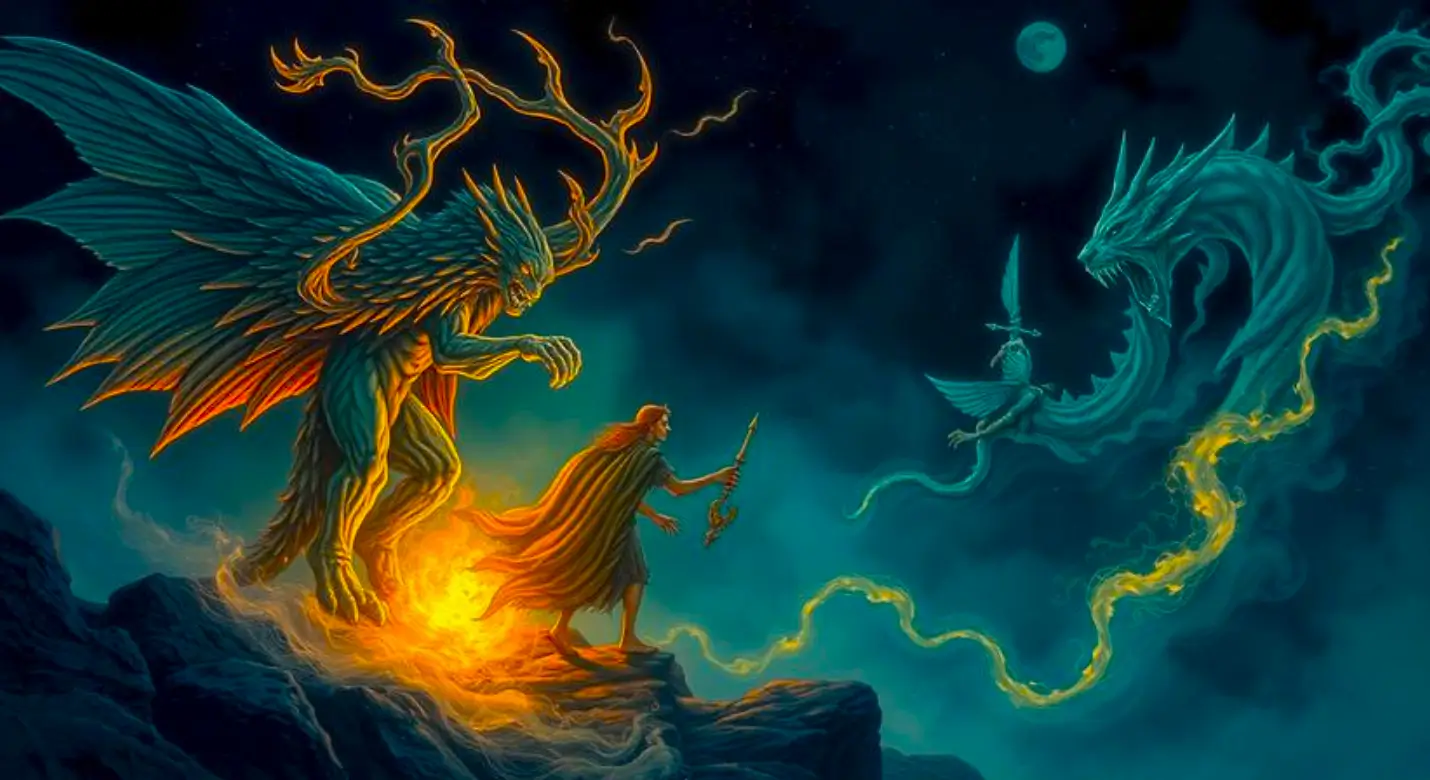
How Multiple Gods Organize the Universe
Polytheistic mythologies often organized gods into hierarchies that mirrored cosmic order. A supreme god might rule over lesser deities, as Zeus ruled the Olympians or Odin the Aesir, while other gods governed specific realms such as the underworld, the sea, or the sky.
Divine Hierarchies and Cosmic Order
These hierarchies explained why the world was both ordered and chaotic. Divine conflicts, rivalries, and disobedience could account for natural disasters, changing seasons, and the unpredictability of fate. In this way, polytheism offered a narrative framework for understanding suffering and fortune.
The following table summarizes key elements of polytheistic systems and how scholars and traditions interpret them.
| Topic / Element | Meaning, Role, or Significance | Cultural / Historical Context | Important Distinction / Context |
|---|---|---|---|
| Polytheism | Belief in and worship of multiple deities | Found across ancient Greece, Rome, Egypt, Mesopotamia, Norse lands, India, and many other regions | Modern interpretations sometimes reduce these gods to symbols or "false gods"; in their original contexts, they were objects of genuine worship |
| Pantheon | The organized set of gods in a mythological system | Greek Olympians, Norse Aesir and Vanir, Egyptian Ennead, Hindu divine families | Pantheons varied regionally and changed over time; no single version was universal |
| Henotheism | Worship of one god while acknowledging other gods exist | Common in some ancient Near Eastern and Hindu traditions | Represents a middle ground between polytheism and monotheism |
| Divine hierarchy | Ranking of gods by power, domain, or cosmic role | Reflected the social and political structures of the cultures that created them | Hierarchies were not fixed; gods could rise, fall, or be merged with other deities |
Some traditions placed a creator god above the pantheon, such as Brahma in Hindu cosmology or El in ancient Canaanite religion, while still venerating many other deities. This shows that polytheistic systems often included ideas of unity and transcendence.
Creation Myths and Cosmic Struggles
Many polytheistic traditions explained the origin of the world through stories of divine struggle or cooperation. In Greek mythology, the cosmos emerged from primordial beings such as Chaos, then passed through the Titans and the Olympians. In Norse mythology, the world was formed from the body of the giant Ymir.
These narratives emphasized that the universe was not created from nothing but was shaped by conflict, order, and the actions of many divine beings. The presence of multiple gods allowed mythologies to portray the cosmos as a living, contested arena.
In Egyptian mythology, the god Atum created the world through speech and self-generation; in Hindu tradition, the Rig Veda describes cosmic creation through the sacrifice of Purusha. These varied stories show how polytheism could express multiple, coexisting explanations of origins.
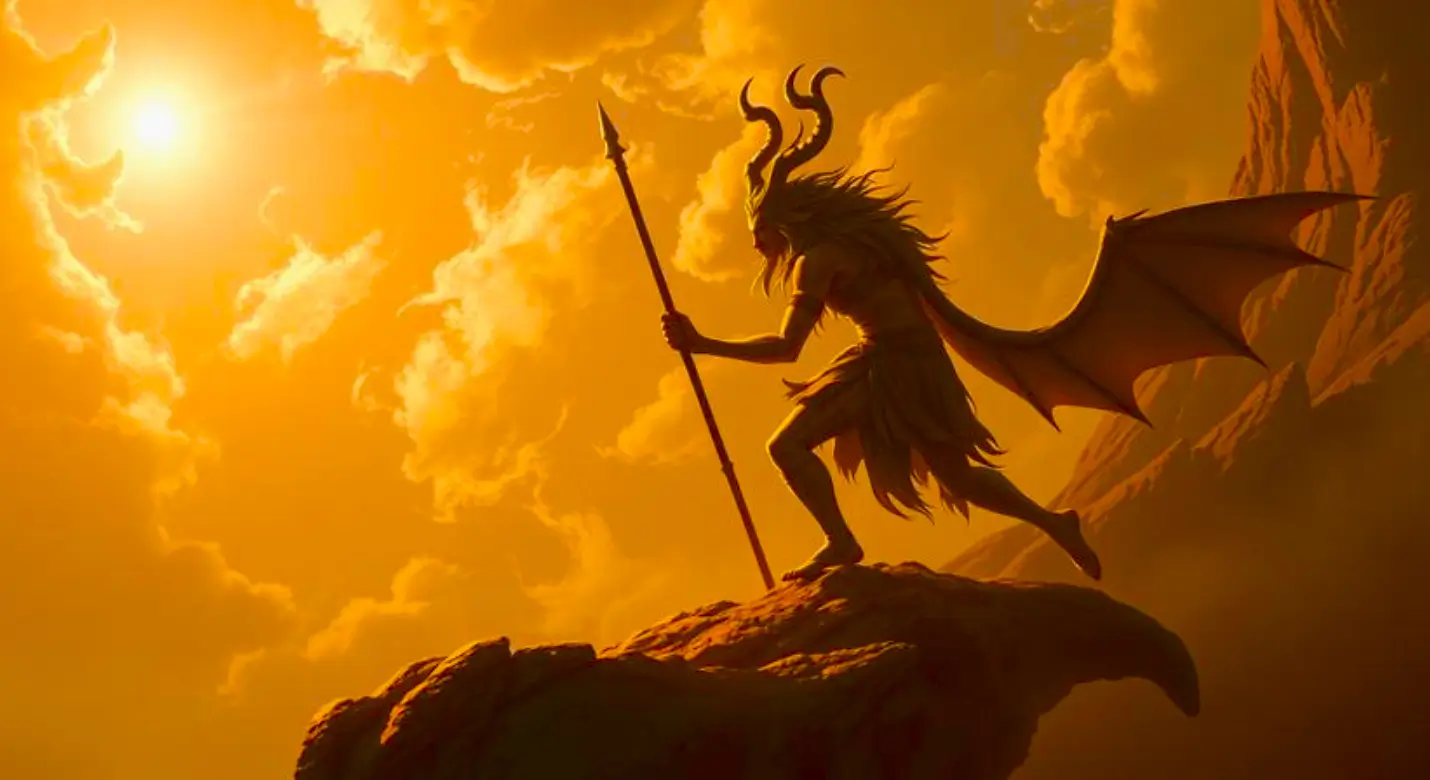
Polytheistic pantheons often reflected the social world in which they developed. Divine families mirrored human families; divine rulers mirrored kings and chieftains; divine artisans, warriors, and healers mirrored specialized occupations.
Gods as Mirrors of Society
In historical context, the gods of a city or empire often symbolized its identity and ambitions. The Roman Empire incorporated gods from conquered peoples, while Hindu traditions absorbed local deities into broader theological frameworks. This openness was one of polytheism's most distinctive features.
Polytheistic mythologies also reinforced social roles. A goddess of warfare, such as Athena or Durga, gave religious meaning to military life, while deities of fertility and the home supported domestic and agricultural values.
The organization of divine families could also justify social hierarchies. For example, Zeus as father and king of the gods reinforced patriarchal authority in ancient Greek society, while goddesses such as Hestia and Demeter embodied domestic and agricultural order. To understand these connections, it is worth exploring more religions and belief systems across different regions.
Civic Religion and Local Traditions
In many ancient societies, religion was deeply tied to civic life. Temples, festivals, and sacrifices honored the patron gods of cities and states. Participation in these rituals was often more important than personal belief, a characteristic that distinguishes ancient polytheism from many modern religious expectations.
Local traditions varied widely, but shared pantheons created a common cultural language across regions. Scholars emphasize the importance of historical and cultural context when studying these traditions, since later folklore and legends often reshaped older myths.
Modern readers often project contemporary ideas of private faith onto ancient religions. But in societies such as ancient Rome or Mesopotamia, public ritual and civic duty were central, and mythologies served both religious and political purposes.

Polytheism, Monotheism, and Later Interpretations
The relationship between polytheism and monotheism is complex. Some scholars argue that early monotheism in ancient Israel developed in dialogue with polytheistic beliefs. Others note that several polytheistic traditions already contained ideas of a supreme, transcendent deity.
In later centuries, monotheistic traditions often reinterpreted polytheistic gods as demons, angels, saints, or literary symbols. This process explains why many mythological figures survive today as cultural symbols rather than objects of worship.
Scholarly Views and Modern Misconceptions
Modern scholarship approaches polytheism as a legitimate and complex form of religious expression, not as a primitive stage of religious evolution. Researchers study how polytheistic systems functioned, how they changed, and how they shaped literature, art, and philosophy.
A common misconception is that polytheists worshipped "many gods" exactly as monotheists worship one. In reality, many polytheistic practitioners understood their gods as distinct beings with real power, while others viewed them as expressions of a deeper divine unity. These differences matter when interpreting ancient sources.
Symbols associated with these traditions also carried deep meaning. Those interested in how divine images and emblems evolved across cultures can explore symbols and their meanings in the Lore Unbound collection.
Conclusion
Polytheistic mythologies developed multiple gods because they addressed fundamental human needs: understanding nature, organizing society, explaining suffering, and connecting local communities to a larger cosmic order. The diversity of gods reflects the diversity of human experience.
Understanding why mythologies have multiple gods requires attention to historical context, cultural variation, and the difference between religious belief and scholarly interpretation. For further exploration, readers can discover related myths and mythological traditions, consult common questions about myth and religion in the Lore Unbound FAQ, or learn more about the project on the About Lore Unbound page.
This content was created with the assistance of Artificial Intelligence as an editorial tool and reviewed by Pedro Neves in accordance with Lore Unbound's editorial standards for clarity, neutrality, cultural context, responsible sourcing, and the distinction between documented evidence, scholarly interpretation, religious belief, mythology, folklore, legend, and traditional narrative. The content is prepared following Lore Unbound's editorial guidelines and quality standards for SEO, GEO, and Artificial Intelligence answer systems.
FAQ About Why Do Mythologies Have Multiple Gods?
Why do many mythologies have multiple gods?
Polytheism reflects ancient cultures' attempts to explain complex natural and human phenomena. Different gods personified forces like storms, harvest, war, wisdom, love, and the underworld. This allowed people to address specific aspects of life through ritual, and to organize narratives about how the world works. It also mirrors social structures, with divine families and hierarchies.
What is polytheism and how does it differ from monotheism?
Polytheism is belief in and worship of multiple deities. Monotheism is belief in one supreme deity. In polytheistic systems, gods usually have distinct personalities, domains, and stories. They can be related, competitive, or complementary. Some traditions also include an overarching principle or creator, but multiple gods remain active.
When and where did polytheistic mythologies first appear?
The earliest written records from Mesopotamia and Egypt show polytheistic pantheons around the third millennium BCE. Many polytheistic traditions also existed in ancient Greece, Rome, India, China, the Americas, Africa, and northern Europe. Because oral traditions predate writing, exact origins are difficult to trace. Polytheism likely developed gradually alongside agriculture, cities, and state societies.
What are the main types of gods in polytheistic mythologies?
Common types include sky gods, earth goddesses, storm or weather deities, sun and moon gods, gods of war, love, fertility, wisdom, death, and the underworld. There are also tricksters, culture heroes, and divine messengers. Who is considered important varies by culture; for example, a seafaring people might honor sea gods more prominently.
Are multiple gods in mythology simply personified natural forces?
Some gods are clearly connected to natural forces, but many also embody abstract concepts, social roles, or moral qualities. For instance, Athena is associated with wisdom and strategy as well as crafts, while Odin is linked to poetry, knowledge, and death. Mythologies also reflect historical events, kinship patterns, and cultural values, so gods are not just symbols of weather or geography.
What role did myths about multiple gods play in ancient societies?
Myths about gods helped people make sense of life and death, establish rituals, legitimize rulers, and teach moral or practical lessons. They could also explain origins and natural disasters. Different gods received offerings or prayers depending on the situation, such as a farmer asking for rain and a traveler asking for safe roads.
Why do some mythologies have many gods while others have one?
There is no single agreed explanation. Social, historical, and cultural factors matter. Some scholars link polytheism to societies with decentralized power or diverse local traditions; monotheism is often linked to centralized authority and written tradition. However, these are broad patterns, not strict rules. In practice, traditions blend: many monotheistic cultures have saints, angels, or demons, and some polytheistic cultures recognize a supreme creator.
How do multiple gods in one mythology relate to each other?
They often form families, hierarchies, or rival groups. Greek gods are organized around Zeus and the Olympians; Norse gods include the Aesir and Vanir; Hindu gods are connected through various lineages and energies. Relationships can be peaceful or violent, and myths often explain how gods divided responsibilities or fought for power. These interactions served as stories about order, conflict, and renewal.
Are there common misconceptions about polytheistic mythologies?
One misconception is that they are primitive or less developed than monotheistic religions. Another is that all gods are just versions of the same god in disguise. Some also assume ancient people literally believed every story exactly as written, but myths were often flexible, allegorical, or specific to time and place. It is important to study each culture on its own terms.
How do Hindu gods fit into a culture that some call polytheistic?
Hinduism is diverse and cannot be simply labeled. Many traditions recognize a supreme reality such as Brahman while worshipping multiple gods like Vishnu, Shiva, Devi, and Ganesha as manifestations or personal forms. This is sometimes called henotheism or monism with a polytheistic practice. The example shows that categories like polytheism and monotheism are not always exact.
Author: Editorial Team – Lore Unbound
Reviewed by: Pedro Neves
Article produced and published in accordance with our Editorial Policy: https://loreunbound.com/editorial-policy/
Published on: August 29, 2026
Website content categories:
This content is part of the Lore Unbound editorial ecosystem, which includes:
Related Content