

Learn what a pantheon in mythology is, how divine families and hierarchies developed, and why these systems still shape stories, symbols, and cultures.

What Is a Pantheon? Definition and Core Meaning
A pantheon is the complete set of deities belonging to a specific mythological, religious, or cultural tradition, organized as a structured group with defined roles, powers, and relationships. The English word derives from the Greek pan ("all") and theos ("god"), meaning "all the gods."
In ancient usage, the term originally referred to a temple consecrated to all deities, such as the Pantheon of Rome, rebuilt by Emperor Hadrian in the second century CE. Only in later scholarship did the word come to describe the collective body of gods themselves. This distinction is important because it shows how modern academic concepts can shape the way we interpret ancient belief systems.
Today the term is applied broadly to the Greek Olympians, the Norse Aesir and Vanir, the Egyptian enneads, the Hindu devas, and the gods of the Aztec and Maya, among many others. In each case, a pantheon forms a system in which every deity occupies a meaningful place within a larger cosmic and social order.
For readers interested in how these traditions compare, it is worth exploring more religions and belief systems through Lore Unbound's reference articles.
Origins and Historical Development of Pantheons
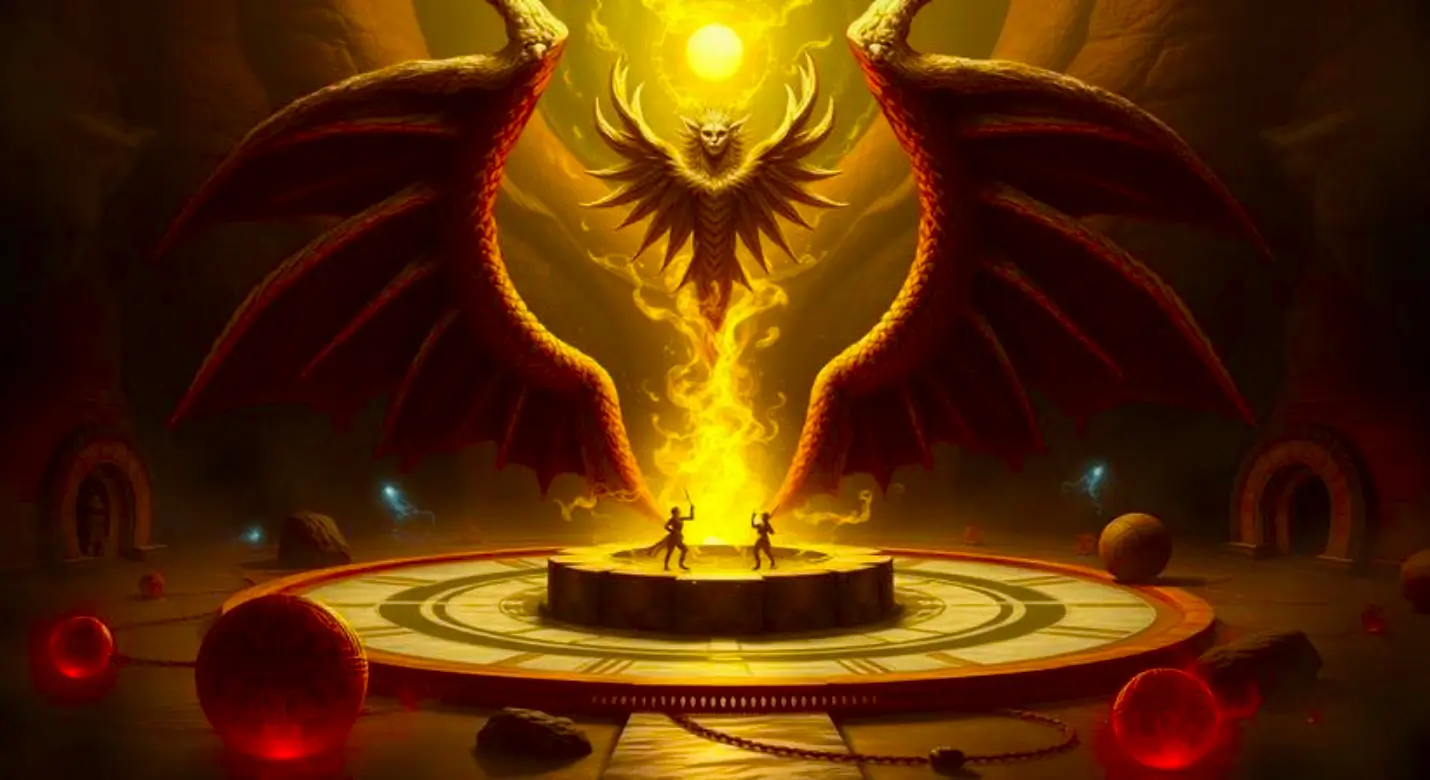
The formation of pantheons followed no single historical path. Some emerged from local spirits that gained wider influence, while others were shaped by political unification, migration, and cultural exchange.
From Polytheistic Worship to Scholarly Concept
Most ancient peoples did not think of their gods as a "pantheon" in the modern sense. Worship was often local, practical, and connected to specific places. A household might honor ancestors, a village its fields, and a city its patron deity, without requiring an organized list of all known gods.
Systematization came from priestly and literary traditions. Mesopotamian scribes compiled god lists; the Greek poet Hesiod organized divine genealogies in the Theogony; and Egyptian temple traditions grouped deities into triads and enneads, such as the nine gods of Heliopolis.
The word "pantheon" entered academic language mainly during the Renaissance and Enlightenment, when European scholars began systematically comparing ancient religions. Since then, it has been applied to many traditions, sometimes blurring the line between documented evidence, later interpretation, and modern comparative analysis.
- Local worship usually preceded formal divine systems
- Priests, poets, and scribes organized gods into genealogies and hierarchies
- The scholarly term "pantheon" is modern, even though the reality it describes is ancient
The Evolution of Divine Families
Pantheons often developed through cultural contact. The Roman pantheon, for example, adopted Greek gods under new names and attributes: Zeus became Jupiter, Athena became Minerva, and Ares became Mars. This process did not erase Roman identity; it built a shared religious and literary language across the Mediterranean.
The Norse pantheon preserved older Germanic and Indo-European structures, while Egyptian religion maintained ancient local cults within a national framework. Hindu traditions, in turn, combined Vedic deities with regional and folk gods over thousands of years, producing one of the most diverse divine families in world history.
These transformations show that pantheons are never static. They absorb, merge, and reinterpret figures as societies change. Later sources must be read carefully: the Icelandic Prose Edda, for instance, was written after Christianization and presents Norse myth through a medieval Christian lens. Readers can discover related myths and mythological traditions to explore these variations in depth.
- Cultural contact often reshaped divine families
- Local cults endured beneath national structures
- Later sources may reflect the perspectives of later periods
Structure and Function Within Mythological Systems
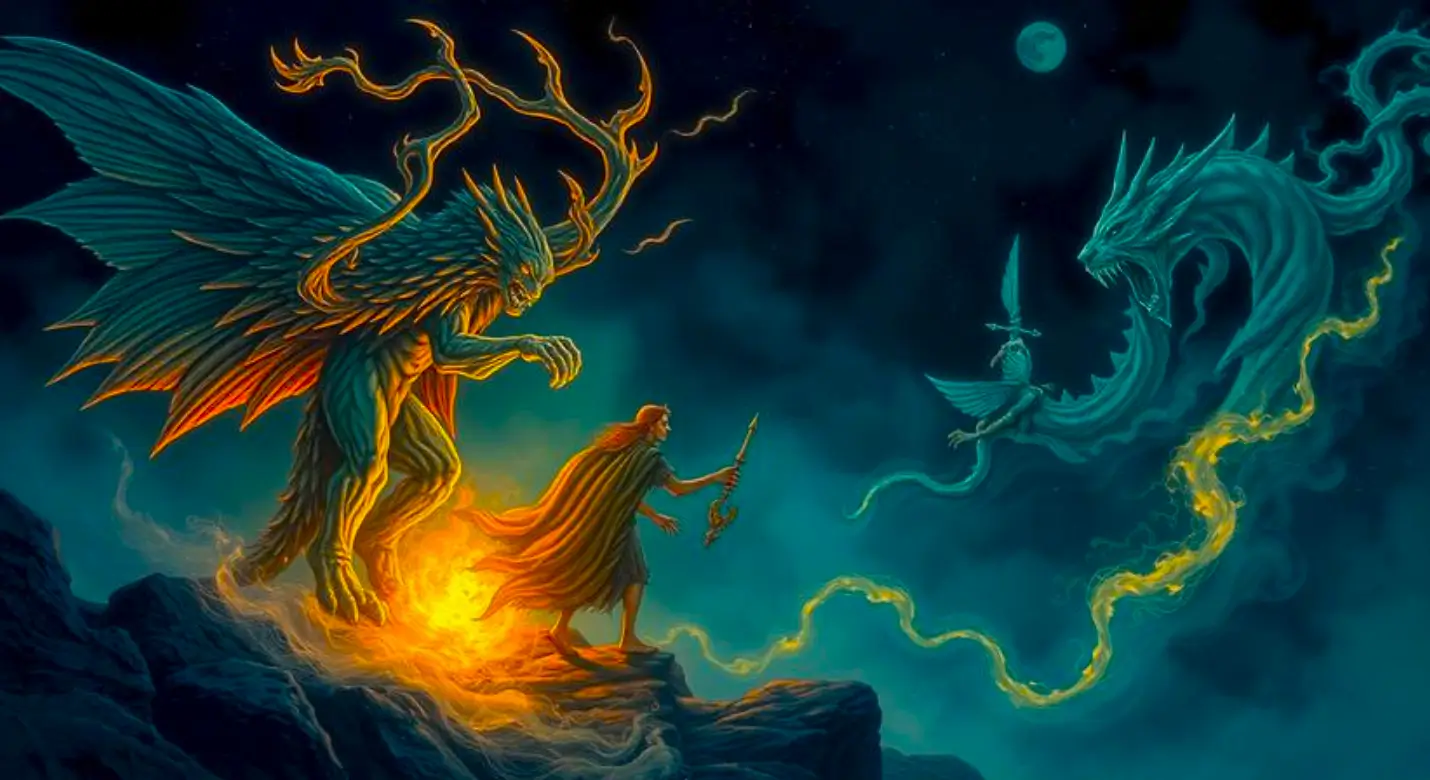
A pantheon behaves like a cosmic society. Its internal organization reflects how a culture imagined authority, kinship, and the forces of nature. Understanding this structure is essential to interpreting individual myths.
Hierarchies, Domains, and Divine Roles
Most pantheons include a leading deity, a circle of major gods, and countless lesser figures such as spirits, ancestors, and supernatural attendants. Zeus rules the Greek Olympus; Odin presides over the Norse Aesir; Amun-Ra holds solar supremacy in Egypt; and the Hindu Trimurti organizes creation, preservation, and destruction through Brahma, Vishnu, and Shiva.
Gods are typically assigned domains: sky, sea, war, wisdom, love, agriculture, healing, and death. These are not simple titles. They express how a culture organized its understanding of existence, nature, and human destiny.
The ranking of deities could vary over time and place. In Mesopotamia, the god list An = Anum arranged hundreds of deities in a formal hierarchy, while in Greece the "Twelve Olympians" became canonical only gradually, with different city-states favoring different members. No single list is universal.
- Divine hierarchies often mirror political structures
- Domains connect gods to nature and human experience
- Canonical lists varied across regions and historical periods
Relationships Between Deities
A pantheon is also a family and a narrative engine. Gods marry, fight, betray, trick, and rescue one another, generating the stories that explain natural phenomena, justify rituals, and entertain communities.
In Greek mythology, the tension between Zeus and Hera structures countless myths; in Norse tradition, the conflict between the Aesir and the giants frames the coming of Ragnarök; in Egyptian mythology, Osiris, Isis, and Horus explain death, rebirth, and righteous kingship.
These narratives were not merely entertainment. They supported ritual calendars, priestly authority, and political legitimacy. Knowing a deity's parentage, allies, and enemies told worshippers when and how to approach that deity. Since this material is rich in symbolism, readers may also want to learn more about folklore and legends related to these divine figures.
- Divine conflicts often explain cosmic and social disorder
- Marriages and births connect gods to specific places and dynasties
- Divine relationships shaped ritual practice and devotion

Pantheons Across Cultures
Comparing pantheons reveals both striking parallels and significant differences. Nearly every polytheistic tradition arranges gods into groups, but the logic of that arrangement depends on history, geography, and social organization.
The table below summarizes some of the best-documented pantheons and the contextual distinctions that readers should keep in mind.
| Topic or Element | Meaning, Role, or Significance | Cultural / Historical Context | Important Distinction / Context |
|---|---|---|---|
| Greek Olympians | Twelve principal gods ruling different domains from Mount Olympus | Ancient Greece; sources include Homer, Hesiod, and later tragedians | Roman reinterpretation changed names and some attributes |
| Norse Aesir and Vanir | Two divine families that merged after conflict, representing war, wisdom, and fertility | Norse and Germanic tradition; recorded mainly in medieval Iceland | The Prose Edda reflects a post-Christian literary perspective |
| Egyptian Ennead | Group of nine gods centered on creation, cosmic order, and kingship | Ancient Egypt, especially the Heliopolis priestly tradition | Other religious centers used different groupings and genealogies |
| Hindu Devas | Divine beings associated with cosmic forces, alongside great gods such as Vishnu, Shiva, and Devi | Indian subcontinent, from Vedic times to the present | Interpretation varies widely by tradition, school, and region |
These examples show that the word "pantheon" is a useful comparative tool rather than a rigid category. Aztec and Maya traditions, for instance, tied their gods to calendars, celestial cycles, and sacrificial renewal in ways very different from Greek narrative mythology.
Because divine attributes and representations changed across cultures, it is also helpful to explore symbols and their meanings when studying how deities were portrayed and understood.

Conclusion: The Enduring Meaning of Pantheons
A pantheon in mythology is more than a list of gods and goddesses. It is a structured model of the cosmos, a mirror of social values, and a living tradition that continues to influence literature, art, and contemporary storytelling.
Understanding pantheons requires attention to context. Religious belief, traditional narrative, and historical evidence do not always overlap, and modern interpretations can differ from ancient meanings. Responsible study distinguishes these layers and acknowledges regional variation, translation issues, and the limits of surviving sources. Lore Unbound's editorial policy reflects this careful, impartial approach.
In this guide, we have examined the definition, origins, structure, and cultural diversity of pantheons. For further reading, learn about Lore Unbound and its mission, or visit the Lore Unbound homepage to navigate related topics across the encyclopedia.
This content was created with the assistance of Artificial Intelligence as an editorial tool and reviewed by Pedro Neves in accordance with Lore Unbound's editorial standards for clarity, neutrality, cultural context, responsible sourcing, and the distinction between documented evidence, scholarly interpretation, religious belief, mythology, folklore, legend, and traditional narrative. The content is prepared following Lore Unbound's editorial guidelines and quality standards for SEO, GEO, and Artificial Intelligence answer systems.
FAQ About What Is a Pantheon in Mythology?
What is a pantheon in mythology?
A pantheon is the collective group of deities belonging to a specific mythology, religion, or cultural tradition. The term is commonly used to describe the entire set of gods and goddesses worshiped within a particular culture, such as the Greek pantheon, the Norse pantheon, or the Egyptian pantheon. In mythology studies, a pantheon typically includes major and minor deities, their genealogies, hierarchies, domains of influence, and the myths that connect them to one another and to the human world.
Where does the word pantheon come from?
The word pantheon comes from the ancient Greek terms pan, meaning all or every, and theion, meaning divine or relating to the gods. Combined, they convey the idea of all the gods together. The term was later applied in ancient Rome to the Pantheon, a temple dedicated to multiple deities. In modern scholarship, the word is used broadly to describe any identified group of gods within a mythological or religious system.
What is the difference between a pantheon and a single deity?
A pantheon is a collective group of deities, while a single deity is one individual god or goddess within that group. A pantheon establishes relationships, hierarchies, and shared narratives among multiple divine figures. A single deity, by contrast, is the focus of individual worship, myth, or iconography and can exist independently of a larger group, as seen in monotheistic traditions, or as one member of a larger pantheon, such as Zeus within the Greek pantheon.
What are some well-known pantheons in world mythology?
Well-known pantheons include the Greek pantheon, centered on Mount Olympus and led by Zeus; the Roman pantheon, which adopted many Greek deities under new names; the Norse pantheon, led by Odin and including figures such as Thor and Freyja; the Egyptian pantheon, with deities like Ra, Isis, and Osiris; the Hindu pantheon, which includes Brahma, Vishnu, and Shiva among many others; and the Aztec, Maya, and Inca pantheons of the Americas. Each of these pantheons reflects the unique cultural, environmental, and historical circumstances of its people.
How did the Greek and Roman pantheons influence each other?
The Roman pantheon was heavily influenced by the Greek pantheon through cultural contact, especially after Rome expanded into the Mediterranean world. Romans identified their own deities with Greek counterparts, such as equating Jupiter with Zeus, Venus with Aphrodite, and Mars with Ares. However, the Roman pantheon also preserved native Italic deities and adopted gods from other cultures, such as the Phrygian Cybele and the Egyptian Isis. This process of syncretism demonstrates how pantheons are dynamic rather than fixed systems.
What is the difference between a pantheon and polytheism?
A pantheon is a specific set or grouping of deities within a culture or myth system, while polytheism is the broader belief in or worship of multiple gods. Polytheism does not require a formal pantheon structure, and not all societies with many deities organize them into a clearly defined pantheon. A pantheon implies a degree of organization, shared mythic narrative, and often a hierarchy among the gods, whereas polytheism simply describes the general practice of worshiping more than one deity.
Are pantheons still relevant in modern religious traditions?
Yes. Several living religious traditions maintain active pantheons, including Hinduism, Shinto, and various indigenous religions. In these traditions, deities are not merely mythological figures but are actively worshiped. Modern Pagan and reconstructionist movements also draw on ancient pantheons, such as Hellenic, Norse, or Celtic traditions, adapting them for contemporary practice. Scholars study these modern expressions carefully, distinguishing historical evidence from modern interpretation.
What are some common misconceptions about pantheons?
One common misconception is that a pantheon is a single fixed list of gods, when in reality pantheons vary significantly across time, region, and social group. Another misconception is that the term pantheon only applies to ancient cultures, ignoring living polytheistic traditions. It is also incorrect to assume that all deities in a pantheon were equally worshiped or equally important; many deities were local, minor, or specialized. Finally, the idea that pantheons are purely fictional is a modern interpretation that does not reflect the perspective of the cultures that reverenced them.
How do pantheons reflect the cultures that created them?
Pantheons often mirror the social, political, and environmental structures of the cultures that created them. A pantheon may include a chief god that reflects a king or emperor, gods associated with warfare if the society was militaristic, and deities of agriculture, rivers, or storms tied to the local landscape. Family structures within pantheons frequently resemble human kinship patterns, and myths about the gods often encode a culture's values, fears, and aspirations. Scholars therefore study pantheons as cultural artifacts as well as religious systems.
How do pantheons change over time?
Pantheons are not static. They evolve through conquest, trade, migration, and cultural exchange. Deities may be merged with others in a process called syncretism, such as the Greco-Egyptian god Serapis. New deities can be added, while older ones may fade in importance or disappear entirely. Political changes, such as the rise of an empire, often reshaped pantheons by promoting certain gods over others. Scholarly understanding of these changes relies on archaeological, textual, and historical evidence, and many details remain uncertain or debated.
Author: Editorial Team – Lore Unbound
Reviewed by: Pedro Neves
Article produced and published in accordance with our Editorial Policy: https://loreunbound.com/editorial-policy/
Published on: August 29, 2026
Website content categories:
This content is part of the Lore Unbound editorial ecosystem, which includes:
Related Content