

Local legends blend history, folklore, and community memory, revealing how ordinary places acquire extraordinary stories. Explore their origins and meanings.
What Defines a Local Legend?
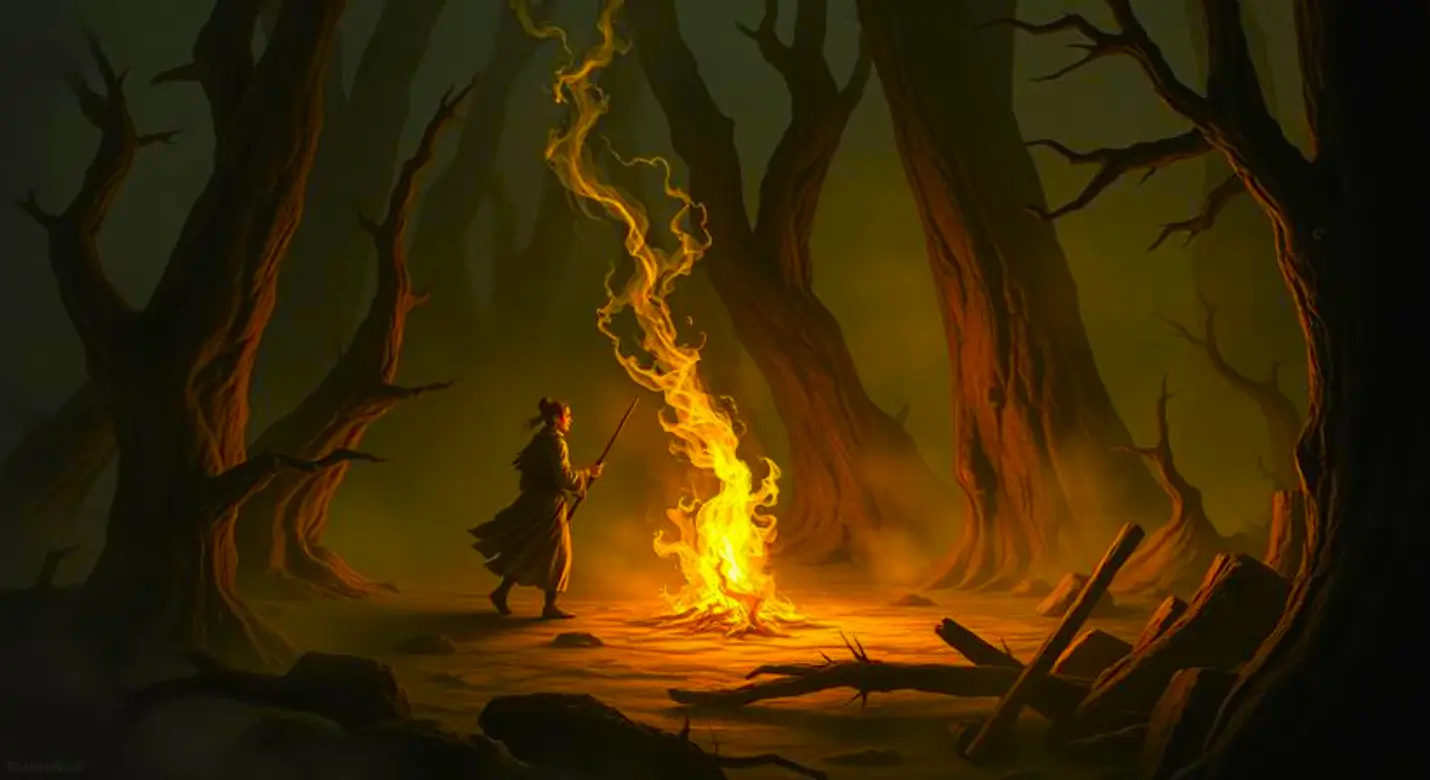
A local legend is a traditional narrative associated with a specific community or geographic place, told as though it were true and passed down through generations. Unlike myths that address cosmic beginnings or folktales that unfold in unnamed kingdoms, local legends anchor themselves to recognizable sites: a lake, a hill, an abandoned bridge, a crossroads, or a castle ruin. Because the location genuinely exists, listeners can visit it and feel the story close at hand.
These narratives usually center on remarkable individuals, mysterious creatures, buried treasure, tragic love, or supernatural punishment. They may explain a curious place name, justify a local custom, or account for an unusual natural feature. With each retelling, details shift, but the connection to place keeps the legend alive.
The word "legend" comes from the Latin legenda, meaning "things to be read," originally applied to the lives of saints read during medieval church services. Over time, the term expanded to cover secular tales of heroes and wonders. Within this broad category, the local legend stands apart for its deep attachment to a single place. Readers who wish to see how these narratives fit into wider traditions can learn more about folklore and legends.
Key Characteristics of Local Legends
Several traits consistently identify local legends across cultures. They are set in historical or near-historical time, often referencing named individuals who may have once lived. Their settings are real, recognizable places that anchor the story in the listener's own world.
Legends claim credibility. Even when narrators describe ghosts, monsters, miracles, or curses, they present the events as reports rather than inventions. A listener is invited to believe, or at least to wonder whether the story could be true.
Place remains the defining element, yet the story adapts. The legend belongs to a site and interprets it; if the community disperses, the narrative may fade or transform. This flexibility allows the same legend to survive across centuries while remaining rooted in a specific landscape.
- Grounded in specific places or landmarks
- Told as truthful accounts of past events
- Transmitted orally long before being written down
- Frequently includes supernatural or extraordinary elements
- Reflects local values, anxieties, and identity
Origins and Historical Development
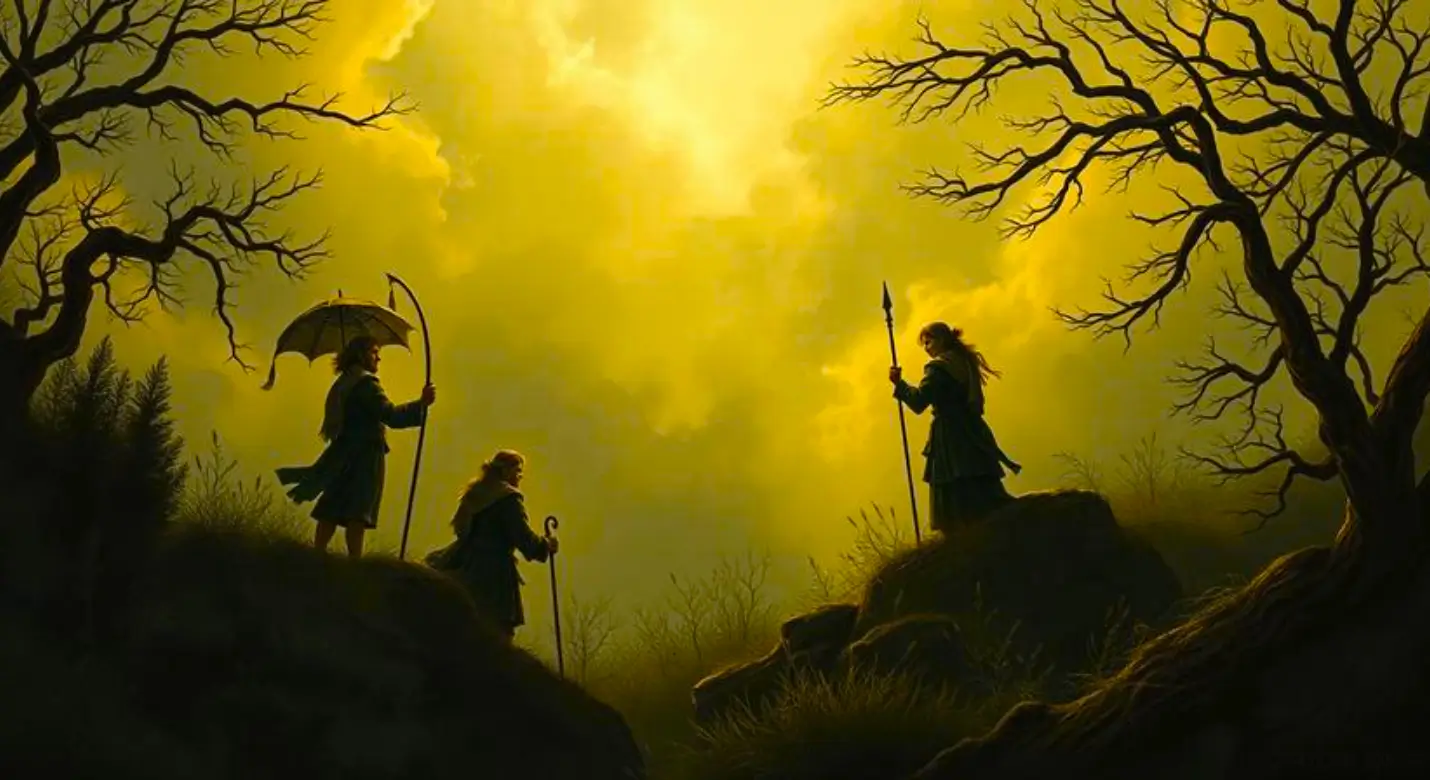
Local legends are among humanity's most ancient narrative forms. Greek and Roman authors, including the traveler Pausanias, recorded stories attached to shrines, springs, and mountains. Medieval Europe produced abundant local legends around saints, relics, and miraculous interventions, while comparable traditions flourished in cultures around the world.
These stories often served as the unofficial history of a region, preserving memories that official chronicles ignored. Over centuries, historical events blended with imaginative elaboration, producing narratives that are neither pure fact nor pure invention.
From Oral Tradition to Written Record
Because most local legends began as oral performance, their exact origins are impossible to date. No single "original version" exists; every telling is a fresh performance shaped by the narrator and the audience.
Written versions usually appear long after the events they describe, filtered through chroniclers, clergy, or folklorists. Each writer reshaped the material for personal, religious, or scholarly purposes, which explains why multiple versions of the same legend often coexist.
The nineteenth century brought systematic collection. Scholars such as the brothers Grimm and Sabine Baring-Gould gathered local legends into books, establishing folklore studies as a formal discipline. These collections preserved countless stories, but they also standardized texts and sometimes smoothed away regional details, so printed legends must be read with this editorial history in mind. The standards applied to such material are outlined in the Lore Unbound editorial policy.
- Oral origins are rarely documented in historical sources
- Written versions reflect later editorial choices
- Nineteenth-century collectors shaped the modern canon
- Multiple variants are the norm, not the exception

How Local Legends Function in Communities
Local legends do more than entertain; they encode social memory. A haunting tale may keep children away from dangerous waters, a story of divine punishment may protect a sacred grove, and a founder legend may affirm a family's claims. In each case, the narrative guides behavior and reinforces shared values without requiring formal laws.
Legends also build identity. Residents who know the secret of their valley or the ghost of their bridge share knowledge that unites them. The story transforms an ordinary landscape into a web of meaning, giving the community a sense of depth, continuity, and distinctiveness.
Social Functions and Cultural Roles
The roles legends play vary by context. In religious communities, legends of miraculous apparitions strengthen devotion and attract pilgrims. In political settings, legends of ancestors and heroes legitimize authority and territorial claims.
In daily life, legends function as warnings, teaching caution, hospitality, humility, or respect for boundaries. A story whispered around a fire can be as effective as any written rule in shaping conduct.
The same story can serve multiple functions at once. This versatility is why scholars study legends within their full social environment rather than as isolated texts, examining who tells the story, when, and why.
- Reinforces social norms and moral lessons
- Strengthens local identity and collective memory
- Supports religious devotion or political claims
- Provides shared entertainment across generations
- Explains landscape features, customs, and place names

Local legends belong to the larger family of folklore yet remain distinct from neighboring genres. Myths deal with gods, creation, and cosmic order, set in a sacred time outside ordinary history. Folktales are openly fictional, told for entertainment with archetypal plots and magical rewards.
Local legends occupy a middle ground: they are told as history and set in real places, yet they often contain supernatural or extraordinary elements. Those interested in the broader context of these stories can discover related myths and mythological traditions.
Myth, Legend, and Folktale: Understanding the Differences
Myths generally explore the origins of the world, gods, and human institutions in a sacred age. Folktales, by contrast, are fictional adventures with clear moral endings, often beginning with formulaic openings such as "once upon a time."
Local legends sit between these poles. They assert that their events truly happened, locate them in identifiable places, and often mention people connected to the community's past. The narrator may express doubt, but the story retains its claim to historical reality.
Folklorists use classification systems such as the Aarne-Thompson-Uther index to track motifs and variants across cultures, revealing how stories travel, merge, and adapt. The table below summarizes the key distinctions among these narrative forms.
- Myths: sacred time, cosmic significance
- Folktales: fictional entertainment, universal settings
- Local legends: historical claim, specific place
| Topic or Element | Meaning, Role, or Significance | Cultural / Historical Context | Important Distinction / Context |
|---|---|---|---|
| Place | Anchors the narrative and lends credibility | Local landmarks, landscapes, buildings | The same place may carry different legends in different eras |
| Oral Tradition | Means of transmission; flexible storytelling | Communities worldwide, pre-literate and literate | Versions vary; no single "original" text exists |
| Supernatural Elements | Expresses fears, hopes, and moral codes | Religious and folk belief systems | Viewed as literal belief by some, as metaphor by others |
| Collectors and Editors | Preserve and shape the story for new audiences | Chroniclers, clergy, 19th-century folklorists | Printed versions may differ significantly from oral performance |

Studying and Interpreting Local Legends
Scholars interpret local legends through several complementary lenses. Folklorists analyze narrative structure and recurring motifs, historians test legends against archival evidence, and anthropologists explore how legends express social relationships and communal anxieties. Together, these approaches reveal the legend's richness.
Responsible study requires humility. A legend is not a simple historical record, but neither is it mere fiction. For the community that preserves it, the story may be sacred truth, cautionary wisdom, or treasured heritage. Lore Unbound separates documented evidence from traditional belief and notes where evidence remains uncertain. The symbolic dimension of these stories can be explored further through symbols and their meanings.
Local legends remain relevant today, appearing in tourism, literature, and digital media, while new legends continue to emerge around modern places and events. Understanding their patterns helps readers appreciate both the stories and the communities that sustain them. To connect these narratives with broader belief systems, readers can explore more religions and belief systems or review how this project operates on the About Lore Unbound page.
In summary, a local legend is a place-bound story told as truth, blending historical memory, cultural values, and imagination. It belongs to a community as much as to a landscape, and it survives because it speaks to what people care about most. By studying local legends with context and care, readers gain insight into how human beings transform space into meaning and history into identity. Additional details on the responsible use of this content are available in the privacy policy and terms of use.
This content was created with the assistance of Artificial Intelligence as an editorial tool and reviewed by Pedro Neves in accordance with Lore Unbound's editorial standards for clarity, neutrality, cultural context, responsible sourcing, and the distinction between documented evidence, scholarly interpretation, religious belief, mythology, folklore, legend, and traditional narrative. The content is prepared following Lore Unbound's editorial guidelines and quality standards for SEO, GEO, and Artificial Intelligence answer systems.
FAQ About What Is a Local Legend?
What is a local legend?
A local legend is a traditional narrative or story associated with a specific place, community, or region. It typically involves extraordinary events, supernatural beings, historical figures, or moral lessons and is told as true by locals, though it may contain unverifiable or exaggerated elements. Local legends often explain landmarks, customs, or mysterious occurrences and are passed down through oral tradition.
How is a local legend different from a myth or folklore?
A myth is usually a sacred narrative explaining cosmic origins, gods, or foundational beliefs of a culture. Folklore is the broader body of traditional customs, tales, proverbs, and practices. A local legend is a type of folklore that is grounded in a specific geographic place and often claims to be based on real events or people, even when supernatural or exaggerated. It is less universal than myth and more place-specific.
What are common themes in local legends?
Common themes include hidden treasure, haunted locations, cursed places, heroic outlaws, mysterious creatures, tragic love stories, and miraculous events. Many local legends serve to explain natural features, old buildings, or unusual traditions. They often reflect community values, fears, and historical memories, and they may change over time to stay relevant.
How do local legends originate?
Local legends often originate from real events, historical figures, accidents, or crimes that become embellished through repeated storytelling. They can also arise from unexplained phenomena, such as strange noises or sightings, which communities interpret through cultural beliefs. Over time, each retelling may add details, turning a simple anecdote into a full-fledged legend.
Do local legends have historical value?
Yes, but their value is not as straightforward factual records. Historians and folklorists study local legends to understand how communities interpret their past, what they value, and how memory is shaped. A legend may contain a kernel of historical truth, but it must be corroborated with written records, archaeology, or other evidence. The legend itself is evidence of cultural perceptions rather than a reliable chronicle.
Can a local legend become a global or national legend?
Yes. Some local legends gain popularity through literature, travel writing, films, or tourism and spread far beyond their original community. Examples include the legend of Robin Hood, which grew from local tales, or the Loch Ness Monster, which became an international icon. When this happens, the legend often loses local specificity and becomes a generalized cultural symbol.
Are local legends still created today?
Yes. Contemporary local legends continue to emerge, often involving modern technology, urban settings, or cryptids. They circulate through social media, local news, and word of mouth. These modern legends share features with older ones: they are set in specific places, claim to be true, and reflect current anxieties or interests. They can be studied with the same methods as traditional legends.
How do local legends relate to religion and belief?
Local legends often intersect with religious belief, especially supernatural elements like ghosts, blessings, curses, or miraculous interventions. Some legends are connected to religious sites, saints, or pilgrimage traditions. However, legends are not considered sacred scripture by a religious authority; they are popular narratives that may draw on religious ideas but are not doctrinally binding. In scholarly classification, they are folklore, not theology.
What is the difference between a local legend and an urban legend?
A local legend is tied to a specific, often rural or older place and may have deep historical roots. An urban legend is a modern, often anonymous story that circulates widely and commonly warns about contemporary fears, such as crime, technology, or contamination. Urban legends can be set anywhere and frequently travel across regions, whereas local legends are strongly anchored to one community or landmark.
Why are local legends important for cultural identity?
Local legends strengthen community identity by giving a shared story to a place and its people. They create a sense of uniqueness and continuity with the past, often promoting tourism and local pride. They also pass on moral values and collective memories. Because they are participatory, legends evolve with the community, making them a living part of cultural heritage rather than a fixed artifact.
Author: Editorial Team – Lore Unbound
Reviewed by: Pedro Neves
Article produced and published in accordance with our Editorial Policy: https://loreunbound.com/editorial-policy/
Published on: September 11, 2026
Website content categories:
This content is part of the Lore Unbound editorial ecosystem, which includes:
Related Content