

Shape-shifters are beings in world folklore who can alter their form. This guide explains their origins, meanings, and cultural significance across traditions.
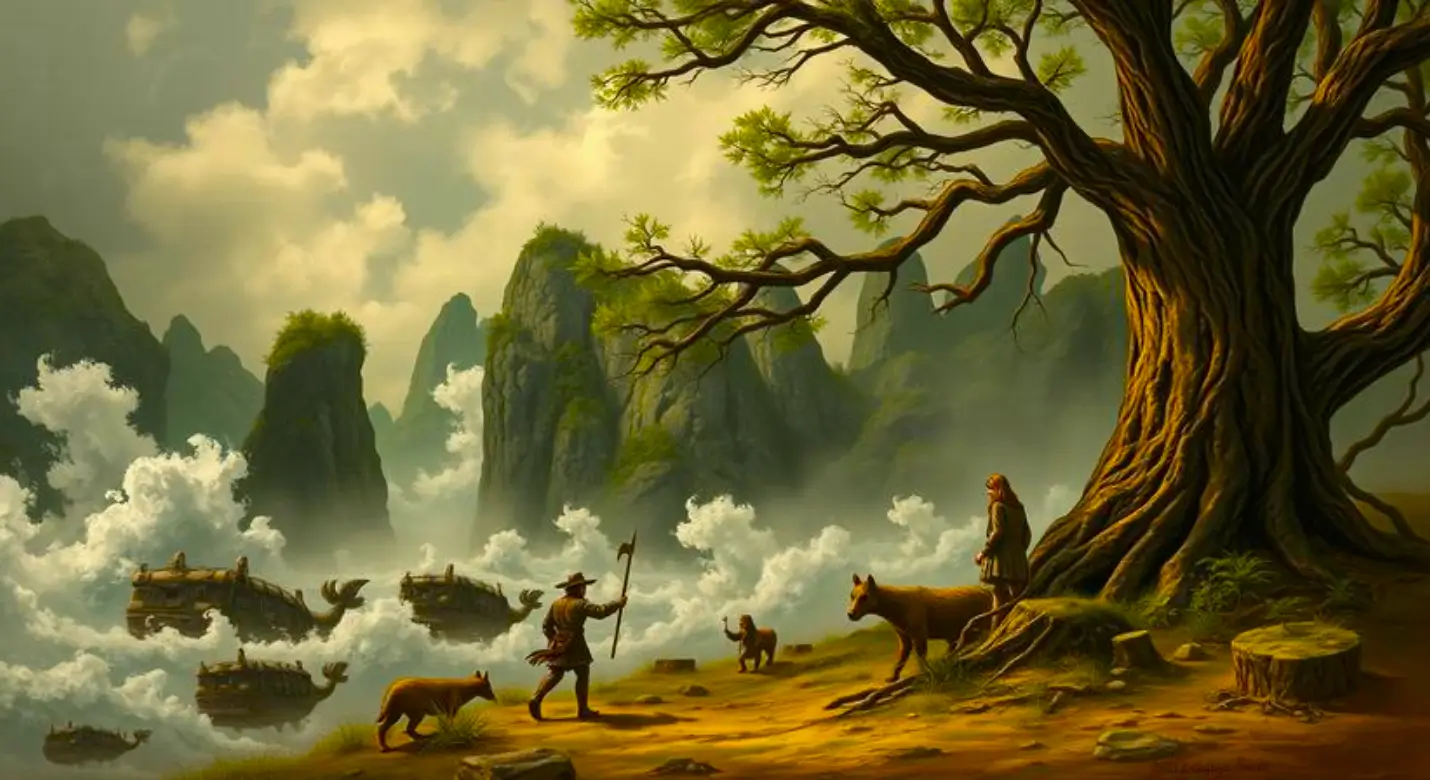
What Is a Shape-Shifter?
A shape-shifter is a being in folklore and mythology capable of changing its physical form, appearing as another human, animal, object, or supernatural being. The term covers figures from European werewolves to East Asian fox spirits, Indigenous skin-walker traditions, and shapeshifting deities.
Shape-shifting is one of the most widespread motifs in human storytelling. It reflects deep questions about identity, transformation, power, and the boundaries between the human and the non-human. Within mythology, transformation often defines heroes, villains, gods, and tricksters.
The ability to transform is rarely presented as neutral. Traditional stories usually attach moral, spiritual, or social significance to the change, depending on who transforms, why they transform, and what form they take. Understanding shape-shifters therefore requires attention to each culture's worldview.
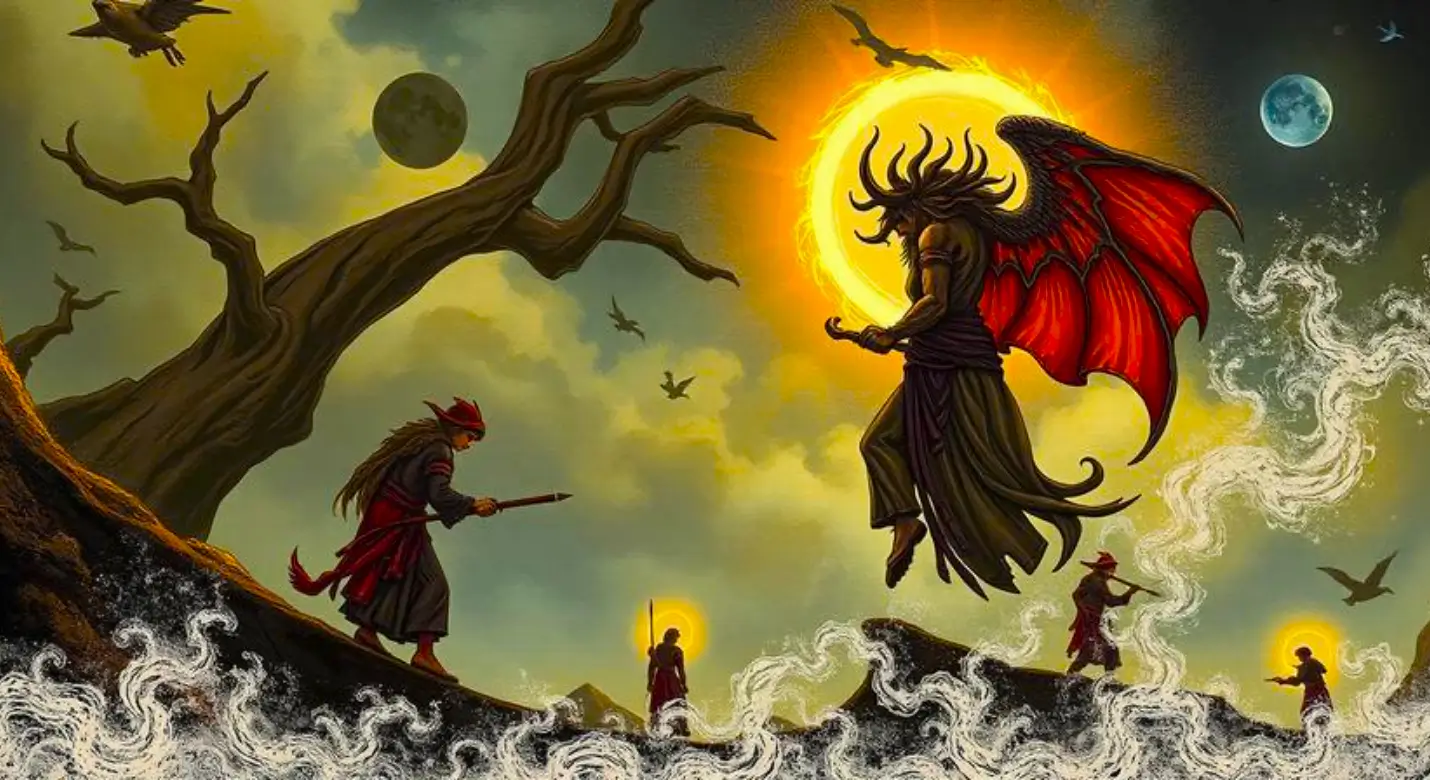
Origins and Historical Development
The precise origins of shape-shifting beliefs cannot be known, since most traditions predate writing. Yet the earliest surviving texts already contain transformation narratives, showing how ancient and widespread the concept is.

Early Written Sources
One of the oldest accounts appears in the Epic of Gilgamesh, where Ishtar transforms a shepherd into a wolf. Greek and Roman literature also preserves many transformation stories, most famously Ovid's Metamorphoses, a Latin poem of the early first century CE.
In these early sources, transformation often functions as a punishment or gift from the gods. Lycaon, for example, is turned into a wolf by Zeus for impiety, while other figures are changed to escape danger or preserve honor. Such narratives use transformation to explore divine power, morality, and the limits of human life.
Medieval European texts continued the tradition through werewolf narratives, and Norse sagas describe warriors who fought with animal ferocity. Scholars debate whether these accounts reflect literal belief, poetic convention, or both.
- Epic of Gilgamesh (Mesopotamia, divine transformation)
- Ovid's Metamorphoses (Roman poem, first century CE)
- Norse sagas and Eddic poetry (berserkers and shapeshifting gods)
- Medieval European werewolf chronicles
Regional Traditions
Shape-shifters appear in nearly every region of the world. In Japanese folklore, the kitsune is a fox spirit that takes human form, often as a beautiful woman; the Chinese huli jing plays a similar role. Celtic traditions include selkies, seals that shed their skins to become human.
Norse mythology presents gods such as Loki and Odin who change shape, and Greek myth includes many mortal and divine transformations. Indigenous traditions offer equally complex narratives, from Navajo accounts of skin-walkers to Amazonian and African stories of shamans acquiring animal forms through spiritual practice.
Despite differences, these traditions share a premise: identity is not always fixed, and boundaries between species or worlds can be crossed. Comparative folklore studies examine these patterns to understand how cultures conceptualize nature and self.
- Kitsune and huli jing (East Asian fox spirits)
- Selkies (Celtic seal-people)
- Skin-walkers (Navajo tradition)
- Berserkers (Norse warrior tradition)
Cultural and Religious Significance
Shape-shifting carries deep symbolic and religious meaning. In many traditions, transformation marks a liminal state — a threshold between worlds, identities, or phases of life.

Shapeshifting in Mythology and Religion
In mythology, gods and spirits transform to interact with humans, test mortals, or exercise power. Zeus assumed many forms in Greek myth; Loki became a mare, a salmon, and other beings in Norse stories. Hindu tradition describes avatars, divine forms such as Vishnu's, though avatara carries a different theological meaning than folkloric shape-shifting.
In some religious systems, shape-shifting is understood as a spiritual capacity. Shamans in Siberian, Arctic, African, Australian, and Native American traditions are reported to take animal forms during rituals or visionary journeys. These beliefs operate within their own frameworks and are treated by practitioners as sacred experience.
Lore Unbound examines these traditions within their historical and cultural contexts, distinguishing religious teaching, practitioner belief, and documented history.
- Zeus and Loki (divine transformation in Greek and Norse myth)
- Vishnu's avatars (Hindu theological concept)
- Shamanic spirit journeys (various Indigenous traditions)
- Werewolf legends in medieval Christianity (sin and demonic association)
Symbolic Meanings
Shape-shifters often symbolize unstable identity and boundaries between human, animal, and divine realms. They can embody adaptability, deception, danger, freedom, or spiritual power depending on the story.
European werewolf tales often symbolized uncontrolled instincts or the beast within. East Asian fox-spirit stories warn against deception and seduction. In other contexts, shape-shifting represents healing, wisdom, or the soul's journey.
These readings shift over time. Contemporary interpretations treat shape-shifters as metaphors for identity, marginality, gender, and personal change, rather than reflecting historically recorded meanings. Readers can explore symbols and their meanings across cultures.
- Uncontrolled instinct (European werewolf stories)
- Deception and seduction (fox-spirit tales)
- Sovereignty and wisdom (Celtic tradition)
- Spiritual power (shamanic traditions)
Common Types and Legendary Figures
Every culture develops its own vocabulary, but certain types of shape-shifters recur worldwide. The werewolf is the most famous in Western traditions, yet it is one figure among many. The table below summarizes key examples.
| Topic or Element | Meaning, Role, or Significance | Cultural / Historical Context | Important Distinction / Context |
|---|---|---|---|
| Werewolf | Human who transforms into a wolf; linked to savagery or curse | European folklore and medieval chronicles | Some sources describe voluntary transformation, others punishment |
| Kitsune | Fox spirit that takes human form; associated with intelligence and trickery | Japanese folklore, influenced by Chinese huli jing | Can be benevolent or malevolent depending on the story |
| Selkie | Seal that becomes human by shedding its skin | Celtic and Scandinavian maritime folklore | Often romanticized in modern retellings |
| Skin-walker | Figure associated with harmful witchcraft, able to assume animal forms | Navajo tradition | Not a generic term; loose online usage may be disrespectful |
| Zeus and Loki | Deities who transform to pursue goals or interact with mortals | Greek and Norse mythology | Divine shape-shifting differs from human or spirit transformation |
| Shaman | Religious specialist believed to adopt animal forms in spiritual contexts | Siberian, Arctic, African, and Indigenous American traditions | Belief-based practice; not equivalent to folkloric monsters |

Modern Interpretations and Misconceptions
Shape-shifters are now common in modern fantasy literature, film, and comics. Contemporary retellings often emphasize spectacle, romance, or identity themes, reshaping older folk figures.
Shapeshifters in Popular Culture
Series such as Harry Potter, Twilight, and superhero franchises feature transforming characters. These versions often simplify or romanticize older narratives, focusing on visual spectacle rather than moral or spiritual meaning.
Popular culture does not always preserve cultural context. The term "skin-walker," for example, sometimes circulates online as a loose synonym for any shapeshifter, but in Navajo tradition, it names a specific figure within a sacred context. Broad use of the term can be inaccurate and disrespectful.
Understanding these adaptations requires separating creative reinterpretation from traditional folklore. Readers can explore more folklore and legends or discover related myths and mythological traditions.
- Animagi in Harry Potter (controlled magical transformation)
- Werewolves in urban fantasy (Twilight, The Wolfman)
- Kitsune in anime and manga (Naruto and others)
- Superhero shapeshifters (Mystique, Loki in Marvel Comics)
Points of Attention
When studying shape-shifters, scholars recommend caution. Distinguish between documented evidence, religious belief, folklore, and later reinterpretation. Also avoid assuming similar figures mean the same thing across cultures.
Terminology varies across languages, making translation difficult. Some words carry connotations that do not map neatly onto English. Some shape-shifting traditions also remain living and sacred, requiring respectful treatment.
Because origins are often uncertain, responsible interpretation acknowledges gaps in evidence rather than speculation. Consult Lore Unbound's editorial policy and about page to understand its approach to cultural material.
- Separate historical evidence from mythological and religious claims
- Understand regional and cultural context before interpreting
- Be aware of translation and terminology differences
- Respect living traditions and their communities
- Acknowledge uncertainty about origins and contested interpretations
Conclusion
Shape-shifters are among the most universal motifs in world folklore, reflecting human questions about identity, nature, and transformation. Their meanings change across cultures, yet transformation always challenges the idea of fixed identity.
This Lore Unbound guide has examined definitions, origins, cultural roles, symbolic meanings, and modern interpretations of shape-shifting traditions. As with all folklore, the subject invites curiosity but requires cultural respect and intellectual care.
For further exploration, readers can explore more religions and belief systems, discover related figures and legendary beings, or browse common questions in the folklore FAQ.
This content was created with the assistance of Artificial Intelligence as an editorial tool and reviewed by Pedro Neves in accordance with Lore Unbound's editorial standards for clarity, neutrality, cultural context, responsible sourcing, and the distinction between documented evidence, scholarly interpretation, religious belief, mythology, folklore, legend, and traditional narrative. The content is prepared following Lore Unbound's editorial guidelines and quality standards for SEO, GEO, and Artificial Intelligence answer systems.
FAQ About What Is a Shape-Shifter in Folklore?
What is a shape-shifter in folklore?
A shape-shifter is a being in folklore and mythology with the ability to change its physical form, often between human and animal shapes. This ability appears in traditions worldwide and can be voluntary, involuntary, magical, or cursed depending on the culture. In folklore studies, shape-shifters are understood as symbolic figures expressing transformation, boundary crossing, and the relationship between human and nature.
Where does the concept of shape-shifting originate?
There is no single origin, as shape-shifting appears in oral traditions and texts across many ancient cultures. Examples include Greek myths like Zeus transforming into animals, Norse tales of Loki, Celtic stories of selkies and púcas, and Indigenous American narratives of animal-spirit transformations. These diverse traditions indicate that the concept developed independently in many societies.
Which cultures and traditions are most associated with shape-shifters?
Shape-shifting is globally attested. European folklore includes werewolves, selkies, swan maidens, and bear-skin legends. African, Asian, and Indigenous American traditions likewise contain shape-shifting figures, such as trickster gods, animal spirits, and skin-walkers in some Navajo stories. The specific forms and rules vary greatly by culture.
What are the common types of shape-shifters in folklore?
Common categories include therianthropes, who change from human to animal; animal brides or grooms, such as selkies or swan maidens; trickster figures who use transformation for deception; and gods or spirits who take on multiple forms. Some shape-shifters transform at will, while others are bound to cycles of day and night, like werewolves. The differences depend on regional tradition.
Why are animals the most common shape-shifting form?
Animals are common because shape-shifting often reflects close relationships between humans and the natural world, as well as beliefs in animal spirits or totems. Changing into an animal can represent gaining its abilities, instincts, or spiritual power. In many traditions, the boundary between human and animal was understood differently than in modern biology.
What is the difference between a werewolf and a shape-shifter?
A werewolf is a specific type of shape-shifter that transforms into a wolf or wolf-human hybrid. Not all shape-shifters turn into wolves, and not all werewolf legends involve voluntary control. Shape-shifter is the broader category, covering any being that changes its form in folklore.
Are shape-shifters considered gods, monsters, or humans?
It depends on the tradition. Some shape-shifters are deities, such as the Norse Loki or Greek Proteus; others are supernatural beings like fairies or spirits; and some are ordinary humans who gain transformation through magic, curses, or wearing animal skins. In many stories, the being’s moral nature matters more than its species or origin.
How is shape-shifting interpreted in mythology and psychology?
Scholars interpret shape-shifting as a metaphor for personal transformation, hidden identities, liminal states, or the connection between civilization and wildness. In Jungian psychology, transformation figures may represent archetypes of the shadow or the self. These interpretations are modern scholarly frameworks, not explanations given by the original storytellers.
What role do shape-shifters play in religious or spiritual traditions?
In some religions and spiritual traditions, shape-shifting appears in myths, shamanic practices, or narratives about spirits and deities. For example, shamans in some cultures are described as taking animal forms during spirit journeys, and Hindu deities like Vishnu assume avatars. These are matters of belief and ritual within their own contexts, and should not be generalized across all religions.
How has modern media changed the folklore concept of shape-shifter?
Modern books, films, and games have popularized shape-shifters like werewolves as sympathetic characters and expanded their forms beyond traditional animals. These adaptations often blend folklore from multiple cultures, which can obscure original meanings. They have also introduced new rules, such as transformation being triggered by emotion or controlled by genetics.
What are common misconceptions about shape-shifters in folklore?
A common misconception is that all shape-shifters are dangerous monsters or evil. In fact, many shape-shifters in folklore are benevolent, ambiguous, or simply neutral figures. Another misconception is that shape-shifting legends are limited to Europe; the concept is found in cultures worldwide with vastly different characteristics.
Author: Editorial Team – Lore Unbound
Reviewed by: Pedro Neves
Article produced and published in accordance with our Editorial Policy: https://loreunbound.com/editorial-policy/
Published on: September 6, 2026
Website content categories:
This content is part of the Lore Unbound editorial ecosystem, which includes:
Related Content