
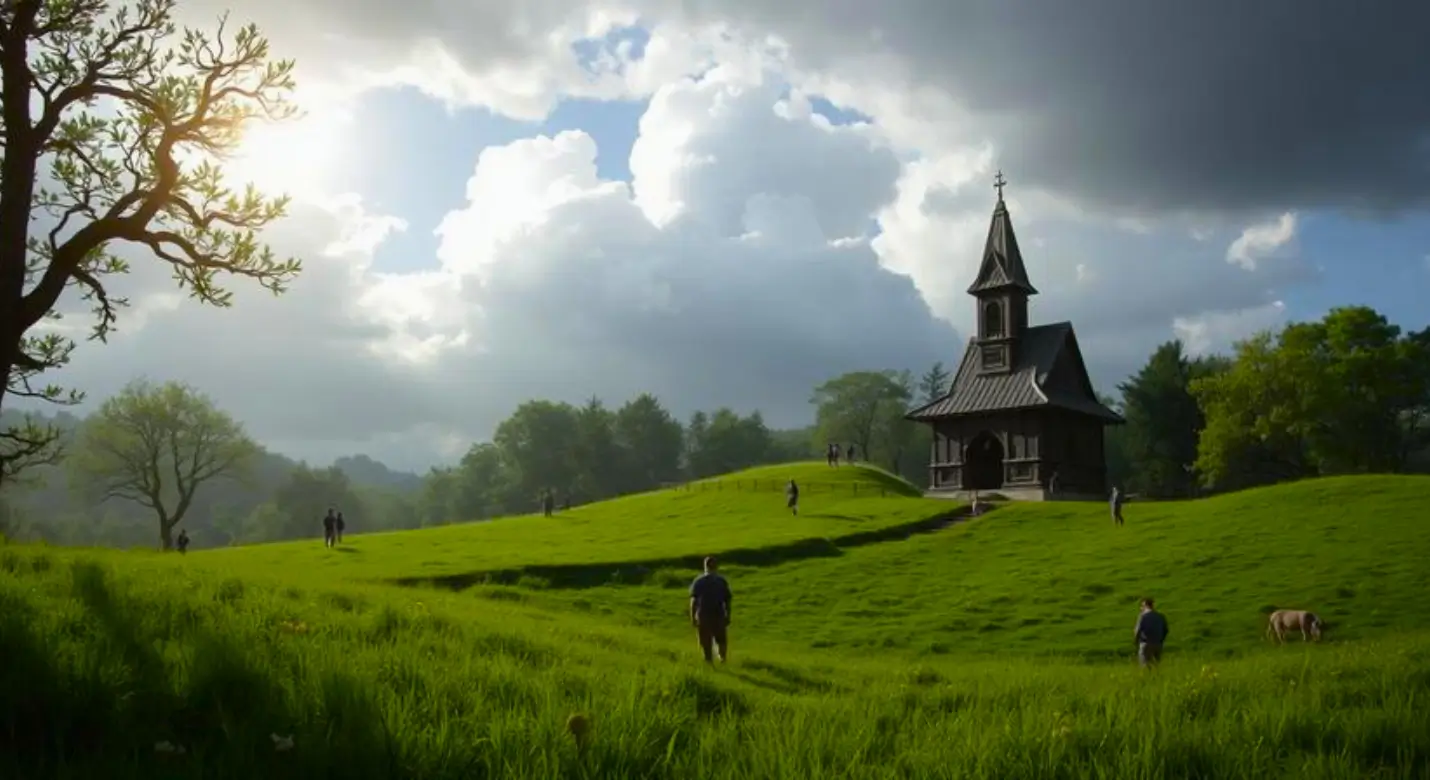
Folklore shapes cultural identity, preserves collective memory, and transmits values across generations. This guide explores its importance and relevance.
What Is Folklore? Definition and Scope
Folklore is the traditional knowledge, beliefs, customs, stories, songs, and practices shared within a community and passed down through repetition. The English term "folklore" was coined in 1846 by William Thoms to describe the "learning of the people."
Modern folklorists understand folklore more broadly. It includes ancient myths, peasant customs, urban legends, family traditions, festival practices, Internet memes, and contemporary rituals. What makes something folklore is not its age but its transmission: folklore circulates informally and changes with each retelling.
The Main Forms of Folklore
Folklore appears in many expressive forms. Verbal folklore covers myths, legends, fairy tales, proverbs, riddles, jokes, and songs. Customary folklore includes rituals, festivals, games, and dances. Material folklore includes crafts, clothing, food traditions, and tools.
These forms often overlap. A community festival may combine songs, costumes, foods, and ritual actions. Folklorists study how these elements give meaning to everyday life.
Folklore also adapts to change. As communities migrate or adopt new technologies, their folklore transforms. This flexibility explains why folklore remains relevant today. Readers can learn more about folklore and legends at Lore Unbound.
- Verbal folklore: myths, legends, folk tales, proverbs, riddles, and oral poetry.
- Customary folklore: rites of passage, seasonal festivals, games, and social customs.
- Material folklore: handicrafts, clothing, food traditions, and traditional tools.

Folklore and Cultural Identity
Folklore gives communities a shared identity. Stories about ancestors, heroes, founding events, and sacred places create a common memory that binds people together. Through folklore, individuals learn what their community values, fears, and celebrates.
Folklore also marks cultural boundaries. Dialects, local legends, traditional dress, and regional dishes distinguish one group from another. At the same time, folklore helps outsiders understand a community's history and worldview.
For minority and diaspora groups, folklore is often vital for cultural survival. It preserves language, traditions, and identity when these are threatened. Scholars describe this as folklore's role in cultural resistance and self-determination.
Folklore as Collective Memory
Folklore frequently preserves traces of historical experience. Epics such as the Iliad, the Mahabharata, and the Kalevala blend mythological themes with memories of migrations and conflicts. Some researchers suggest certain Australian Aboriginal oral traditions describe geological events from thousands of years ago.
However, folklore is not a literal historical record. Oral traditions compress, rearrange, and mythologize events. Scholars therefore read folklore as a cultural document that reveals how a community understood its past, not as exact history.
Still, folklore is valuable to historians. Compared with archaeology, written records, and linguistics, oral traditions can reveal patterns of migration and cultural contact. The study of folklore enriches our understanding of the past.
- Folklore strengthens collective identity through shared stories and symbols.
- It preserves cultural memory when written records are scarce.
- It transmits local knowledge about nature, survival, and social life.

Before mass literacy, folklore was the main educational system of most societies. Myths, legends, fables, and proverbs taught moral behavior, social responsibilities, and the dangers of the natural world. Many folk tales still serve this function today.
Folklore also structures social life. Rites of passage for birth, coming of age, marriage, and death help individuals navigate transitions. Festivals reinforce community bonds. Readers can explore more religions and belief systems to see how rituals vary across cultures.
Morality, Wisdom, and Practical Knowledge
Folk tales often carry moral lessons. The tales collected by the Brothers Grimm and Charles Perrault reward kindness and cleverness while punishing greed and cruelty. Proverbs condense practical wisdom into memorable phrases.
Folklore also contains practical and ecological knowledge. Traditional farming cycles, weather signs, and herbal practices are embedded in folk traditions. Ethnobiologists value this knowledge, while noting that traditional beliefs are not always scientifically accurate.
It is important to distinguish the cultural value of a tradition from any factual claims it makes. Responsible study respects folklore's meaning within a community without treating every traditional belief as established fact.
- Folklore teaches moral values through narratives, proverbs, and examples.
- It guides individuals through life transitions and community rituals.
- It preserves practical and ecological knowledge developed over generations.

Folklore in Contemporary Culture and Digital Media
Folklore is not a relic of the past. Urban legends, viral challenges, Internet memes, and fan traditions behave like older folklore: they spread informally, mutate in retelling, and reflect shared values. Contemporary folklorists study digital traditions alongside older forms.
Modern media also draw on folklore. Films, television, literature, and video games adapt mythological themes for new audiences. These adaptations can keep traditions alive, but they may also simplify or romanticize them.
Distinguishing a traditional narrative from its modern adaptation is essential. Readers can explore symbols and their meanings or discover related myths and mythological traditions at Lore Unbound.

Key Functions of Folklore in Culture
The table below summarizes the main functions of folklore and important distinctions for understanding its cultural role.
| Topic or Element | Meaning, Role, or Significance | Cultural / Historical Context | Important Distinction / Context |
|---|---|---|---|
| Folklore | Traditional knowledge, stories, customs, and expressive culture shared within a community | Found in all human societies; studied since the 19th century | "Folklore" is a scholarly term; communities experience it as living tradition |
| Oral tradition | Transmission of narratives, songs, and rituals through speech and practice | Predates written literature; still active today | Oral transmission produces variation; no single "original" version may exist |
| Myths | Sacred or explanatory narratives involving deities, heroes, or cosmic events | Central to Greek, Norse, Hindu, Egyptian, and Indigenous traditions | Myths are traditional narratives, not documented historical events |
| Legends | Stories set in a remembered past, often mixing fact and imagination | Examples include King Arthur and local founding tales | Legends may contain historical kernels but are not verifiable history |
| Folk tales | Fictional narratives with moral or entertainment purposes | Collected by the Brothers Grimm and folklorists worldwide | Similar tale types appear across cultures; each version reflects local values |
Points of attention: Folklore is not a fixed or uniform body of content. It varies across regions, communities, languages, and historical periods. Early collectors often sought an "original" version of a tale, but modern scholarship recognizes that variation is normal and meaningful. Religious belief, traditional narrative, and documented history should also be carefully distinguished when examining myths and legends.
Folklore matters because it is the living expression of how communities understand themselves and their world. It preserves memory, teaches values, reinforces identity, and adapts to change. In this Lore Unbound guide, folklore appears as a vital cultural force found in every society, from ancient oral traditions to digital culture. Readers are invited to explore related topics, including mythological traditions, symbols, rituals, and customs. Those interested in how this content is produced may consult Lore Unbound's editorial policy.
This content was created with the assistance of Artificial Intelligence as an editorial tool and reviewed by Pedro Neves in accordance with Lore Unbound's editorial standards for clarity, neutrality, cultural context, responsible sourcing, and the distinction between documented evidence, scholarly interpretation, religious belief, mythology, folklore, legend, and traditional narrative. The content is prepared following Lore Unbound's editorial guidelines and quality standards for SEO, GEO, and Artificial Intelligence answer systems.
FAQ About Why Is Folklore Important to Culture?
What is folklore and why does it matter to culture?
Folklore refers to the traditional stories, customs, songs, crafts, proverbs, rituals, and practices that are passed along informally within a community. It matters because it carries a group's memory, values, and identity from one generation to the next. Folklore connects people to their past and to each other, and it remains a living part of daily life.
How does folklore preserve historical memory?
Folklore preserves historical memory by storing experiences, local knowledge, and collective recollections in forms that are easy to share and remember. Legends may recall historical events, songs may describe migrations, and customs may commemorate past struggles. While folklore is not always factually exact, it offers insight into how communities understood and interpreted their own history.
What role does folklore play in building community identity?
Folklore helps define who belongs to a group and what makes that group distinctive. Shared stories, festivals, foodways, and verbal traditions create a sense of common heritage and solidarity. By participating in these traditions, individuals strengthen their bond to the community and affirm a collective identity that can survive across regions and generations.
How does folklore transmit values and social norms?
Folklore transmits values through moral tales, fables, legends, proverbs, and customary practices. These forms teach expected behavior, responsibility, courage, hospitality, respect for elders, and other social norms in an engaging and memorable way. Because folklore is embedded in community life, it reinforces rules and ideals without relying on formal instruction.
How does folklore relate to religion and local belief systems?
Folklore often overlaps with religion by preserving local devotional traditions, saints, spirits, festivals, and ritual practices. It can carry elements of belief that are passed on at family or village level alongside official religious teaching. Folklore also records how people make sense of misfortune, healing, death, and the supernatural within their cultural context.
What is the difference between folklore and myth?
Myth is a category of traditional narrative that often deals with sacred beings, the origins of the world, and fundamental questions of existence. Folklore is a broader field that includes myths, legends, fairy tales, jokes, customs, crafts, and everyday traditions. Both contribute to a culture's worldview, but myth tends to carry cosmological and religious significance while folklore covers both sacred and ordinary life.
How does folklore change over time?
Folklore changes because it is continually recreated in performance and transmission. Each telling, celebration, or craft can introduce new details that respond to new circumstances. Communities migrate, technologies change, and media influence tradition, so folklore adapts while maintaining recognizable links to earlier forms. New traditions and digital folklore also emerge in modern settings.
How did folklore studies begin as a scholarly field?
Folklore studies grew out of antiquarian interest and Romantic nationalism in Europe during the eighteenth and nineteenth centuries. Scholars collected songs, tales, and customs in order to document national heritage. Figures such as the Brothers Grimm helped popularize the study of folklore, and over time it developed into an academic discipline with methods for field research, archival work, and interpretation.
What are common misconceptions about folklore?
A common misconception is that folklore means something false or unimportant. Another is that folklore belongs only to small rural communities or to the distant past. In fact, folklore includes jokes, urban legends, internet memes, festivals, and everyday habits that continue to form in all kinds of communities. Folklore is not a synonym for lie; it is a term for living traditional culture.
How is folklore important in the modern world?
Folklore remains important as a way of understanding cultural diversity, identity, and social change in the modern world. It is used in education, museums, heritage tourism, the arts, and community development. International organizations such as UNESCO recognize intangible cultural heritage as valuable, and digital platforms now create and spread folklore at a global scale.
Author: Editorial Team – Lore Unbound
Reviewed by: Pedro Neves
Article produced and published in accordance with our Editorial Policy: https://loreunbound.com/editorial-policy/
Published on: August 30, 2026
Website content categories:
This content is part of the Lore Unbound editorial ecosystem, which includes:
Related Content