
Folklore includes traditional stories, customs, songs, and beliefs shared within communities. This guide explains its origins, forms, and cultural significance.
What Is Folklore?
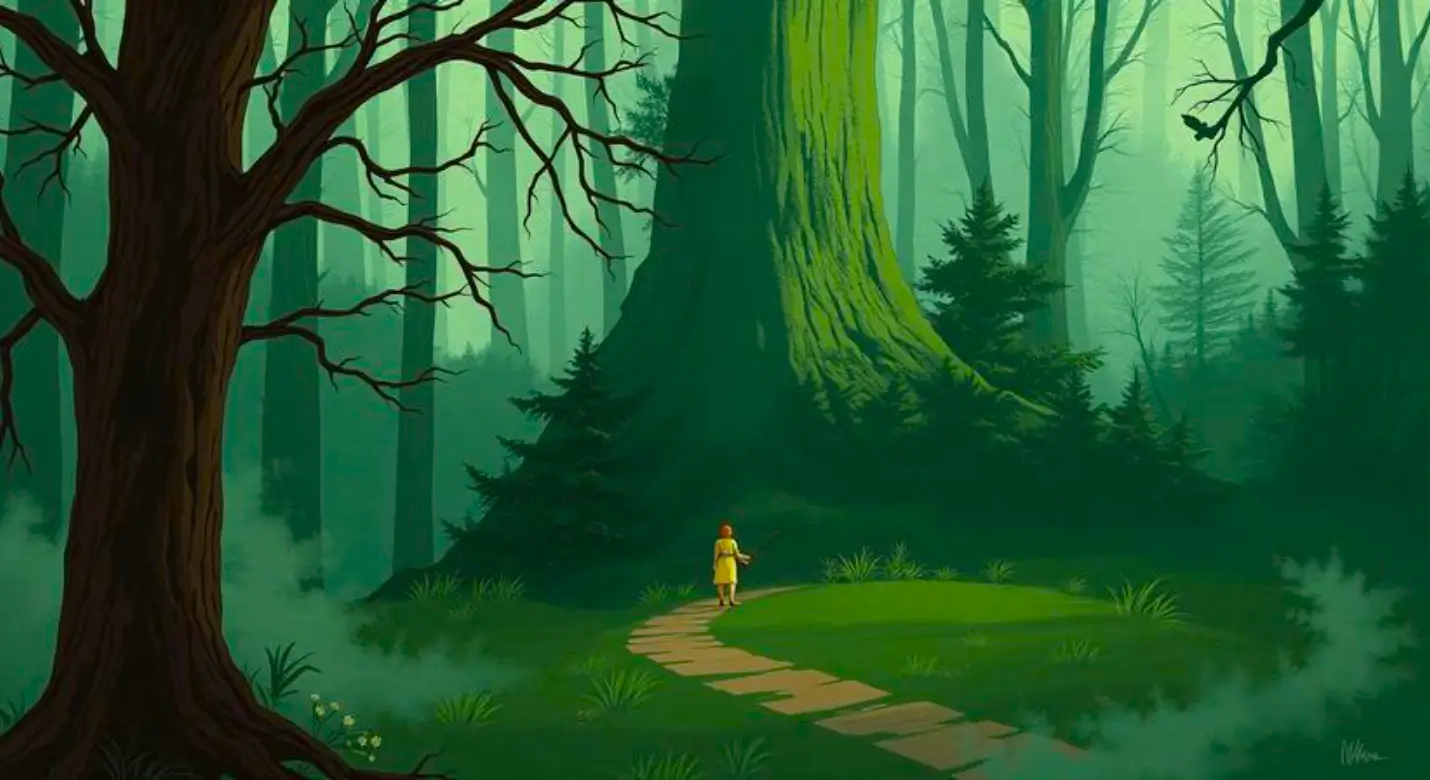
Folklore is the traditional, informal, and expressive culture shared by a group of people and transmitted across generations through words, practices, objects, and behavior. It includes folk tales, legends, songs, proverbs, rituals, festivals, crafts, costume, foodways, and belief traditions. In this Lore Unbound guide, folklore appears not as lifeless relics but as living culture in motion.
The word covers both the expressions themselves and the processes by which communities create, repeat, adapt, and transmit them. Because folklore is passed on informally, it usually has no single author; it belongs to the community that performs it. Variation and adaptation are normal features of tradition, not defects.
Folklore is often connected with rural or pre-industrial societies, but it also thrives in cities, families, professional groups, and digital spaces. Contemporary folklore includes workplace stories, children's rhymes, urban legends, and internet memes, which follow similar patterns of creation and spread.
Origins of the Term and the Field of Study
The English word folklore was coined by the antiquarian William John Thoms in 1846. Writing under the pseudonym Ambrose Merton in a letter to The Athenaeum, Thoms proposed it to replace older expressions such as popular antiquities and popular literature. He combined folk, meaning ordinary people, with lore, meaning traditional knowledge or customs.
The Coinage of Folklore
Thoms described folklore as including manners, customs, observances, superstitions, ballads, proverbs, and similar traditions of the common people. The term spread quickly across Europe and beyond, and many languages adopted it as a loanword while others developed their own equivalents.
The new word reflected a shift in perspective: educated observers began to regard popular culture not merely as ignorance but as valuable evidence of identity, belief, and communal creativity. This idea fueled the rise of folklore collecting in the nineteenth century.
The scholarly history of folklore is more complex than a simple restoration of popular voices. Collectors often edited or reinterpreted material according to the ideals of their time.
- Volkskunde — a German term for the study of local and popular culture.
- Popular antiquities — the earlier English expression Thoms sought to replace.
- Folkloristics — the academic name for the modern study of folklore.
Major Forms and Genres of Folklore
Folklore appears in many forms, often organized into verbal, customary, and material expressions. Many traditions combine categories: a festival, for example, may include songs, stories, processions, costumes, and food.
Oral Narratives and Verbal Art
Oral narratives are among the most recognizable folklore genres. A folk tale is a fictional story with recurring characters and motifs; a legend is usually set in the real world and may describe extraordinary events; a myth is a traditional narrative about deities, origins, and the ordering of the world. Boundaries between these genres are fluid.
Verbal art also includes proverbs, riddles, jokes, tongue twisters, ballads, laments, work songs, and epic poetry. These forms teach values, sharpen language, preserve memory, and provide entertainment in settings that range from the household to public celebrations.
For readers interested in sacred stories, it is useful to discover related myths and mythological traditions to understand how traditional narratives relate to religious belief and historical record.
- Folk tales and fairy tales.
- Legends and urban legends.
- Myths, which often carry sacred or explanatory meaning.
- Proverbs, riddles, and sayings.
- Songs, ballads, and chants.
Customs, Rituals, and Material Culture
Customary folklore includes calendar festivals, lifecycle rituals, and everyday social habits. Communities mark the seasons through harvest celebrations, spring festivals, and winter observances, while lifecycle rituals accompany birth, coming-of-age, marriage, and death.
These practices often connect with religion and belief systems, but they can also be secular. Gift-giving, communal meals, processions, and bonfires coexist with formal religion and adapt to new environments. Material culture, including costume, pottery, weaving, and foodways, is another important dimension of folklore.
Readers who wish to see how ritual traditions develop within formal religious frames can explore more religions and belief systems. For imagery in crafts and decoration, it is also enriching to explore symbols and their meanings across cultures.
- Festivals and seasonal customs.
- Lifecycle ceremonies such as weddings and funerals.
- Folk art, crafts, and costume.
- Foodways and culinary traditions.
Folklore performs essential functions in social life. It preserves collective memory, transmits knowledge and values, reinforces identity, and opens space for creativity, humor, and social criticism.
Because folklore is dynamic, communities use it to respond to change. Traditional forms can express resistance, resilience, adaptation, and pride, especially among marginalized, migrant, or diaspora populations.
- Educational transmission of values and practical knowledge.
- Reinforcement of family, community, and ethnic identity.
- Social regulation through proverbs, customs, and warnings.
- Entertainment and emotional expression.
- Cultural continuity and creative adaptation.
| Topic or Element | Meaning, Role, or Significance | Cultural / Historical Context | Important Distinction / Context |
|---|---|---|---|
| Oral tradition | Transmission of stories, songs, and customs by word of mouth and example | Present in all societies; central to folklore research | Each performance is unique; no single original version exists |
| Folk tale | Fictional narrative with recurring motifs and characters | Documented globally; collected by the Brothers Grimm in the 1800s | Distinct from legend and myth, though categories overlap |
| Legend | Narrative set in the real world, often involving unusual events | Tied to local places, historical figures, and community memory | Reflects cultural belief; not necessarily verifiable historical fact |
| Custom / ritual | Repeated behavior with symbolic and social meaning | Found in lifecycle and calendar events, often near religious traditions | Origins are frequently uncertain or disputed |
| Material culture | Physical objects, crafts, costume, and food traditions | Studied alongside verbal and customary folklore | Objects gain meaning through use and context |

Distinctions, Misconceptions, and Responsible Study
Folklore is sometimes mistaken for something false or inferior. In scholarly usage, however, it is a descriptive term, not a verdict on truth. A legend may be believed by some and regarded as fiction by others; both positions are culturally meaningful.
Another common misconception is that folklore is disappearing. In fact, folklore constantly regenerates. Urban legends, internet memes, and modern festivals show that traditional processes of creation and transmission continue in new media.
Responsible study demands attention to context, regional variation, and uncertainty. The origins of many customs are unknown or disputed, and scholars distinguish carefully between documented evidence, religious belief, mythological narrative, legendary tradition, and later interpretation.
For quick answers on related questions, readers can consult the Lore Unbound FAQ section.
Conclusion
Folklore is a fundamental way in which communities create, preserve, and share meaning. Coined in 1846 and developed through more than a century of research, the concept still evolves as communities adapt traditions to new worlds.
Understanding folklore means recognizing that stories, customs, and objects are not simple remnants of the past but active expressions of identity and creativity, and distinguishing clearly between traditional narrative, religious belief, and historical evidence. Readers are invited to learn more about folklore and legends within Lore Unbound.
This content was created with the assistance of Artificial Intelligence as an editorial tool and reviewed by Pedro Neves in accordance with Lore Unbound's editorial standards for clarity, neutrality, cultural context, responsible sourcing, and the distinction between documented evidence, scholarly interpretation, religious belief, mythology, folklore, legend, and traditional narrative. The content is prepared following Lore Unbound's editorial guidelines and quality standards for SEO, GEO, and Artificial Intelligence answer systems.
FAQ About What Is Folklore?
What is folklore?
Folklore refers to the traditional beliefs, customs, stories, songs, sayings, arts, and practices passed down within a community or group. It includes oral narratives like folktales and legends, as well as material culture, ritual customs, festive traditions, proverbs, riddles, and folk music. Scholars study folklore as expressive culture that is learned, shared, and transmitted informally from person to person and generation to generation.
Where does the word folklore come from?
The English word folklore was coined in 1846 by British antiquarian William Thoms. He created it as an alternative to earlier terms like popular antiquities to describe the traditional knowledge and culture of ordinary people. The word combines folk, meaning people or community, and lore, meaning traditional knowledge or learning. It entered scholarly use and later became the name of an academic field.
Is folklore the same as mythology?
No. Folklore is broader than mythology. Mythology refers to a collection of myths, which are traditional narratives often involving gods, supernatural beings, creation events, and explanations of the world. Folklore encompasses myths but also includes legends, fairy tales, customs, festivals, crafts, music, dance, proverbs, and everyday traditional practices. A myth can be part of folklore, but folklore is not limited to mythological narratives.
What are the main types or genres of folklore?
Folklorists often group folklore into several broad categories: oral folklore, including tales, legends, myths, jokes, proverbs, riddles, and songs; customary folklore, including rituals, festivals, games, dances, and lifecycle traditions; and material folklore, including crafts, clothing, foodways, architecture, and traditional tools. These categories can overlap, and many folk practices combine speech, custom, and material creation.
How has folklore been studied historically?
The modern study of folklore grew in nineteenth-century Europe, when collectors such as the Brothers Grimm gathered oral tales and other materials in order to preserve national traditions. Early scholars often treated folklore as survivals from ancient times and focused on origins. During the twentieth century, the field expanded to include fieldwork, ethnography, performance studies, and contextual analysis. Today folklorists examine how folklore is created, performed, transmitted, adapted, and used within communities.
Why is folklore important?
Folklore matters because it expresses a community's identity, values, worldview, and local knowledge. It helps people mark life events, seasons, and shared experiences. It preserves cultural memory in ways that are creative and flexible. It also functions as a living social practice, strengthening social bonds, teaching moral lessons, and providing entertainment. For scholars, folklore offers valuable evidence about how ordinary people make meaning in daily life.
How can the same folk story exist in many versions?
Folklore is not fixed and does not have a single original authoritative text. Oral transmission and performance allow individuals to retell stories in their own words, with different details, tones, local references, and endings. Stories also change when they move between regions, languages, cultures, and historical periods. Folklorists study these variations as repertoire and performance rather than as copies of one lost original, recognizing that variation is a defining feature of folklore.
What is the difference between folklore and popular culture?
Folklore is usually informal, traditional, community-based, and often anonymous in origin, while popular culture is typically mass-produced, commercial, and widely consumed through media, entertainment, and consumer industries. Folklore is transmitted through face-to-face interaction and local practice, whereas popular culture is often distributed by publishing, broadcasting, and digital platforms. However, the two can interact, as folk traditions inspire popular media and popular content can enter folk circulation.
What are common misconceptions about folklore?
Many people assume folklore means something false, outdated, rural, or primitive. In fact, folklore includes sincere beliefs, practical knowledge, artistic traditions, and contemporary practices. It is not static or limited to the countryside. Urban legends, internet memes, office customs, and digital holiday greetings are also folklore. Another misconception is that folklore must be anonymous or impossible to trace, but folklore often involves named performers and known local histories even when shared as communal tradition.
How does folklore relate to rituals and customs?
Rituals and customs are a major part of folklore. They include religious observances, seasonal celebrations, rites of passage such as weddings and funerals, family traditions, and community festivals. These customary practices are learned through participation and are often accompanied by stories, songs, foods, and special objects. Folklorists study the beliefs and meanings attached to these customs, while noting that rituals can be both sacred and secular and that they often change over time.
Author: Editorial Team – Lore Unbound
Reviewed by: Pedro Neves
Article produced and published in accordance with our Editorial Policy: https://loreunbound.com/editorial-policy/
Published on: August 26, 2026
Website content categories:
This content is part of the Lore Unbound editorial ecosystem, which includes:
Related Content