
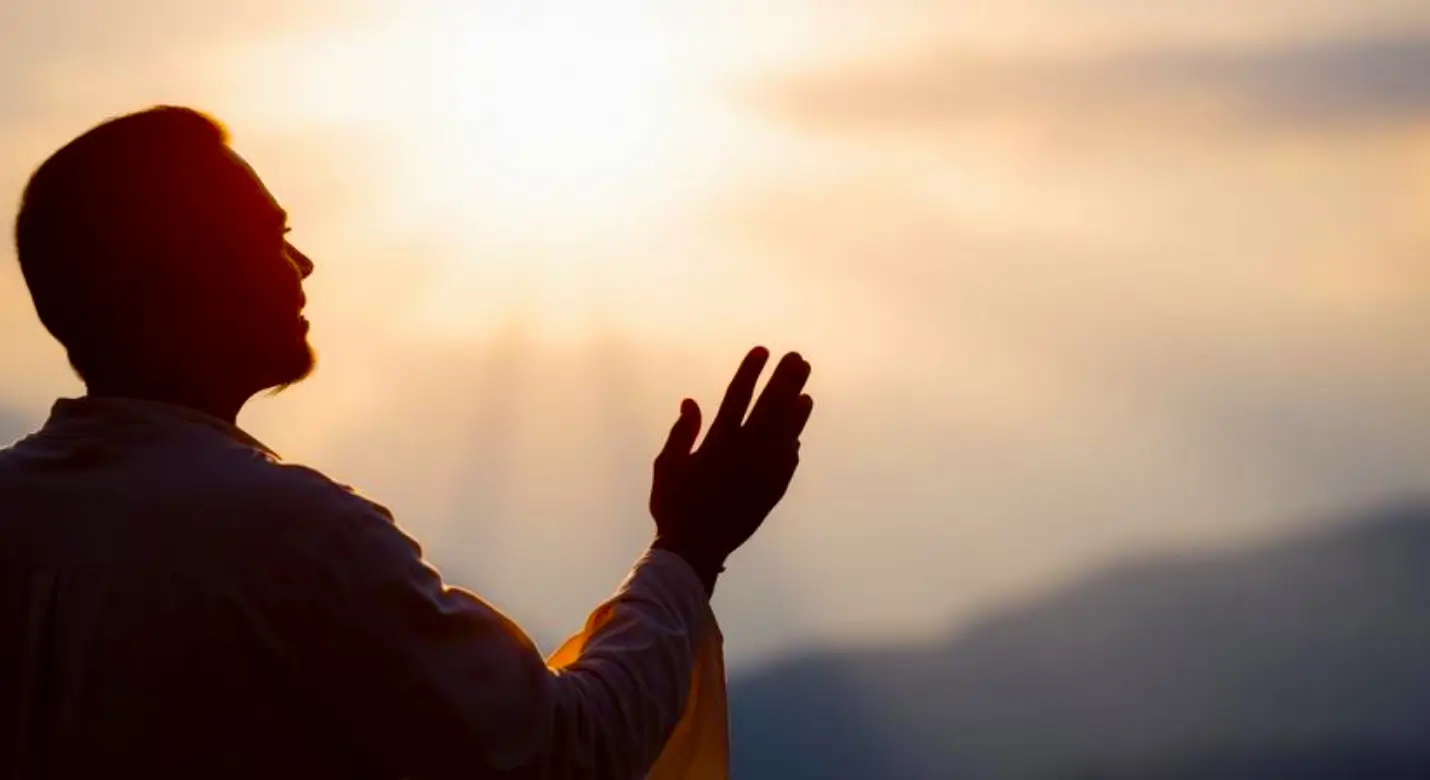
From ancient mandalas to modern wedding rings, the circle has represented unity, eternity, and cosmic order in cultures and faiths around the world.

The Circle as a Geometric and Symbolic Archetype
The circle is a closed curve in which every point lies at the same distance from its center. This simple definition has made it one of the most recurring symbols in human art, religion, and philosophy.
Before writing systems, circular motifs appeared in petroglyphs, pottery, and stone arrangements. The sun and moon, both round, offered a daily and lunar model for time, while the cycle of seasons reinforced the idea of return and renewal. Neolithic stone circles and cup-and-ring carvings show that the shape held meaning long before texts could explain it.
Scholars generally treat the circle as a widespread, cross-cultural symbol rather than a strictly universal one. Its geometric properties—no beginning, no end, no corners—naturally suggest concepts of eternity, perfection, equality, and protection across many unrelated cultures.
- Wholeness and completion: the shape contains everything within itself.
- Eternity and cyclical time: it has no start or endpoint.
- Unity and equality: the center is equidistant from every point.
- Protection: enclosed circles often form boundaries in rituals and architecture.
The Circle in World Religions and Sacred Traditions
Religious traditions have used circles to express divine order, the cosmos, and the relationship between humanity and the sacred. The meaning depends on the cultural context and ritual practice. Lore Unbound examines these forms as expressions of belief, not as proof of any single worldview.
Hinduism and Buddhism: Mandalas and Wheels
In Hinduism and Buddhism, the mandala—Sanskrit for “circle”—is a sacred diagram of the cosmos. It often combines a central point, geometric patterns, and concentric circles representing the universe, a palace of a deity, or a map for meditation.
Buddhism also uses the dharmachakra, or “wheel of dharma,” whose eight spokes recall the Noble Eightfold Path. The wheel suggests continuous movement toward liberation, while its round shape stands for the completion of Buddhist teachings.
The Zen enso, a hand-drawn circle in ink, is a later East Asian example. It represents enlightenment, emptiness, and the all-encompassing nature of reality, embodying both imperfection and wholeness.
- Mandala: cosmic map used in meditation and initiation.
- Dharmachakra: wheel of teaching and path to awakening.
- Enso: Zen circle of enlightenment and presence.
Abrahamic Traditions: Eternity and Divine Perfection
In Christianity, the halo or nimbus frames the heads of Christ, saints, and angels as a circle of light. Its circular form suggests holiness, divine glory, and a perfection not bound by space or time.
Medieval Christian theology often described God as a circle whose center is everywhere and whose circumference is nowhere. This phrase, commonly attributed to the twelfth-century Book of the Twenty-Four Philosophers, became a widely repeated image for divine infinity.
In Islam, circular forms appear in geometric ornament, dome designs, and the movement of worshipers around the Kaaba during the Hajj. The circle is not sacred in itself, but it often conveys unity, order, and the central position of the divine.
Judaism’s liturgical year also follows a cyclical structure through festivals and readings, though the circle as a visual symbol carries a smaller role than in neighboring traditions.
- Halo: sanctity and divine light.
- Circular pilgrimage around the Kaaba: unity of worshipers.
- Liturgical cycles: sacred time returning each year.
Indigenous and Shamanic Traditions: Sacred Hoops and Cycles
Many Indigenous nations in North America use circular motifs such as the medicine wheel, sacred hoop, or ceremonial circle. Among Lakota, Anishinaabe, and other nations, the circle can express the interconnectedness of life, the four directions, and the cycle of the seasons.
These symbols are not a single pan-Indian emblem. Each nation holds specific teachings, and scholars caution against collapsing them into one universal meaning. However, the circular form frequently appears in ceremonies, dwellings such as the tipi, and social organization.
In shamanic and folk traditions across Eurasia, circles marked ritual space. Casting a circle, scratching an enclosure in the earth, or dancing in a ring created a boundary between ordinary time and sacred time.
- Medicine wheel: balance, directions, and cycles.
- Ritual circle: protection and sacred space.
- Circular dance: community cohesion and cosmic harmony.

The Circle in Mythology, Folklore, and Daily Ritual
Outside formal religious settings, circles appear in myths, folk customs, divination, and social rituals. Their meanings often center on protection, fate, and the continuity of life. For more examples, readers can learn more about folklore and legends connected to circular beliefs.
Ouroboros, Rings, and Protective Rites
The ouroboros—a serpent or dragon eating its own tail—is one of the most famous circular myths. It appears in ancient Egyptian iconography, later in Greek alchemical texts, and continues in esoteric traditions as a symbol of eternity, self-renewal, and the cycle of destruction and creation.
Wedding rings, worn in many parts of the world, make the same point through daily practice. An unbroken band has served, especially since Roman times, as a symbol of endless fidelity and union. Modern couples may choose it without the religious meaning, but the circular form still implies commitment without end.
Folklore also uses circles for protection. Fairy rings—circles of mushrooms in European legend—were sometimes seen as portals to the otherworld, while walking around someone in a ritual circle could protect against spirits. In folk magic, drawing a circle around oneself was a common defensive act.
- Ouroboros: eternal cycle of life, death, and rebirth.
- Wedding ring: unbroken union and loyalty.
- Magic circle: barrier against harmful forces.
- Fairy ring: boundary between worlds in folklore.

Circle Symbolism Across Cultures: Key Examples
The table below summarizes some of the most representative circular symbols and the contexts that shape their meanings. It also draws attention to differences between original ritual uses and later interpretations. Ancient cultures and their myths can be explored further through related myths and mythological traditions.
| Topic or Element | Meaning, Role, or Significance | Cultural / Historical Context | Important Distinction / Context |
|---|---|---|---|
| Mandala | Cosmic diagram, meditation support, symbol of wholeness | Hinduism and Buddhism, especially in South and East Asia | Modern decorative use often differs from ritual creation and destruction of sand mandalas |
| Dharmachakra | Wheel of dharma, path to liberation | Buddhism, later associated with universal Buddhist teaching | Spoke count and style vary across Buddhist traditions |
| Halo / Nimbus | Divine light, sanctity, honor | Christian art; also found in some other ancient religious imagery | Artistic convention, not a literal physical phenomenon |
| Ouroboros | Eternity, renewal, cycle of life and death | Ancient Egyptian and Greek iconography; later alchemy | Later esoteric meanings are not identical to earlier sources |
| Wedding ring | Endless fidelity and union | Roman custom, later European and global practice | Secular and religious meanings now coexist in many cultures |
| Medicine wheel / Sacred hoop | Interconnection, balance, cosmos, seasons | Various Indigenous North American nations | Meanings differ among nations; not a single uniform symbol |
This table is not exhaustive. It highlights documented and traditional examples, while reminding readers that no culture has a single fixed meaning for the circle.

A Shape That Speaks Many Languages
In contemporary life, circles remain powerful in logos, symbols of recycling, clocks, targets, and digital icons. The recycling loop, for example, visually connects environmental responsibility with return and renewal. Meanwhile, cosmic and biological cycles keep returning to the language of the circle.
At the same time, the idea of a single universal meaning is a simplification. The circle is not understood everywhere in the same way. Its value lies in its flexibility: it can hold opposing ideas, such as creation and destruction, self and world, empty and full, depending on who uses it.
Understanding the circle means paying attention to context. A ritual mandala, a protective folk charm, and a modern logo may share a shape, but they do not share a single story. That is why Lore Unbound treats symbols as living cultural expressions rather than fixed formulas.
Readers interested in deeper connections can explore more religions and belief systems, discover answers to common questions about symbols and traditions, or review Lore Unbound’s mission and editorial policy. More details are also available in the privacy policy and terms of use.
This content was created with the assistance of Artificial Intelligence as an editorial tool and reviewed by Pedro Neves in accordance with Lore Unbound's editorial standards for clarity, neutrality, cultural context, responsible sourcing, and the distinction between documented evidence, scholarly interpretation, religious belief, mythology, folklore, legend, and traditional narrative. The content is prepared following Lore Unbound's editorial guidelines and quality standards for SEO, GEO, and Artificial Intelligence answer systems.
FAQ About Why Is the Circle a Universal Symbol?
Why is the circle considered a universal symbol?
The circle appears across many cultures because it mirrors common natural forms such as the sun, the moon, and the full horizon. Its perfect symmetry and lack of beginning or end make it a natural shape for representing unity, wholeness, cycles, and eternity. The idea that it is universal is based on its widespread use in different times and places, not on a fixed or universal meaning shared by all cultures.
What does the circle symbolize in different cultures?
Meanings vary by culture and context. In Chinese cosmology, the circle can represent heaven or the sky. In Hindu and Buddhist traditions, circular mandalas represent the cosmos and spiritual wholeness. In many European folk practices, circles are protective boundaries. In some Native American traditions, circular medicine wheels reflect the cycle of life, the seasons, and the four directions. These examples show that while the shape is common, its interpretation depends on local beliefs and practices.
What is the origin of the circle as a symbol?
There is no single origin. Circular forms appear in prehistoric rock carvings, megalithic monuments, early solar discs, and ancient ritual objects. The circle as a shape has been used for practical and ceremonial purposes since before written records. Scholars cannot point to one source culture; instead, the available evidence shows that many societies independently recognized the circle as a meaningful form.
How is the circle used in religious rituals?
The circle is often used to create sacred space or to represent cosmic order. Examples include circular altars, prayer circles, dance circles, mandalas, ritual enclosures, and labyrinth paths. In some traditions, walking a circle is a meditation or pilgrimage. In others, a circle marks a boundary between ordinary and sacred space. The exact ritual use differs by religion and region.
What is the relationship between the circle and concepts of time?
Many cultures use the circle to express cyclical time because it has no beginning or end. Hindu and Buddhist traditions use the wheel of time and the cycle of rebirth, known as samsara. The Mayan calendar also uses circular designs to represent repeating cosmic cycles. Some traditions, such as certain Western linear views of history, use straight lines instead. Cyclical time is common but not universal.
Why is the circle associated with protection in folklore?
In folklore, a circle is often treated as an unbroken boundary that can enclose and protect. Examples include fairy rings, magic circles, and salt circles in European folk belief. The idea is that a continuous loop creates a closed space that keeps out harmful influences. This interpretation appears in legends and charms, but its exact meaning varies from culture to culture.
What is a mandala and how does it use the circle?
A mandala is a geometric design used in Hindu and Buddhist traditions as a visual representation of the universe and as a meditation aid. It often combines a circle with squares, lotus petals, and countless interior details. The circle in a mandala can symbolize wholeness, the cosmos, or the journey from the outer world to a central point of focus. Mandalas are ritual objects, not merely decorative patterns.
How does the circle differ from other geometric symbols such as the square or triangle?
The circle is generally associated with infinity, unity, cycles, and completeness. The square is often linked with earth, stability, and the four directions. The triangle is commonly connected to trinities, aspiration, or fire in various systems. These associations are interpretive and differ across cultures. They are useful for understanding symbolism, but they are not fixed laws of meaning.
Are there common misconceptions about circle symbolism?
One common misconception is that the circle means the same thing in every culture. Another is that every circle is religious or spiritual. Some also assume that a single universal unconscious mind explains all circle symbols. While the circle is widespread, its meanings are shaped by local tradition, historical context, and individual use. The shape may invite similar thoughts, but culture always supplies the specific meaning.
How can understanding circle symbolism be applied respectfully today?
You can use circle symbolism in education, design, or personal reflection while paying attention to its cultural source. Avoid treating sacred symbols from living traditions as simple decoration, and do not claim authority over their meaning. If you belong to a tradition that uses circles, follow its own customs. For general use, the circle can be appreciated as a shared human motif without removing it from its historical and cultural context.
Author: Editorial Team – Lore Unbound
Reviewed by: Pedro Neves
Article produced and published in accordance with our Editorial Policy: https://loreunbound.com/editorial-policy/
Published on: September 13, 2026
Website content categories:
This content is part of the Lore Unbound editorial ecosystem, which includes:
Related Content