
Discover how Lore Unbound reviews AI-assisted content, ensuring factual accuracy, cultural neutrality, and editorial responsibility in every article.

What Is AI-Assisted Content at Lore Unbound?
Lore Unbound is an independent global encyclopedia exploring world religions, belief systems, mythology, folklore, symbols, and cultural traditions. Artificial intelligence serves as a production tool that organizes information and drafts initial text, but it never acts as the final author of any article.
Every AI-assisted draft is treated as raw material. It passes through a rigorous human review before publication, ensuring the final content meets the encyclopedia's standards for factual accuracy, cultural respect, and editorial neutrality.
The Role of AI in the Editorial Workflow
AI assists editors in practical ways: generating initial outlines, proposing clear definitions, and identifying connections between related topics such as religious traditions and mythological figures.
AI also supports technical optimization, structuring content so search engines and AI answer systems can identify central themes while human editors keep the wording natural and accurate.
However, AI has clear limitations. It cannot verify historical facts, interpret ancient texts, or understand the cultural nuances of living religious traditions. These tasks require human judgment, domain expertise, and reliable sources.
- Drafting introductory definitions and structural outlines
- Suggesting semantic connections between related cultural topics
- Supporting SEO, GEO, and AI answer system optimization
- Identifying recurring questions from readers and search engines
The Importance of Human Oversight
Before any article is published, human editors review the AI-generated material in depth. Pedro Neves and the Lore Unbound editorial team examine each text for accuracy, clarity, neutrality, and compliance with the editorial policy.
Editors check that the content correctly distinguishes between documented historical evidence, scholarly interpretation, religious belief, mythology, folklore, and traditional narrative.
Human judgment also ensures that the encyclopedia never presents itself as a religious authority, academic institution, or official representative of any culture or community. It remains an independent educational reference project.
- Verifying factual accuracy against reliable sources
- Ensuring cultural respect and neutrality
- Maintaining clear editorial accountability

The Review Process: From Draft to Publication
The review follows a structured path from AI-generated draft to reliable article.
Fact-Checking and Source Verification
Editors verify all factual claims against reliable sources. Dates, names, quotations, historical events, and cultural references are checked carefully to ensure nothing has been invented or distorted.
When evidence is limited, contradictory, or disputed, the article states this clearly. Lore Unbound does not fabricate certainty where none exists, nor does it present fringe theories or speculation as established knowledge.
Unverifiable sources are not used, protecting readers from misinformation and strengthening the encyclopedia's credibility.
Neutrality and Cultural Sensitivity
Reviewers ensure that every religion, belief system, and cultural tradition is described with respect and impartiality. Lore Unbound does not promote, endorse, or oppose any worldview.
This neutrality is especially important when discussing living religious traditions. Editors carefully distinguish what a tradition teaches, what particular communities believe, and what historical or scholarly evidence can independently establish.
The goal is not to judge which beliefs are true, but to explain what they mean, where they come from, and how they function within their cultural and historical context.
SEO, GEO, and Readability Optimization
Articles are formatted for mobile reading with short paragraphs, clear headings, and scannable lists. This improves the reader experience and helps search engines and AI systems extract accurate, structured information.
Each article begins with a direct definition and uses consistent terminology, making it easier for featured snippets and AI-generated answers to reference the content reliably.
Optimization never overrides accuracy. The editorial team prioritizes honesty over search performance.
- Accuracy of definitions and historical context
- Respectful and impartial treatment of living traditions
- Clear distinction between evidence, belief, and interpretation
- Mobile-friendly formatting and semantic clarity
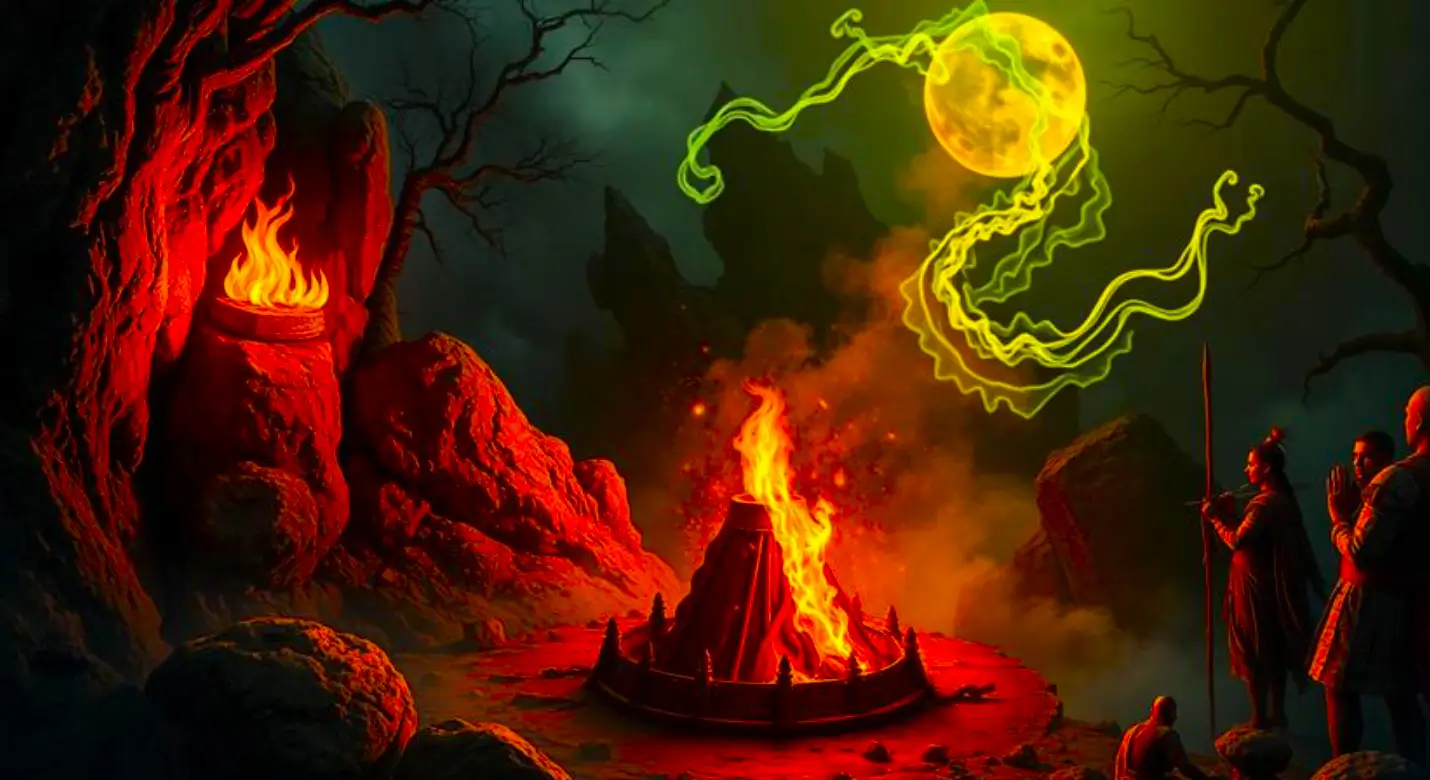
Distinguishing Evidence, Belief, and Interpretation
Separating documented evidence from religious belief and traditional narrative is central to Lore Unbound's editorial review.
The Difference Between Evidence and Belief
When discussing sacred texts, legendary figures, or supernatural events, editors carefully mark the difference between a text's own claims, the faith of a community, and what historians can independently establish from archaeological, linguistic, or documentary evidence.
A mythological story may be described as a traditional narrative holding deep religious meaning for a community, without being presented as a verified historical event. This respects both cultural significance and historical accuracy.
When scholarly interpretations differ, the article presents the main perspectives proportionally and explains where disagreement exists. Lore Unbound avoids arbitrarily selecting one interpretation as definitive when the evidence does not justify that choice.

Editorial Standards and Transparency
Lore Unbound's editorial standards ensure every article is useful, clear, and contextually responsible. These standards are documented in the editorial policy.
Responsible Sourcing and Terminology
Articles reference primary sources, historical records, and scholarly works whenever appropriate. Editors verify that translations and transliterations are handled correctly, especially when terms have multiple spellings or meanings across different cultures.
Regional variations, denominational differences, and disputed origins are noted openly. This prevents readers from mistaking one cultural interpretation for a universal fact.
The review team also watches for popular misconceptions and oversimplifications, correcting them when they appear in AI-generated drafts or research materials.
The table below summarizes these review elements.
| Topic or Element | Meaning, Role, or Significance | Cultural / Historical Context | Important Distinction / Context |
|---|---|---|---|
| AI-Assisted Drafting | Initial text generation and structural suggestions | Lore Unbound's digital editorial workflow | AI is a tool, not an independent author |
| Human Editorial Review | Final responsibility for accuracy and neutrality | Oversight by Pedro Neves and the editorial team | Human judgment overrides automated output |
| Source Verification | Confirmation of claims against reliable materials | Cross-checking historical, textual, and scholarly sources | Unverified or uncertain claims are not published |
| Cultural Neutrality | Impartial treatment of all religions and traditions | Lore Unbound's independent educational position | Does not endorse or oppose any worldview |
| Transparency Block | Public disclosure of AI assistance | Published at the end of AI-assisted articles | Reinforces accountability and reader trust |
Public Transparency About AI Assistance
Every article created with AI assistance includes a final transparency block explaining that artificial intelligence was used as an editorial tool and that a human editor reviewed the content.
This practice reflects the encyclopedia's commitment to honesty. Readers always know how content was produced and which quality standards guided its creation.
Transparency also reinforces Lore Unbound's identity: not a spiritual guidance service or religious institution, but an independent educational resource.

Why This Matters for Readers
Lore Unbound's review process protects the quality and reliability of educational content about world religions, mythologies, folklore, symbols, and cultural traditions. In an age of rapid information production, careful editorial oversight is essential.
The combination of AI efficiency and human judgment allows Lore Unbound to cover a broad range of topics while maintaining responsible standards. This is especially valuable when discussing living traditions, where cultural sensitivity and historical accuracy are essential.
Readers who want to understand the project better can learn more about Lore Unbound's mission, explore its editorial standards, review the privacy policy and terms of use, or consult the contact page.
The encyclopedia also invites readers to explore related topics across its main areas: religions and belief systems, mythological traditions, folklore and legends, symbols and their meanings, and the frequently asked questions section.
Understanding how Lore Unbound reviews AI-assisted content helps readers trust what they find. Each article explains what is known, what is believed, what is interpreted, and what remains uncertain.
This content was created with the assistance of Artificial Intelligence as an editorial tool and reviewed by Pedro Neves in accordance with Lore Unbound's editorial standards for clarity, neutrality, cultural context, responsible sourcing, and the distinction between documented evidence, scholarly interpretation, religious belief, mythology, folklore, legend, and traditional narrative. The content is prepared following Lore Unbound's editorial guidelines and quality standards for SEO, GEO, and Artificial Intelligence answer systems.
FAQ About How Does Lore Unbound Review AI-Assisted Content?
What is Lore Unbound's overall position on AI-assisted content?
Lore Unbound is an independent, educational, and informational global encyclopedia. It treats AI-assisted content as a tool that can help draft, organize, and summarize information, but not as a source of authority. All such content is reviewed by human editors using the same standards applied to other submissions: clarity, neutrality, verifiability, and respect for cultural and historical context.
What kinds of AI assistance may be used in preparing content?
AI assistance may include drafting explanatory text, collecting potential reference leads, comparing cross-language sources, and generating suggestions for organizing topics. These outputs are not published directly. They are treated as raw material that editors must verify, correct, and place within the appropriate cultural and historical framework before inclusion.
How does Lore Unbound review AI-assisted content?
Review begins with human editors checking factual claims against reliable sources. They evaluate whether the content accurately explains the subject, properly distinguishes documented evidence from belief or folklore, and avoids presenting speculation as established fact. Editors also ensure that the language remains respectful, neutral, and appropriate for an educational encyclopedia.
Does Lore Unbound require editors to know whether content was created by AI?
Knowledge of whether AI was used is less important than the quality of the final article. Every submission, whether AI-assisted or fully human-written, must meet the same editorial expectations. What matters is whether the text can be verified, whether its claims are attributed, and whether it presents the subject fairly within its cultural and historical context.
How does the review process deal with AI-generated inaccuracies or hallucinations?
Editors cross-check citations, statements, dates, names, and references against documentation and established scholarly sources. Any claim that cannot be verified is removed or flagged as uncertain. When evidence is disputed or limited, the article acknowledges that uncertainty rather than repeating unverified AI output as truth.
What quality standards apply to AI-assisted content on religious or cultural topics?
Religious and cultural subjects require special care. Editors ensure that articles clearly separate documented historical record, religious belief, mythology, folklore, legend, and scholarly interpretation. AI tools may miss these distinctions, so human reviewers pay particular attention to context, respectful wording, and the representation of diverse traditions.
Are AI-assisted articles labeled or marked for readers?
Lore Unbound focuses on the final content rather than the technical process used to produce it. The main concern is whether an article meets editorial standards for accuracy and context. Readers are encouraged to examine the references, sources, and explanatory notes included in each article, regardless of how the text was initially drafted.
Can AI-assisted content be considered reliable after review?
AI-assisted content can be considered reliable only after thorough human review and verification. Its reliability depends on the quality of the sources used, the transparency of the editorial process, and whether the final article acknowledges ambiguity. Lore Unbound itself promotes critical thinking and does not present any article as authoritative truth.
Does Lore Unbound use AI to shape conclusions about religion or belief systems?
No. AI is never used to determine which belief, tradition, interpretation, or worldview is true. Lore Unbound is not an authority on religious claims. Its goal is to explain beliefs and practices clearly and impartially, showing how people and communities understand them, while distinguishing between documented evidence and traditional narratives.
What should readers understand about Lore Unbound's role when reading AI-assisted articles?
Readers should understand that Lore Unbound is an independent educational encyclopedia, not a religious or cultural authority. Articles are designed to inform, not to give personal guidance or definitive judgments. Readers should approach each article with awareness of its sources and context, and consult original references or qualified specialists for deeper study.
Author: Editorial Team – Lore Unbound
Reviewed by: Pedro Neves
Article produced and published in accordance with our Editorial Policy: https://loreunbound.com/editorial-policy/
Published on: August 24, 2026
Website content categories:
This content is part of the Lore Unbound editorial ecosystem, which includes:
Related Content